
testMonth: October 2022

Preparing Your Black Friday Advertising Strategy

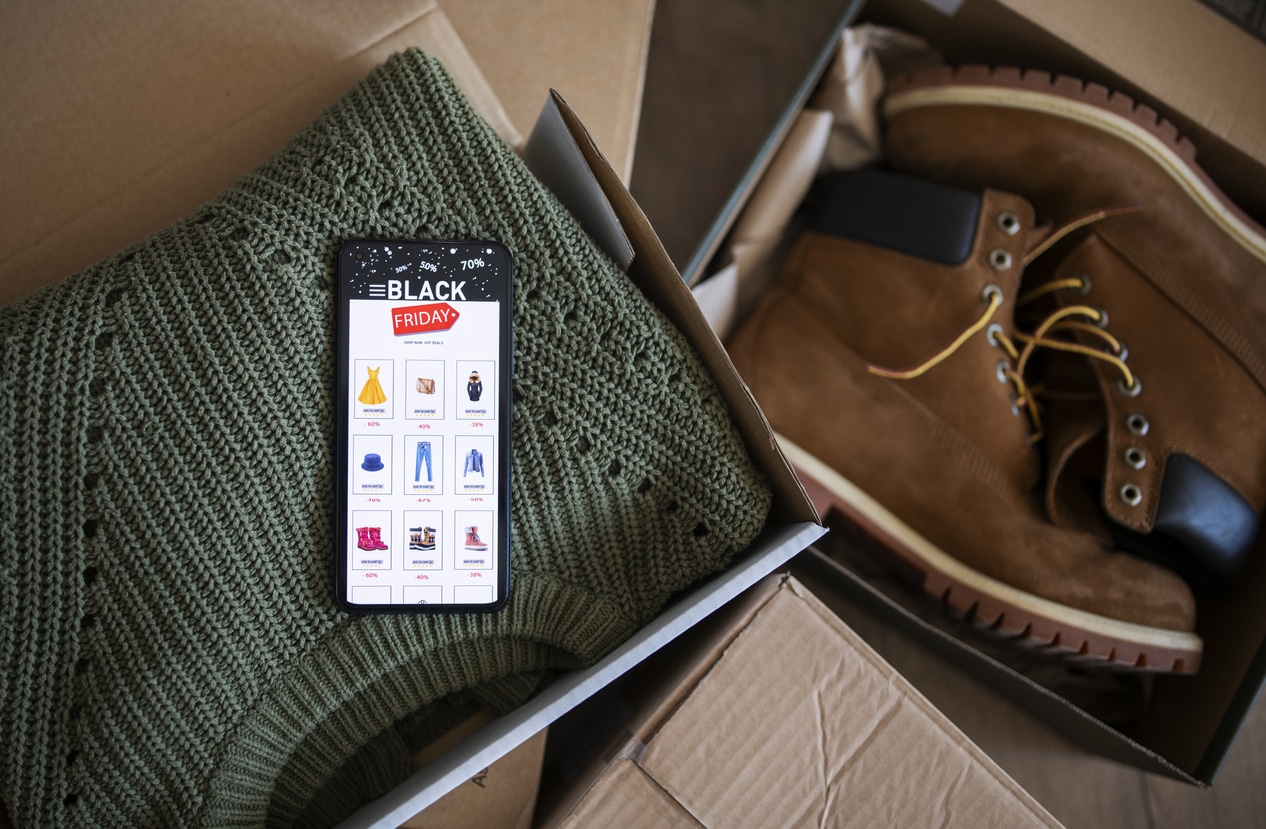
Black Friday and its sibling, Cyber Monday, are almost here. These two have become the premiere retail days of the year and now more than ever, it’s time for brands to prepare their campaigns. Curious about the best ways to approach campaigns for the biggest retail weekend of the year? Look no further.

Lead with Data

More important than any catchy slogan or meme is data. Does your brand resonate in market? Who are the customers? What do they want? Why do they want it? The foundation of any successful campaign is data analysis and segmentation to reveal the real customer story behind your brand. Figure out who your customers are, understand their behaviors, and build around these data points. 

Last year, despite the surging COVID variants, Black Friday and Cyber Monday broke several online retail records with over $200 billion spent online over the entire holiday season, another $100 billion spent during Cyber Week, and $9 billion spent on Black Friday alone. To put this into perspective, Black Friday sales figures clocked in at $6.2 billion in 2018, $7.4 billion in 2019, and $8.9 billion in 2020.

Although last year was a record-breaking holiday shopping season overall, the average eCommerce conversion rates dropped in 2021 by over 20%, landing just under the 2019 number. Curious about more? A deeper analysis of over two billion eCommerce store sessions every single week showed that the average conversion rate globally for Black Friday in 2021 was 3.2%, compared to 4.5% in 2019. While a 1.2% drop seems insignificant as a number, for marketers, this means brand messages need to speak louder to customers, lest a brand is left behind. The US scored slightly better than the global average, with conversion rates at 3.6% in 2021, vs. 4.3% in 2020. Nonetheless, that doesn’t mean we can rest on our laurels. It’s hustle time. 

Be Seen or Be Left Behind

If you’re not first, you’re last, and absolutely no one wants to lose. The weeks before Black Friday and Cyber Monday are all about honing your brand’s perfect message and serving it over and over again. This isn’t the time to scatter-shot a hundred different ads with different messages. This is the time for a solid message and driving it home. Reduce your campaign budgets to focus on only the best-performing ads and maximize spend in those areas. It’s vital for your brand to produce and finalize creative early on and allocate budgets toward success. Is your brand worth shouting about? Prove it in your marketing campaigns. 

Many brands are shifting their Black Friday sales as early as late October, while others begin offering promotions in early November. 75% of retailers surveyed in 2020 said they offered deals before Black Friday, with some lasting several days or weeks. 83% of holiday shoppers stated that they started their holiday shopping earlier than Black Friday, and with the persistent economic uncertainty, it is likely that 2022 will bring in the same.

Custom AI: Your Cookie-based AND Cookie-free Targeting Solution

Google Chrome has been the leading browser of choice for online consumers for quite a few years now. According to www.statcounter.com, in May 2022, Chrome was dominating the web browser market share by 64.34%. As Google previously announced, Chrome internet browser will stop supporting the user-tracking technology called third-party cookies by late 2024. Cookies are small files sent to your browser from websites you visit. These files track and monitor the sites you visit and the items you click on these pages. This announcement sent shockwaves through the AdTech industry. Third-party cookies have been a foundational part of the technology that enables personalized digital ads, allowing advertisers to personalize ads to users based on their behaviors and site-visit history for decades.

So, what does a cookieless world mean for Dstillery and our audience model building? We have it all covered! Besides offering our premium ID-based methodology for building audiences with cookies, we also have ID-free audiences that do not rely on any user-tracking, cookies, or IDs.

ID-based Custom AI Audiences

Dstillery builds predictive models for audiences by analyzing the data on users who visited certain domains. This data is completely anonymous. It comes from sources like the programmatic ad environment (the bid-stream) and 3rd party data partners, and it is cookie-based. 

Once we receive this cookie-based data, we store it under anonymous user profiles in our system. When we talk about examining data on users, we mean understanding their online behavior. After analyzing common patterns among the users who visited a certain domain, Dstillery builds a model consisting of the online behaviors most likely to lead to conversions or actions among all these users. This predictive model is then used for targeting consumers on the internet who would be most likely to exhibit the same behaviors that the model has already identified.

The model is then used daily to score devices that match the model features and build a probabilistic ID-based audience for targeting. All ID-based audiences are refreshed every day by scoring new qualifying devices in and scoring out the ones that do not fit the model criteria anymore. This guarantees that Dstillery’s audiences are always relevant, up-to-date, and ready for immediate use.

Dstillery offers a wide range of ID-based audiences. They fall into different categories based on the way they are built and their composition.

How are Custom AI audiences built by applying the ID-based methodology?

For Custom AI audiences, Dstillery requires first-party data that comes directly from the client, not just any domain or source, in order for the target user behavior for that brand’s signal to be identified. This first-party data can be collected by placing a Dstillery Pixel on the client’s website or by ingesting CRM data offline. The collected first-party data is then analyzed by finding common browsing behaviors among the client’s consumers and used to create Custom AI models that are 100% tailored to the client’s brand and needs. 

ID-based Custom AI audiences deliver some of the best results and precision. Why?

First-party data, whether it comes from pixel-based devices or from other data sources such as CRM-based lists, provide the strongest signal for interest in your brand. It is also important to note that the models for Custom AI audiences are rebuilt every 24 hours due to the constant flow of new devices to pixels that sets off the model refresh. Additionally, all Custom AI audiences are refreshed daily by having devices scored in and out of them, which always guarantees strong relevance and excellent performance. Internal studies have shown a 15x lift in conversion rate for qualified customers identified in our ID-based Custom AI Audiences.

ID-free® Custom AI Audiences

Dstillery already has a plan and a solution for the ‘Post Cookie Era.’ Enter ID-free® targeting, a methodology for model and audience building without using third-party cookies. Dstillery has adapted its proven ID-based model-building technology so that cookie IDs are not necessary to create high-quality predictive audiences. In our ID-free environment, we do not rely on tracking the devices we are trying to target. This makes ID-free the ideal choice for advertisers who want to get ahead of consumer privacy concerns without compromising campaign performance and scale. 

Dstillery’s ID-free methodology for building audiences is based on patented neural network technology that analyzes hundreds of millions of anonymous digital journey patterns to learn the behavioral signals underlying any web visit. By using this influx of hundreds of millions of anonymous digital journeys our algorithm learns how, when, and from where people browse the web and derive a multidimensional map of the web where the closer the points, the more similar the actions of visitors to those sites. Dstillery builds these statistical predictive models from opt-in first-party data (such as pixels, surveys, and panels) that are then applied to the ID-free universe of prospects. This enables brands to identify the right impression opportunities among all these untracked browsers and devices.

Our Chief Data Scientist, Melinda Han Williams, explains how our cookieless targeting solution is not the same as contextual targeting. “ID-free doesn’t read the words on the webpage or scrape content from websites, it is entirely a behavioral solution. So, it is picking up on signals that reflect interest in the brand, regardless of the content on the webpage. ID-free can take a high-performing 1st party signal, amplify it and activate it at internet scale.”

Who are ID-free audiences for?

The core of ID-free technology, and its inherent cookieless nature, delivers performance and scale for all brands. ID-free audiences are particularly great for industries that have strict privacy standards, like healthcare and finance. We can confidently conclude that ID-free is an excellent solution for everybody, for two reasons:

  1. Cookies will be going away, so brands can get ahead of the curve now.
  2. It opens up a whole universe of devices that brands have not been engaged with, so it’s good for performance and incremental scale today!
How is Custom AI implemented through Dstillery’s ID-free methodology?

Just like ID-based, ID-free Custom AI audiences deliver some of the best results and precision because these models are built with first-party data or keywords. Dstillery’s multidimensional Map of the Internet (MOTI) is compounded with the client’s first-party signal. This allows our AI to learn the browsing patterns of anonymous opt-in devices identified in the client’s seed and to create a base model. Then, the identified patterns are extended to all websites by utilizing our neural network technology, allowing the client to select opportunities that are predictive of desired behaviors. When a Custom AI model is generated and applied to the ID-free universe of devices, this creates tailored ‘just-for-your-brand’ predictions to identify the most valuable impressions for the client’s brand.

ID-free Custom AI is a proven post-cookie solution, available now, it works on every browser and across all types of devices including desktop, mobile, and tablet. It performs on par with the best ID-based Custom AI solutions, sometimes even better based on current campaign results. ID-free Custom AI could be used strategically as a way of adding incremental scale to any client’s campaign by unlocking a whole new universe of devices that aren’t being tracked.

How is ID-free Custom AI tailored for healthcare brands?

Custom Patient Targeting is a version of Dstillery’s ID-free Custom AI product made specifically for healthcare. Because the core ID-free methodology doesn’t create profiles, doesn’t “know” the names of the sites that any user visited to make predictions, and doesn’t target any IDs or cookies, ID-free targeting offers optimal precision, customization, and compliance for healthcare brands in programmatic advertising. For advertisers in healthcare looking to engage with consumers in a completely privacy-friendly manner, Custom Patient Targeting is Dstillery’s privacy-safe behavioral targeting solution that provides performance and precise reach without user tracking.

How Dstillery Processes its Data

Dstillery ingests billions of data points daily. This includes website visitations, foot traffic, and app usage, which are processed into consumer behavior. With that data, individual devices (mobile and desktop) are scored in and out of specific audiences across different topics and then organized into categories. Dstillery audiences are up-to-date as audience segments are refreshed daily to deliver an unparalleled level of advertising effectiveness. 

Although Dstillery audiences are continuously refreshed on a daily basis, and users are scored in and out of audiences across our different audience categories, users can still leave our data store/ecosystem at any time. 

Dstillery has over 2,800 prebuilt audiences. Audiences are created using our AI models. These models score users in and out of specific audiences across different behaviors. As a result, valuable data is produced through graphs that reveal audience composition, demographics, locations, and the trail of sites visited.

How Users Score into an Audience:

To score means that the model analyzes the browsing history of the users who visited particular websites that revolve around the same topic. The AI model then uses that data to find other users with similar behaviors and interests. 

Moreover, the AI model analyzes URLs to find similar browsing histories of individual users and search for common behavioral patterns. After those common web behavioral patterns are identified, the model uses that information to score users in and out of particular audiences. 

How We Build a Pre-built Audience:

To have a better understanding of what a Pre-built audience is, let’s take a look at an example. “Toyota Vehicle Shoppers” is a Pre-built audience. This audience was built by putting together URLs that show users who are looking to buy a Toyota car or someone who is browsing anything related to Toyota vehicles. For example, www.olathetoyota.com, www.toyota.co.uk, www.toyota.com, and www.toyotacertified.com are fed into the model as input known as seed sets. The AI model will use these URLs to find users who have similar URLs in their web history. Users with these URLs in their web history are analyzed as users of interest. The model uses that information to find users with similar web patterns and interests, allowing it to score users into specific audiences. This process enables us to create accurate profiles of the users.

How Users Score out of an Audience:

Above, we described how to score into a specific audience. Now, let’s look at how the AI model scores a user out of an audience. Scoring out means that when users no longer demonstrate a particular pattern, they are scored out of an audience. For example, if the user’s web behavior has changed from buying a car to buying a jacket, the AI model would then score that user out of the “Toyota Vehicle Shopper” audience and into a “Jacket Lovers” audience.

As the AI model scores users in and out of the audience daily, another system – the data retention system looks at a user’s cookie history.  

Data Retention Period for Audiences:  

Data retention period across different audiences refers to how long users are retained in our scoring system. When users clear out their cookie history, we can no longer score that particular user into any audience because the AI model does not have any web history to analyze and score. Our data retention system checks users’ web history every day for 60 days. If the system doesn’t see the user’s web history, the system will delete the user from our database. Suppose/if we see that user’s cookies again, that user will return as a brand-new user. The AI model will analyze the web behavior of the new user and score them into a new audience.  

Custom AI Audiences Built by First-Party Data to Create Specific Profiles for Brands:

Custom AI audiences are built by analyzing your first-party data to create a profile specific to your brand. When a user clicks on a pixel on the client’s website or web page, we automatically receive the user’s cookies. Our AI model then uses those cookies as model input to train the model. The AI model is trained to find users with similar web behavior to those who click the pixel. After the patterns in web behavior are identified, the AI model uses that information to score users into retarget audiences. The Custom AI Audience is one of our best audiences because it is 100% customizable to your brand. 

The AI model rebuilds itself whenever users click on a pixel. By clicking on a pixel, new input is used to train the model even more. Let’s look at the data retention period for the Custom AI audience. The data retention period differs from the Pre-built audience because we look at the users who click on the pixel.  

Once the pixel is placed on the client’s web page, we activate it to receive users’ cookies. When a user stops interacting with that pixel for 180 days, the user will be removed from the model input. Users get updated into the model input every time they interact with a pixel. 

If a user doesn’t interact with a pixel for 180 days, that user will be removed from the model input. Furthermore, the behavioral history of that user will also be removed. Moreover, if the same user interacts with the same pixel on day 181, the system will look at it as a new user that clicks on the pixel. 

What will happen to our first-party data if you create a custom AI audience and leave the pixel active without us terminating our contract with Dstillery? 

As long as that pixel is active and the user constantly interacts with that pixel, the user will be a member of that Custom AI segment audience. Any data collected from that pixel older than two years will be removed from our system.

What will happen to our first-party data if the pixel gets deactivated? 

Upon the deactivation of the pixel, after 14 days, our system will score out every device from the custom AI segment audience. If your custom AI audience is reactivated, our system will find the users that interact with the pixel placed on the web page. 

To learn more about Dstillery audiences, please visit our products page.