testCategory: Trends

Celebrating International Women’s Day at Dstillery

International Women’s Day is more than just a date on the calendar – it’s a time to recognize the achievements of women everywhere and keep pushing for progress. This year’s theme, “Women: NOW – Leading With Vision,” is a powerful reminder that women aren’t just shaping the future – they’re leading it right now.

At Dstillery, supporting women is embedded in our culture. Half of our executive team is comprised of women leaders with a range of expertise who are setting strategy, driving innovation, and inspiring the team every day. Leadership isn’t just about titles; it’s about impact. And we’re proud to create an environment where women are empowered to lead with confidence and vision.

Creating a Culture Where Everyone Thrives

Change doesn’t happen in a single moment – it takes ongoing commitment. At Dstillery, we ensure that women’s voices are not only heard but amplified. We’re focused on creating a workplace where everyone, regardless of role or experience, feels encouraged to speak up, share ideas, and take the lead. By breaking down barriers and fostering a healthy culture of collaboration, we create space for real innovation.

Women at the Forefront of Innovation

One reason we celebrate International Women’s Day is to recognize how far we’ve come and to keep building the pipeline for future women leaders. At Dstillery, we’re all about mentorship, growth, and opportunity — giving women at every career stage the support they need to succeed.

A great example of this can be seen during a recent interview for CNBC’s CMO NOW series, with our Chief Marketing Officer, Patti Boyle, filmed during her time at Davos 2025. She highlights the importance of women advocating for themselves, the power of mentorship in shaping future leaders, and how Dstillery’s culture is designed to help women thrive. When women are empowered to lead, the entire industry moves forward.

Honoring the Women of Dstillery

This International Women’s Day, we’re celebrating the incredible women who make Dstillery what it is. Their drive, expertise, and leadership push our company forward, and we’re proud to recognize their contributions – not just today but every day.

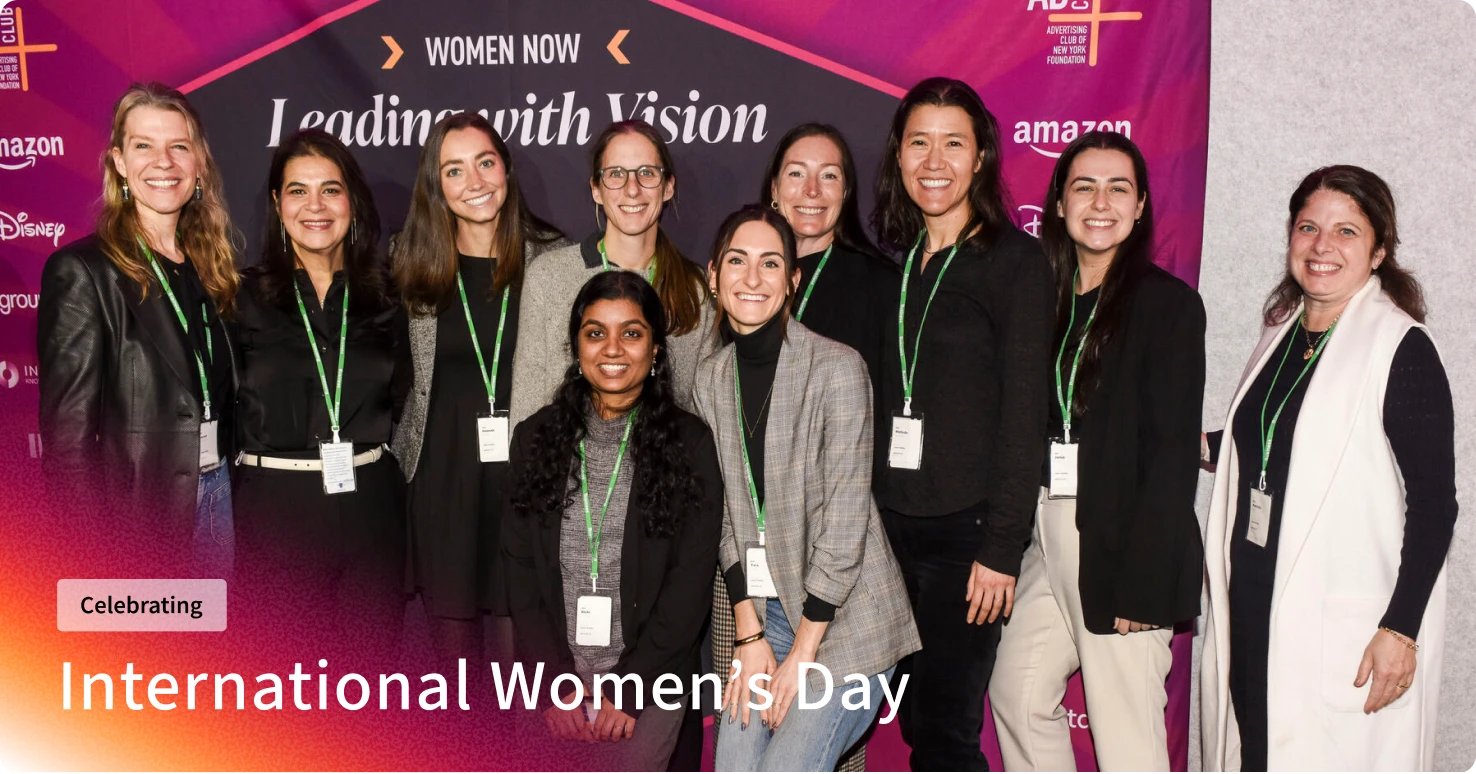
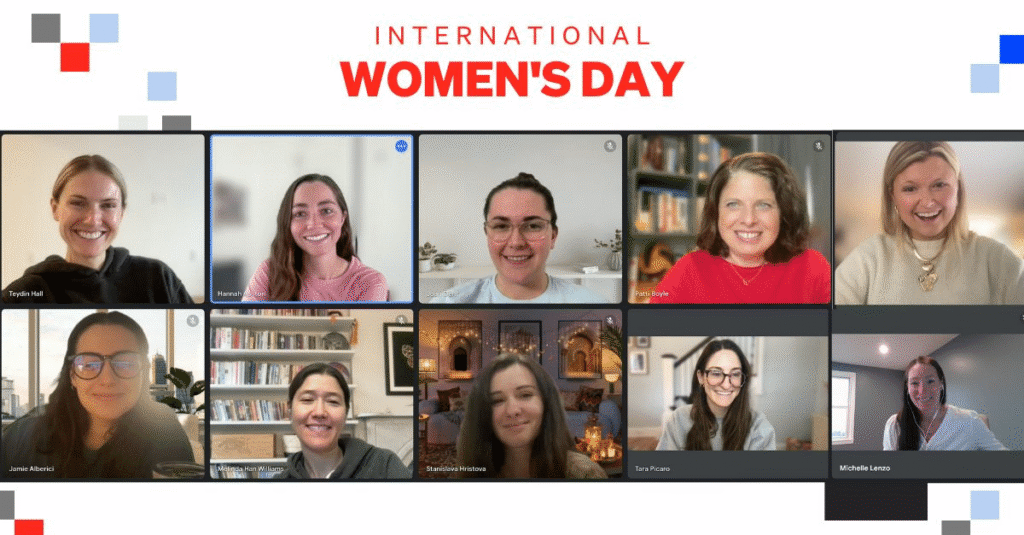
We’re sharing a team photo of our amazing women on LinkedIn to mark the occasion. But this isn’t just a one-time shoutout – it’s a reflection of our ongoing commitment to supporting, elevating, and empowering women all year long.

The Future is NOW Women are leading NOW

The future isn’t about small steps – it’s about creating workplaces where women are valued, heard, and empowered at every level. At Dstillery, we’re committed to being part of that change.

So this International Women’s Day, let’s go beyond the celebration. Let’s commit to making real, lasting change – not just for today, but for the future.

Happy International Women’s Day!

Click here to view this featured post via The Advertising Club of New York.

BrXnd AI LA: The Future of AI for Brands is Now

Following our Dstillery sponsorship of the first annual BrXnd AI event last May in NYC, our Executive Director, Taylor Zamora, and I attended the first LA version at the NeueHouse Hollywood. 

BrXnd AI Founder Noah Brier has emerged as a leading authority on how brands can and should use, and are using, generative AI tools at all stages of the marketing process. Brier’s team consults with companies of all shapes and sizes about using AI, publishes a newsletter and Marketing AI landscape, and hosts in-person events.   

Reflecting on a day of learning and inspiration, I am thoroughly convinced that AI is not overhyped.  It is having real impact.

The first half of the day was mostly about the state of AI and trends in how brands are using it.  The second half was essentially demos/pitches.  Both were impressive and thought-provoking.  A few themes emerged: 

– The consensus view is that we are still very much in the discovery & experimentation stage with AI

– The LLM model itself is a tool, and our collective imagination in using it to solve business challenges is the value-add 

– ROI is hard to measure at this stage and it is premature to try and assign dollar values 

Having sponsored and attended BrXnd NYC’s 2024 event, we saw some amazing progress. There were fewer demos of working AI technology in action. Tools were not ready, so the conference was heavy on trends and themes and light on specifics. We have come a long way.  

The audience for the products is marketers and agencies, and there were some VERY cool demos of tools that simplify and speed up agency and digital media workflows, opening up new opportunities.  Here are a few of our favorites: 

Pencil creative canvas 

– McKinney’s Brand Attention Index 

– JellyFish Share of the Model (how do brands show up across models?)

Springboards.ai creative brainstorming 

Social Department video social asset extraction 

– And my personal favorite, the Waldo.fyi research assistant

These are very cool customer-facing tools that help brands and agencies do their work better, faster, and more cheaply. Eight months ago, they did not exist. Now, they are compelling workflow tools gaining adoption among our clients. I am blown away by the pace of the progress.  

Above all, I am convinced after the BrXnd AI showcase that we are only just getting started. 

Reflections from Davos 2025: Leadership, Innovation, and the Future of AI in Marketing

As I reflect on an unforgettable week in Davos, the World Economic Forum 2025 experience continues to resonate. Representing Dstillery at the gracious invitation of The Female Quotient, I had the privilege of joining a dynamic panel to discuss the power of mentorship, sponsorship, and cultivating the next generation of women leaders.

The Power of Sponsorship & Next-Gen Leadership

On stage with Anna Marks, Camilla Maggiori, Bijou Abiola, and our exceptional moderator Amber Coleman-Mortley, we explored what it means to build pathways for emerging talent — not just in theory but through deliberate, meaningful action. These conversations are particularly relevant in the rapidly evolving landscape of AI-driven marketing, where guiding the next wave of women’s leadership is just as critical as technological innovation itself.

Dstillery & AI Innovation: Aligning with UN SDG #9

Throughout the week, a common theme emerged: the role of AI in driving sustainable innovation. Dstillery’s commitment to AI-driven insights and ethical marketing practices aligns with United Nations Sustainable Development Goal #9 (Industry, Innovation, and Infrastructure) — reinforcing the importance of responsible AI development that fuels both business growth and societal progress.

From collaborative discussions on AI regulation to exploring investments in growth-oriented technology, Davos provided a platform to engage with industry leaders on how marketers can harness AI responsibly while maintaining a human-first approach to advertising.

Leadership in a Shifting Business & Political Landscape

Beyond the panels and networking lounges, I had the opportunity to participate in exclusive roundtable discussions hosted by Steve Clemons, Chairman & CEO of Widehall, Washington, DC. These conversations delved into the evolving terrain of leadership, business, and politics, highlighting the challenges and opportunities executives face in a landscape shaped by geopolitical shifts, economic pressures, and rapid technological transformation.

A Seat at the Table: CNBC International’s “CMO Now” Series

One of the most exciting outcomes of the week was getting invited to record a video interview for CNBC International’s “CMO Now” series, set to air later this month in the lead-up to International Women’s Day. This conversation allowed me to discuss the intersection of AI, marketing, and leadership, further reinforcing the pivotal role of AI-driven insights in shaping modern business strategies.

Looking Ahead: Davos 2026 and Beyond

Among the highlights of Davos 2025 was the invaluable time spent with our newest Dstillery Board Member, Jim Weiss, Founder & Chairman of Real Chemistry, and the outstanding EVP/Chief of Staff, Danielle Clark-Brown. As we look to Davos 2026, one thing is certain: the convergence of AI, leadership, and innovation will continue to shape how brands engage, connect, and grow.

For Dstillery, the takeaways from Davos reinforce our vision: to remain at the forefront of privacy-friendly AI innovation, actionable data insights, and digital advertising solutions that drive measurable business impact. I look forward to continuing these conversations, taking actions to continually grow and lead, and making plans to return and reunite in Davos for WEF 2026.

Stay tuned for our CNBC International interview airing later this month, and let’s keep the conversations going!

Performance Meets Brand: How to Win the Short and Long Game

As the digital media landscape evolves, one perennial debate remains: performance marketing versus brand marketing: which matters more? At Dstillery, we’ve discovered that it’s not an “either-or” question—it’s about finding harmony between these approaches to drive measurable growth while building long-term brand equity. With the upcoming MediaPost Performance Marketing Summit in Deer Valley, UT, there’s no better time to explore how integrating these two disciplines can transform your advertising strategy for 2025.

Performance Marketing: The Sprint to ROI

Performance marketing can sometimes be misconstrued as solely about clicks, conversions, and measurable returns. More accurately, well-planned performance marketing is vital to any strategy, ensuring campaigns are tied directly to outcomes. Yet, in our hyper-quantified world, the danger can lie in focusing solely on short-term wins at the expense of long-term growth. Both pursuits are valuable and not mutually exclusive.

The industry leaders headlining MediaPost’s agenda highlight the sophistication of modern performance strategies, from precision targeting to multi-touch attribution. The key is not just to measure performance but to optimize campaigns while maintaining a broader brand vision.

Brand Marketing: The Marathon to Mindshare

Brand marketing, on the other hand, builds a company’s reputation, affinity, and trust over time. This “slow burn” is no less essential in driving sales; in fact, research shows that brand equity can multiply performance results.
In my MarketingProfs article, “Brand Awareness Measurement: A New Perspective,” I explored how companies often struggle to measure the true impact of brand campaigns. Our solution at Dstillery applies award-winning innovation, including advanced AI modeling and predictive behavioral targeting, to ensure your campaign is reaching your best customers. The future lies in connecting the dots between brand strength and performance metrics.

Why Choose? The Case for Integration

The most effective marketing strategies no longer draw hard lines between performance and brand. Instead, they fuse these disciplines into a seamless, cohesive approach. At Dstillery, we’ve worked with global agencies and brands to align short-term and long-term goals using data-driven decision-making. For example:

Re-framing Target Market Groups: Use Dstillery Insights to refine your target market prioritization or adjust for seasonality. If campaign results reveal that GenZ audiences respond more positively to short-form video ads, then shift your strategy to allocate more budget toward platforms like Instagram to maximize engagement.

– Simultaneous KPIs: Measure short-term ROI alongside brand health metrics, like awareness and favorability, to ensure no aspect of your marketing suffers.

Iterative Feedback Loops: Performance data can fuel brand decisions and vice versa, creating a virtuous cycle of continuous improvement.

Takeaways for the MediaPost Performance Marketing Summit

The MediaPost Summit promises a deep dive into the future of performance marketing, but attendees should look beyond tactical excellence. The challenge — and opportunity — is to balance these skills with brand-building strategies that can scale and sustain success.

Here are a few questions to ponder as you prepare for the summit:

– How can we use performance data to refine social strategies?
– Are our KPIs reflecting both short-term wins and long-term growth?
– What technologies or methodologies (like those in Dstillery’s portfolio) can help bridge the gap between branding and performance?

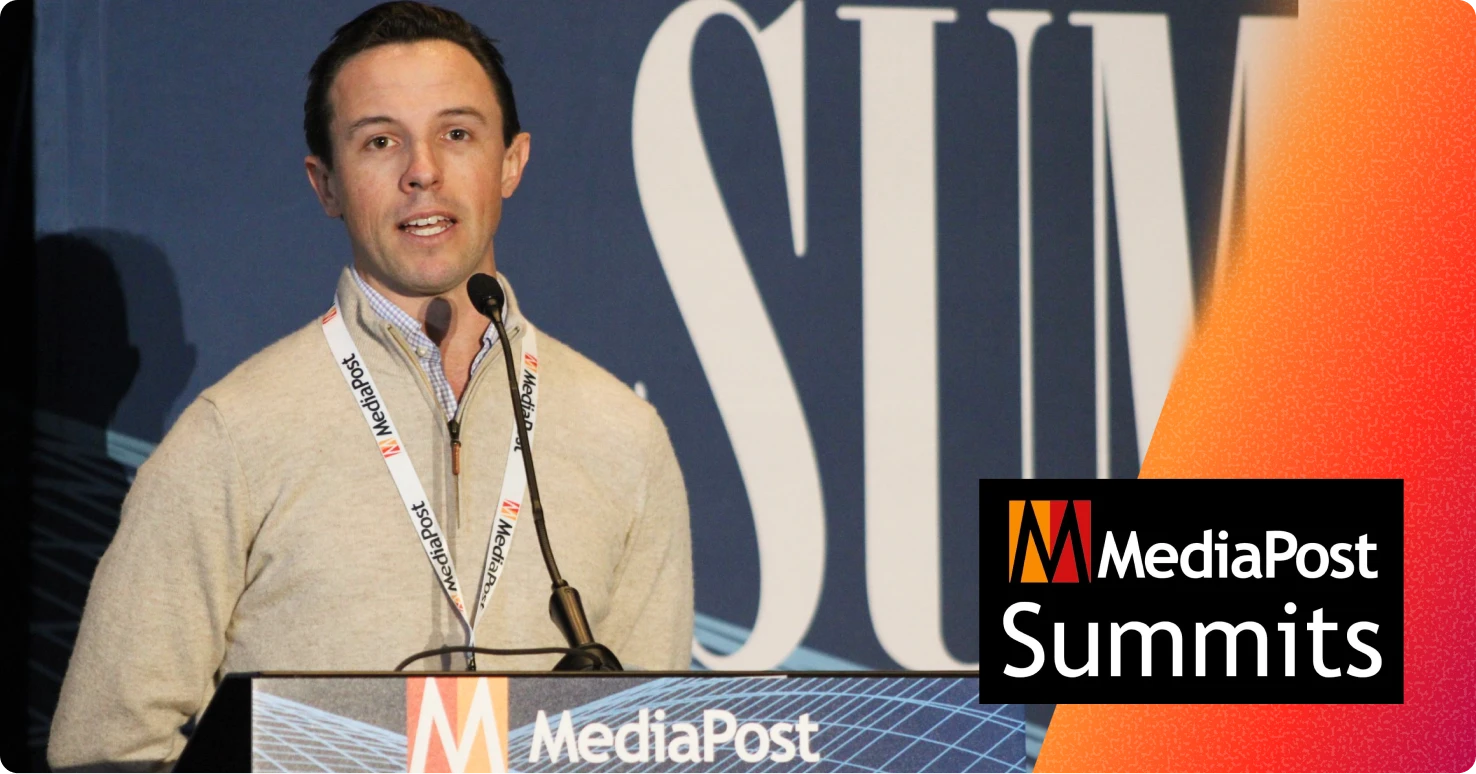
We’re also a proud sponsor of the event and will share insights during our presentation titled, “How To Target & Reach The Right Audiences in 2025.”

A 2025 Marketing Mindset

In 2025, the most successful marketers won’t think of performance and brand as separate entities. They’ll see them as two sides of the same coin, working together to achieve exponential growth. Whether you’re attending the MediaPost Performance Marketing Summit or reflecting on your plans for the year ahead, the time to integrate these strategies is now.

Curious to learn more? Click here to explore how Dstillery’s top-performing audiences help brands achieve measurable results while building long-term equity.

MediaPost Data & Programmatic Insider Summit 2024 Event Recap

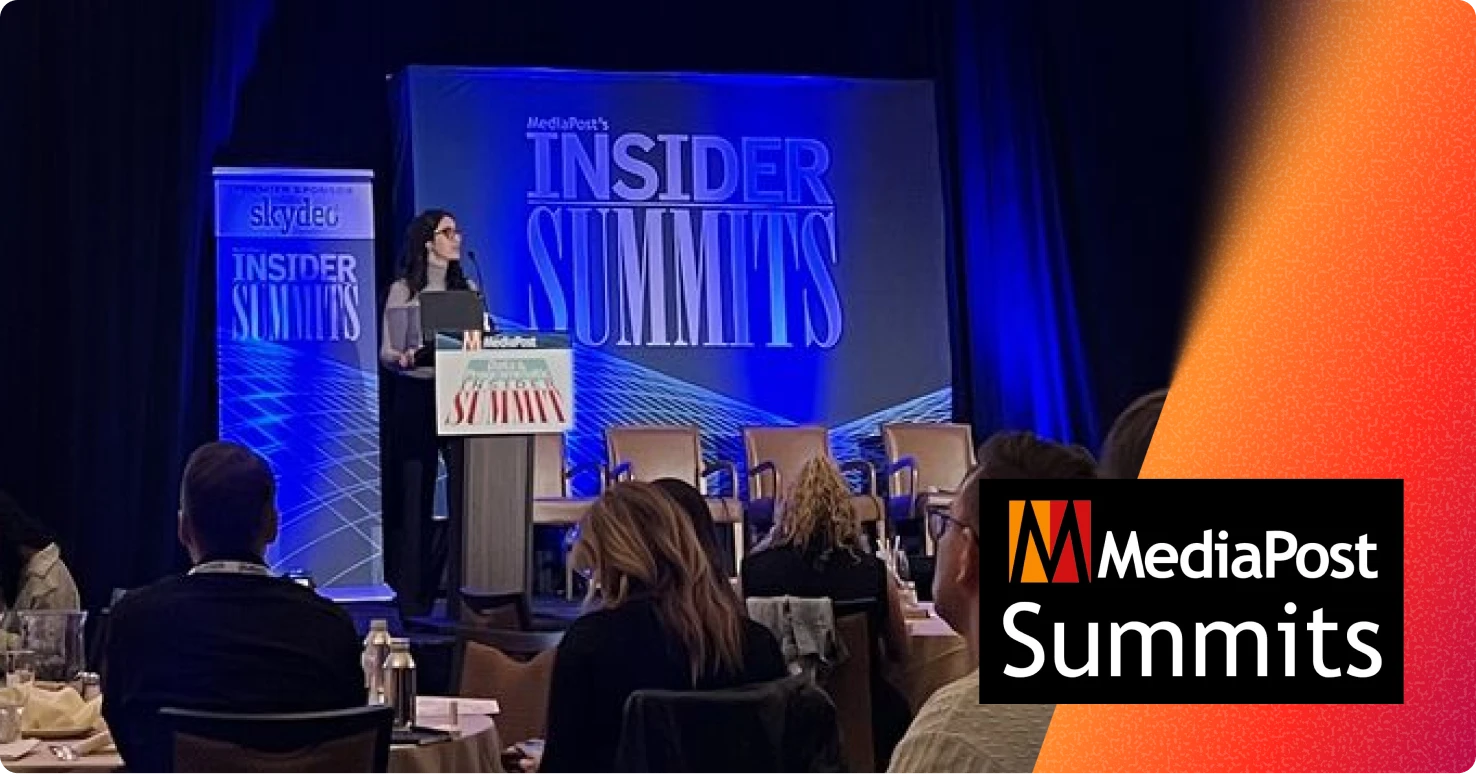
The 2024 MediaPost Data & Programmatic Insider Summit, held from August 21-24 in the picturesque Lake Tahoe, California, brought together leading minds in digital marketing. The event focused on the ever-evolving challenges of data deprecation and new ways of leveraging data in the digital ecosystem. Set against the gorgeous backdrop of the Sierra Nevada range, this year’s summit was a deep dive into innovative solutions for a world without third-party cookies, exploring everything from Retail Media Networks (RMNs) to AI-driven programmatic buying.

Redefining Strategies in an Evolving Landscape

The event consisted of a series of insightful presentations and panels. A fireside chat with Melissa Bonnick of JPMorgan Chase was a highlight. In it, she discussed how diversity fuels innovation in programmatic advertising. She emphasized the importance of diverse and authentic execution styles in maintaining brand safety while innovating in today’s digital landscape.

A pivotal panel discussion, “RMNs and The New Media Shopping Cart,” led by Cory Treffiletti, explored whether RMNs are set to replace Google as a key ad strategy pillar. The panelists explored the effectiveness, costs, and integration of RMNs within broader media plans. Panelists from Mindshare, Kinesso, and Monster Energy shared their perspectives on how the walled gardens are reshaping data-driven media strategies.

Mikey Mizrahi from Reckitt presented a compelling case study on how practical automation can streamline workflows, reduce burnout, and improve accuracy in programmatic advertising. This session was a testament to how AI, when applied strategically, can significantly enhance the media planning and buying processes.

Lenovo’s Lyle Currier took the stage for a keynote Q&A, discussing how a return to contextual targeting is helping the brand grow in a highly competitive market. Many speakers echoed the relevance of contextual targeting, including Jennifer Zeghibe from Dstillery. She mentioned how our patented behavioral targeting technology, ID-free®, is now available via Contextual Integration on The Trade Desk. Our innovative approach provides a scalable, privacy-compliant ad targeting solution that aligns perfectly with the industry’s shift away from third-party cookies.

SVP of Digital at Dentsu, Manny Hernandez, took time during his presentation to reflect on the journey from 2020’s initial predictions about the impact of cookie deprecation to the present state of digital advertising. He discussed how the industry had to quickly adapt, with media buyers preparing for a future without third-party cookies. Manny reviewed the progress made over the past four years, highlighting the solutions currently being tested by marketers, and shared key learnings and observations that have emerged as the industry navigates the ongoing transition to a cookieless environment.

5 Key Takeaways

1. RMNs are here to stay: With their rich first-party data and point-of-purchase access, RMNs are becoming a cornerstone of data-driven media strategies despite their higher costs.

2. AI in media buying: Practical applications of AI are proving to be game-changers – from automating routine tasks to enhancing the accuracy and efficiency of media campaigns.

3. Contextual targeting makes a comeback: As cookies phase out, brands are returning to contextual targeting, leveraging new tools and partnerships to deliver effective campaigns.

4. Diversity fuels innovation: Embracing diversity in thought, execution, and media spend is key to maintaining brand safety while driving innovation in programmatic advertising.

5. Networking and knowledge sharing: The mix of formal sessions and informal networking activities provided a holistic experience, allowing attendees to seamlessly gain insights, forge connections, and unwind amidst the natural beauty of Lake Tahoe.

As the summit wrapped up, we all left with a wealth of new strategies, insights, and connections to navigate the data & programmatic world. The discussions in Lake Tahoe made it clear that while the adtech landscape is changing, there are many opportunities for those willing to innovate and adapt.

Cookies are Here to Stay

Google’s decision to abort its retirement of third-party cookies from Chrome is kind of like President Biden’s decision to withdraw his candidacy for president. It is a massive fundamental shift in direction, but at the same time it is really not surprising at all.

In its announcement, Google indicated that though cookies will remain, it will take steps to ensure that consumers have more control over their personal data, yet telegraphing that data collection will be more difficult for the adtech industry. Combined with other privacy-related developments, this will pressure the quantity and velocity of user data in the adtech ecosystem. But that loss of signal will now be a steady and manageable decline, rather than a cliff.

Google’s plan to retire cookies has inspired a lot of innovation over the last four years, and there is no putting that genie back in the bottle. There are new, privacy-safe technologies like Dstillery’s ID-free® behavioral targeting in the market, and the overall trend toward higher privacy standards, if it continues, will open up opportunities for those that perform to thrive, regardless of the continued existence of cookies.

A collective sigh of relief

That said, I suspect that brands and their agencies are breathing a collective sigh of relief. The transition from cookies to something else was always going to be hard, and messy.

Media agencies are enormous, distributed and complex operations, and their workflows, partners and tools all had to adapt. Scale of the alternatives was a question. Some of the alternatives, like probabilistic IDs, had problematic privacy credentials of their own. And measurement was going to be challenging. Brand KPIs were going to break. Essentially, the fabric of the programmatic ad industry needed to be rewoven.

Media agencies had little control over this process, and not much choice. Like the adtech industry, they were being forced to adapt to the agenda of a large and powerful industry platform. The industry had done an admirable job preparing for this future, and had invested significant brain power, people hours and dollars to make this transition.

Despite all of that investment, there was still a great deal of uncertainty about how exactly this transition would unfold. The risks, uncertainties and operational challenges that accompanied cookie retirement from Chrome, and the headaches that created for media agencies, can now be pushed to the back burner.

Rebalancing our attention

From Dstillery’s perspective, we recognize the magnitude of this shift in the industry’s agenda.

We said at the beginning of this year that 2024 for our industry would be a year like no other, and that the only thing we knew for sure was that there would be a lot of change. From the halfway point of the year, it has lived up to its billing.

Dstillery is uniquely positioned, in that we can provide highly effective targeting solutions with or without IDs, and we are rebalancing our attention across our portfolio.

Our cookie-based audiences continue to deliver best in class performance, and we see opportunities to invest in new types of seeds, new modes of activation, new modeling technologies, and new distribution. Our ID-free targeting provides privacy-safe targeting solutions for parts of the market where that is important, and through our Predictive Bidding actually drives superior scale and performance to even our best cookie audiences.

Together, our ID-based and ID-free targeting solutions can fulfill the targeting needs of our programmatic partners and advertisers, with or without cookies, and we are excited for the new opportunities that this most recent shift will bring.

Soak Up the Sun and Plan a Great Travel Campaign

As the days get longer and the sun shines brighter, we’re ready to make waves this summer at Dstillery. 2024 is expected to see a record-breaking 4.7 billion air travelers globally, up from the previous record of 4.5 billion in 2019. This uptick represents an opportunity for programmatic advertisers. Summer 2024 is not only a great time to capitalize on the traveling trend but also adapt and reorient your campaigns for a new adventure in the coming cookieless advertising landscape.

According to Google’s latest cookie deprecation timeline, cookies will go away in the first half of 2025. Brands and their agencies should consider expanding test budgets for solutions to reach travelers now and in the future as the cookie is retired. What’s out there? Fear not, explorer. We’ve identified a few solutions to help your summer travel campaigns run wild and free.

ID-free® Targeting. Okay, you’re right. We’re a bit biased in bringing this up, but let’s face it – we’ve got the only behavioral targeting solution without IDs on the market, and we’re proud to promote it. Our ID-free technology represents a paradigm shift in programmatic advertising by prioritizing performance and user privacy. Predicting the best impressions for a brand without knowing the user’s identity reshapes the landscape for advertisers seeking effective, privacy-safe targeting. It’s a vital tool for marketers looking to maximize their reach across inventory regardless of whether an ID is present.

First-party data. First-party data is more relevant than ever as the ability to target with cookies phases out, and it’s crucial for mid to lower-funnel campaigns. Embrace your first-party data and weave it into your campaign! Use it to seed your Dstillery Custom AI model, targeting inventory with ID-free technology or targeting users with 24-hour User Scoring technology, letting you expand beyond your known audience.

Use all available targeting solutions in your campaigns. Travelers who opt out of user tracking, today with cookies or in the future with alternative IDs, are just as valuable to your brand. Use all the tools available to reach your best customers. Your portfolio of solutions should include alternative IDs, contextual and ID-free, giving you a diversified, complete approach. 

Seeking the Perfect Solution

All great journeys have a destination. Whether you’re traveling to Italy this summer or trying to get your best customers to go, there’s no shortage of searching for the best routes, places, and pit stops along the way. We know that identifying the best keywords for search-powered models is a significant pain point for travel marketers.  Often, this is due to the general, often vague nature of single or common search keywords or phrases. The basic idea is that seeding your model with brand-centric search terms and long-tail search keywords and phrases allows you to understand a potential customer’s intent without identifying them with cookies. Simple, brand-specific search keywords, usually single words, are great for starting a campaign by casting a broad net. 

One major benefit to utilizing Custom Search Lookalikes is that they help to identify the search terms and phrases that are the most relevant for your brand and campaign goals. Custom Search Lookalikes aren’t strictly built to target individual keywords; they can be utilized to discover and action on the phrases that people use when searching for, discovering, and making decisions about your brand. Painting the picture using precise numbers, 41% of business and 60% of leisure travelers steer their decision compass based on information unearthed from online research built on a mixture of basic search terms and phrases.

For example, suppose you are promoting tours and activities in Tokyo. In that case, you will most likely try to rank for keywords like “tours in Tokyo” or “best tours in Tokyo” to drive as much traffic as possible to your website. Those keywords will be pretty common compared to a phrase, such as “best sushi tours in Shibuya, Tokyo,” which will draw more relevant visitors and be easier to rank for, resulting in higher conversions. 

Leveraging our advanced ID-free technology and data from a 2 million+ opted-in panel, our Custom Search Lookalikes gain unparalleled visibility into the digital behaviors of millions of users. We can determine where these users frequently visit online when searching for specific keywords. Our patented ID-free technology extends this user understanding to all websites. It assesses and ranks every ad impression based on its likelihood of reaching individuals actively searching for brand-specific keywords.

Your Destination Awaits

Custom Search Lookalikes specifically tune to your audience’s intent. This includes devices within our de-identified opt-in panel actively searching for your brand’s keywords. The solution effectively targets them to guide them further down the marketing funnel and brings the value of search keyword-based targeting to your summer travel campaigns. Using OpenAI embeddings for search queries from the largest search engines in the world in our panel data, we can identify the most relevant search keywords and phrases tailored to each audience brief. This allows us to create brand-specific keyword and search phrase clusters tailored to your brand and campaign goals. 

So now that you’ve found the missing piece of your campaign solution, kick back and enjoy the summer breeze, maybe even a cool beverage. Forget the guesswork and rest easy knowing that your campaign uses cutting-edge AI to find your best prospects with the best key terms and phrases. Custom Search Lookalikes gain privacy-safe visibility into the digital behaviors of millions of users, including their search and site visitation behaviors. The best travel campaigns will use all of the tools at a programmatic buyer’s fingertips. Building a campaign that powers programmatic inventory solutions with search behavior data is a strategic and savvy way to maximize your campaign budget. Who knew it could be so easy?

Who cares about Google’s cookie timeline?

On April 23, Google delayed the deprecation of 3P cookies to 1Q 2025 due to concerns raised by the UK’s CMA (antitrust authority) and ICO (privacy authority). The delay itself is not terribly surprising, and the fact that it was only shifted by one calendar quarter does not seem material.

Nevertheless, and predictably for an industry as large and diverse as programmatic advertising, reactions in the marketplace have ranged the full gamut, depending on the commentators’ perspectives.  

The Google delays have become the story

Some skeptics have said with great conviction and a certain amount of schadenfreude that this delay is not the last and that there will inevitably be more. Maybe many more. 

At the extreme, some have embraced the idea that the series of delays indicate that full cookie deprecation from Chrome will never happen. These absolute denialists tend to be people and companies with a vested interest in the status quo, reliant on 3P cookies, unprepared for change, who would prefer that it never happens. Their opinion reflects their fears. 

Meanwhile, many journalists who cover Google and adtech make light of it, with quips about cookies crumbling or not. For them, the story has evolved beyond the ultimate demise of cookies and implications for the industry; it has become the story of ongoing delays. 

While these articles are clever and amusing, they in effect validate the skeptics’ views by focusing not on the impact of signal loss, but on Google’s struggle to actually make it happen.

The genie is out of the bottle

There is also a growing cohort of adtech companies who dismiss the continually shifting timeline as irrelevant. Many companies have been developing innovations inspired by the threat of cookie deprecation since early 2020, many of which have value propositions that go beyond just filling the gap left by cookies.  

These emerging solutions are now genies that are out of the bottle, and cannot be put back due simply to delays. Indeed, whether cookie deprecation ever actually occurs, new competing technologies will chip away at different functions cookies have served.  

At Dstillery, we clearly identify with this perspective.  Our ID-free® technology uses AI to do behavioral targeting without any user tracking at all.  It is 100% privacy compliant, with no consumer tracking or profiling via cookies or any other IDs.  What’s more, ID-free performs 2.5X better than cookie-based user targeting, and delivers significantly greater scale.

Whether or not cookies ever go away, we see a bright future for ID-free. 

Some of our clients are already using it as a standalone alternative to user targeting, with superior performance, scale and privacy.  

Some are using it to complement their user targeting, boosting reach while adding campaign efficiency.  

Some are using it to replace crude and less effective content-based contextual targeting.  

And some clients in the healthcare industry and in Europe are using it today to address privacy-based user targeting constraints that are particular to their industry and geography.

We have a lot more ID-free innovation in the pipeline, as do many of our adtech peers.  Our clients and partners are hungry for more.

While it is still highly uncertain, it seems safe to assume that cookies will be retired from Google’s Chrome within the next 12 months. But maybe not. Who cares? 

The genie of innovation is out of the bottle. The industry ought to focus less on debating Google’s timeline and more on the benefits from the wave of adtech innovation that it has inspired.  

MediaPost: The Power of Search in the Holiday Spirit

Press Events Resources 2023

Amid the backdrop of snow-capped mountains, with alpine air so clean you can taste it, 100 industry leaders are gathering for MediaPost’s Search & Performance Summit in Deer Valley, UT. On the agenda: how senior execs and their teams can embrace the sweeping changes 2024 is sure to bring – from accelerating impacts and opportunities in AI to performance marketing that’s privacy-friendly, at long last.

Wrapping up ’23

As Dstillery’s last co-sponsored programmatic media event of the year, there’s a clear optimism – and a dash of uncertainty – about what ’24 will bring. Along with our fellow “Summit Insiders,” we’ll explore how macro and micro influences change the game and open up new paths for growth.

Whether it’s the healthy outdoor, refreshing setting or the approachable, low-key vibe, session topics for this event have a decidedly different and uplifting tone. 2024 will surely be transformational for AdTech. Yet that shift is being met with optimism and an inspiring zeal for growth. While Google’s deprecation of cookies tees up challenges for audience targeting, the senior marketing, agency leaders, and tech leaders are here to embrace consumer privacy and to learn from one another. Media agencies and brand marketers are embedding cookieless testing into their plans, and committing campaign budgets to AI-modeled search with a greater focus on performance marketing.

Looking forward to ’24

My teammate, Executive Director Meredith Flynn, will share how Dstillery’s ID-free® technology is helping brands and agencies reach their best prospects and customers. We couldn’t be prouder of how our patented, trademarked ID-free solutions, already in market since 2021, are offering the only truly privacy-friendly ad targeting — using no personal identifiers. What’s more, our Custom Search Lookalikes help marketing leaders blend their own first-party data to create unique search audiences just-for-their-brands, powered by ID-free.

Perhaps one of the most distinctly positive aspects of MediaPost events is that our Dstillery team has the chance to meet virtually everyone participating. The relaxed, informal atmosphere offers rare opportunities to develop authentic, new working relationships.

Whether your holiday plans have you traveling to well-loved places, exploring new destinations, or simply relaxing and rejuvenating with family and friends, the Dstillery team wishes you the best. Here’s to reaching your most ambitious goals in 2024. May you find everything you’re searching for .

A+ Back to School Campaign Tips

back to school

Can you believe that we’re just weeks away from cracking open the school books again? Or are they iPads now? MacBooks? Some new technological device that your child has a nickname for that cost you at least a thousand dollars? Regardless of how your child or teen is learning, this is a great time for marketers to heat up the frying pan on Q3 and Q4 retail marketing campaigns focused on clothes, technology, and retail home goods. Unlike your child going to kindergarten and suddenly becoming a high school graduate, marketing campaigns happen and conclude in the blink of an eye. Let’s dive into some campaign trends and ideas to help your brand graduate into a next-level education-based marketing campaign. 

Navigating Back to School Campaigns in 2023

Back to School retail has now been delineated into two segments: Back to School and Back To College. Each segment has its own unique identity and retail traits that marketers can adapt to in their campaigns. In 2023 Back to School-based marketing campaigns have the opportunity to capitalize on $41.5 billion of retail spend. That massive number has grown substantially over the physical-to-digital education material transition over the last several years. For these non-collegiate students, the typical American home is set to spend roughly $890 per student in the household; a jump from $830 last year, which is likely tied to economic inflation.

The Generation Alpha demographic is especially notable in their influence on retail trends as they are the first generation experiencing school in a totally digital format. Generation Alpha rose from the pandemic and have become known as a demographic that is highly focused on inclusivity, sustainability, and social impact. In fact, 50% of parents of Generation Alpha students choose sustainable back-to-school products whenever possible. 

At this point, you might be asking, this demographic information is great, but where can I apply this to my programmatic campaign? We have the answer. Did you know that Alphas are heavily influenced by YouTubers who make shopping or gaming content? These students aged 6 to 16 want to purchase items displayed by their favorite digital personalities and YouTubers. This is a huge opportunity for Display, Video, and CTV campaigns focusing on electronics, clothes, and shoes, which are the three most prevalent areas of Back to School spend.

Opportunities for advertising and brand partnerships within video games such as Roblox are also massively influential as popular gaming reaches 24.2 million daily active users under the age of 13, and brands such as Forever21 and the Gap have opened virtual storefronts within the game. Even Fortnite has partnerships with Nike, Adidas, and other popular brands such as Marvel and Star Wars. 

Back to College Marketing Campaigns

Retail is even more of an opportunity for Back To College, especially with regard to higher-value retail items such as tech and home goods. Back to College Shoppers are projected to spend about $1,367 per college student this year, not including tuition or room and board. Collegiate-level retail shoppers are projected to spend a massive $94 billion in 2023, setting the pace for retail holiday spend in the months following. 43% percent of those spending more than the previous year say it is because they need more new gear, up from 32% in 2022. This tracks consumer spending for college students as nearly six in 10 parents are willing to splurge for the right reasons, like treating their child, self-expression, or better quality. 

While still motivated by digital trends, college students are less interested in following YouTubers for product advice and more interested in traditional retail trends and reputable brands as they mature in their identities and the marketplace. Brands like Apple for electronics, IKEA for furniture, and popular clothing brands will not have to do much work to attract college students to their products but they will have to appeal to them through campaigns that reach across various identity demographics.

Students will solidify their relationships with known brands in the physical-to-digital education material transition if they haven’t already, so campaigns that focus on awareness and consideration should be top of mind for technology retailers. Regarding retail goods such as furniture, college students gravitate towards affordable and easy-to-move items. One recurring expense for college students is home goods in the bedroom and living room which tracks with the traditional lifestyle of a college student moving from dorm to apartment to house. Campaigns promoting on these goods should focus on affordability, ease of integration into a student’s lifestyle, and eco-friendliness. 

Embracing the Digital Shift

It’s an exciting time for brands to rework their traditional marketing approach toward students. While we’ve acknowledged that generations are becoming increasingly online, 2023 is the first year when we have a new, fully tech-integrated generation starting school and cementing the transition away from physical learning materials. In the future, Generation Alpha will become a further template for marketers to analyze and understand as they experience their digital lives and advertising from birth, throughout the education process, and in daily life.

For more information on how to level up your back-to-school campaigns this year, contact us.