testCategory: Audiences

Weaving Dstillery’s Data Fabric for the World of Healthcare

If there’s one thing we know about a new year it is that people have a renewed focus on their health and personal fitness. After dealing with the past two and a half years of the pandemic, healthcare has become an even greater if not the most important focus in our lives. From personal fitness goals to chronic illness, the world of healthcare is vast and frankly, dense, for marketers on internal and agency teams to crack.

The trick, however, is to understand who you want to reach and how to get them. Doing so requires key data insights around behavior, consumer spending habits, and demographics and the way that they all coalesce into your target demographic. What’s fascinating from the Dstillery side is how much our healthcare audiences have grown and changed over the course of the pandemic and how new pockets of overlaps and intenders have emerged.

In addition to making pre-pandemic healthcare assumptions, marketers must open their minds to healthcare’s newer audiences and the ways they overlap with other consumer segments such as fitness and mental health, along with industry mainstays such as chronic illness and medical procedure research. This means looking at more data over a wider array of topics and data points to drive interest and return on investment. Luckily for those in healthcare, the data is out there and it is plentiful.

Choosing Your Targets

If one industry is tried and true with its audiences, it’s healthcare. People all follow the same arc, they’re little, they grow, and they grow, and they grow, and suddenly they’re old. Within all of that growth, they’re getting sick, recovering, developing new health conditions, and making lifestyle changes to increase the longevity of their lives. The life story has a ton of component pieces that Dstillery has taken and parsed out into tons of pre-built audiences that can be utilized for marketing campaigns. Considering the three main stages of human life, let’s look at three segments of healthcare consumers:

  • Children and Teenagers
  • Middle Aged People
  • Elderly People

Understanding the Influence of Healthcare Trends

Sure, it’s easy to identify the three most obvious groups of consumers in healthcare but let’s bring it down into a more approachable level. Looking back on 2021 it seems like everyone was wrapped up with COVID in mind regarding their personal health. 

However, many personal healthcare motivations remained the same. For example, many people renewed their interest in personal fitness early in the year. Kids are outdoors more than ever, but also more digitally connected with devices and screens for schooling and leisure activity. Over the summer, we began to see a renewed interest in action sports and physical activity that required consumers to be outside and engaged with their bodies. For older consumers, there was a blanket uptick in regular check-ups, with an emphasis on heart and lung health as well as increased interest in exploring regular exercise activity. 

What this tells us is that the average healthcare consumer within our classic targeting groups is much more dynamic and sophisticated than being summarized as simply a “fitness intender” or a “medical procedure researcher.” The three demographics we looked at before suddenly become more interesting when you view them like this:

Children and Teenagers 

  • Eyeglasses Shoppers
  • Eyeglasses and Contact Lens Buyers
  • Dermatology / Dermatologists
  • Pediatricians
  • Asthma Sufferers
  • Dentists

Middle Aged People

  • Cardio Health Researchers
  • Vegans / Vegetarians
  • Oncologists
  • Endocrinology
  • Fertility Treatment Researchers
  • Gastroenterologists 
  • Reproductive Health

Late Aged and Elderly People

  • Joint Pain Sufferers
  • Generic Prescription Pill Shoppers
  • Arthritis Sufferers
  • Neurologists
  • Heart Surgery Researchers
  • Orthopedic Health Researchers

Observing and Predicting Healthcare Trends

Now that you can begin to see how complex the average healthcare consumer is and how their needs are determined by lifestyle or seasonal activities, you can begin to needle in on new ways to leverage their motivations. 

Healthcare marketers must understand that one-size-fits-all audiences may be useful in gaining large swaths of consumer segments, but needling in and understanding their behaviors seasonally or habitually will provide the most return on investment. These audiences can come from our recommendations based on pre-built data segments and seed sets, or via first-party data. 

With an ever-changing and evolving customer base, our audiences can be as fluid as your campaign demands. 

Consumer Trends and Data Privacy

One approach to reaching new healthcare-based audiences is to leverage our ID-free Custom AI solution to provide a more privacy-forward and behavior-forward audience solution. ID-free is built differently than our cookie-based audiences. The product is a new privacy-by-design patient targeting solution that reaches your healthcare brand’s best patients while protecting their privacy. Unlike wasteful and stagnant audience segmentation, ID-free is a dynamic model that targets individual impressions based on patients’ behavior. This is all done without any user tracking ensuring 100% compliance with all laws, policies, and guidelines.

Powered by patented neural network technology, the product constantly analyzes hundreds of millions of anonymous patient journey patterns and learns the health condition and behavioral signals underlying any web visit. Using a healthcare brand’s first-party data, the product creates a just-for-your-brand model that evaluates anonymous impressions individually to select the ones most likely to convert.

We do this all without the use of cookies, but rather behaviors that we see trend across websites, seed sets, and other data points to build privacy-forward audiences to help future-proof digital marketing campaigns.

Leveraging the Signals

The segmentation and trend analysis we just walked through is commonplace within all Dstillery campaigns. Consumers broadcast tons of signals out into the ether of the internet and it’s our job to understand and distill that information into useful, tangible results for digital marketers. There’s a huge chance that your brand has useful seed set data for us to utilize and build custom AI audiences for your next marketing campaign. 

It’s not worth the time or money to throw marketing dollars into the hands of audience solutions companies that won’t explain, research, or optimize your campaigns for you. Our audience solutions are dynamic, cutting edge, and built on seizing opportunities as they are and as they arise.


Actionable Data Insights vs. Intelligence Insights

At Dstillery, we understand that terms like data and insight can quickly become synonymous. We put together this blog post to help you understand each term.

What is an insight?

We like to use the term insight as a way to highlight key data points for clients to focus on as we begin to process campaign data and optimize campaign performance. This deeper understanding helps clients make better decisions.

There are two predominant types of insights:

  • Actionable data insights refer to insights that are specific and relevant enough that they lead to actions which can increase efficiency, revenue, and profits. These are gathered as campaigns evolve in real time and are utilized by our client services team to provide immediate campaign optimizations.
  • Intelligence insights refer to having awareness about every aspect of your business from real-time data designed to develop long term actions. Intelligence insights are often used for campaign planning and conquesting campaigns. These insights are viewed as long term insights and allow for stronger campaign performance.

What is an example of an Insight?

Insights can vary greatly between industries. The ability to derive actionable data insights is dependent on a variety of factors. Some of these might include the quantity of data available to you, the parameters of a given dataset, and the specific problem that you are trying to solve. What’s important is establishing which metrics provide valuable information for your particular industry, and leveraging that information to give you an edge in the market.

Data Insights might include:

  • 41% of fast fashion shoppers are also interested in discount travel
  • Over the last 6 months, car insurance researchers have increasingly looked at luxury cars rather than compact sedans
  • 83% of electric vehicle shoppers are also interested in golf courses

Actionable Insights

Actionable data insights share many distinguishing characteristics. Generally speaking, insights are basic observations that may not provide a direction or course of action. Actionable insights include an action you will take due to the insight you gained. This provides a blueprint for creating greater value for consumers, as well as increased efficiency for your business. Below is a list of attributes to consider when deciding whether or not your derived insight is actionable.

What makes a data insight actionable?

  • Relevance
  • Clarity
  • Context
  • Alignment
  • Specificity

Intelligence Insights

Intelligence insights are developed as campaigns evolve over time and can be used to form campaign baselines. These are utilized by clients as a way to interpret actionable insights into a larger context for your business. Over time, many accumulated actionable insights can unlock new aspects of your business and its audiences; allowing you to regularly optimize your campaigns with greater insight throughout the year and spend your marketing dollars more efficiently, with less waste and fragmentation.

The same things that make actionable insights relevant are the same that make intelligence insights relevant but on a grander, longer-term, and encompassing brand umbrella scale.

Bringing it all home

Dstillery deals in clarity. Our insights are made with the cleanest data available for both short and long-term campaigns. Our data cleanliness patents in addition to our patented ID Free Custom AI technology allow for a client to make tactical steps forward with their campaigns without the worry of audience fragmentation or wasteful spending, with or without the use of cookies.

Dstillery’s insights are exactly that – a magnifying glass into the finer details of your business or marketing campaign that may have otherwise gone unnoticed or overlooked. We can see into every corner of the internet that you’re interested in or identify new opportunities and conquests for your brand.

Contact us today to understand how to continually optimize your campaigns and expand your reach across the ever-evolving digital landscape.

Addressing Big Tech’s Power Through a Geopolitical Lens

For several years now, the digital ad industry has operated under the auspices that strict privacy regulations could come down at any moment. Make no mistake, GDPR and CCPA have been paradigm-shifting pieces of legislation, but the deluge that advertisers have long expected hasn’t arrived just yet.

In its place, though, have come major policy shifts originating not from governments, but from non-state actors, like technology companies that generate substantial revenue in the digital ad space. In theory, all companies in the industry – big and small – would be equally affected by any kind of privacy legislation, including the tech giants. However, when given the opportunity to define consumer privacy for everyone, the tech giants can and will define privacy in a manner that benefits them, often increasing the size of their competitive moats, as any rational actor would. How did these big tech companies come to be so powerful, and is there any way to curb that power? What are the risks if we don’t?

The answers go well beyond anything that the ad industry has cobbled together to date, and likely well beyond the reach of the industry by itself. When tech giants make these decisions, they’re acting with the power of states. Confronting that kind of power requires moving beyond business and technology conversations to thinking on a geopolitical level.

Government oversight & privacy

Now, the reason that big tech is leading the privacy conversation is because there is a real need for action around privacy and ensuring a competitive marketplace. While legislation like GDPR and CCPA have forced changes across the advertising industry, consumer advocates continue to call for better privacy controls, and rightly so. Additionally, the US federal government has, for years, given lip service to anticompetitive investigations, and done even less to establish federal standards and regulations to define what consumer privacy actually means.

Given the absence of appropriate government guidance and constraint on their behavior, household names like Google and Apple have had to step in and try to define privacy guidelines in order to keep their customers happy. After all, these companies are often the first to face criticism because of their standing with consumers. The drawback is that, even though some of these moves may be in consumers’ best interests, they also underscore the influence that these big tech companies hold, conferring state-like power over the transmission of information.

The international relations theory of structural realism establishes that the anarchic nature of the global order (e.g. there is no concept of one global government) leads states to pursue self-interested strategies, at times, at the expense of other states.

Big tech, acting with state-like power in economic and informational terms, is maximizing its power because the relatively anarchic global system in which it exists allows it to do so. Historically the entities that have defined and enforced social norms like antitrust and consumer privacy are state actors, such as the US or EU. The only way to constrain big tech is for these forces to limit tech’s ability to pursue a strategy of maximizing its power, and the rest of the ad industry needs to be role players in these conversations.

Controlling the message, and information

Governments may be less concerned with big tech’s rise at the moment, but that could change very quickly. Tech companies are becoming the translation layer between the wider internet and consumers, able to control the messaging around what is good or bad about the internet. In the mobile space, operating systems and app stores have the power to allow and deny certain apps and capabilities, and control how consumers can access the internet. At what point does it become impossible to circumvent big tech, in order to find information online? Further, what are the societal impacts of this?

Responding to big tech

For years, the advertising industry has found ways to respond to laws and regulation by forming coalitions, working with governmental bodies, and issuing best practice guidelines, so that industry leaders can respond appropriately.

Where the industry hasn’t been so adept is developing a unified response to the growing power of big tech at a scale like this. We’re talking about companies with topline revenues on par with the GDP of EU member nations.

It’s understandable why the response has been slow, of course: these companies are in many ways our peers. And they represent potential acquirers and employers.

Like most things in life, there is no silver bullet to constrain the behaviors of these tech companies and level the playing field to encourage competition and innovation. It will require a dedication on the part of governments to define the concepts and guardrails around consumer privacy and competitive marketplaces, and further cooperation among other industry participants to ensure a healthier ecosystem. One of the first potential “battlefronts” will be harmonizing the current focus on technical standards bodies to address privacy, and the resultant changes to identifiers, with a renewed focus on the underlying policy to inform these changes.

However, this isn’t a problem that will be solved with one committee or one meeting. It likely will remain unsolved even in early 2022, when third-party cookies are retired from the digital ecosystem. But it’s critical to start forming the foundation for approaching big tech on a geopolitical level to finally level the playing field. This likely means coalitions with members from big tech, federal governments, and smaller tech players, in order to pursue a more harmonious future.

Why post-cookie targeting solutions can not retread old ideas

It has been more than a year since Google announced that it would stop supporting third-party cookies in its Chrome browser in early 2022. In that time, the advertising technology industry has been developing post-cookie plans and products to fill the white space in targeting that cookie retirement will expose.

The trouble is that many of the proposed solutions are really simple retreads of old ideas. This is not a moment for retrograde thinking — it is a moment for the industry to innovate.

Path of Least Resistance

For advertisers, the path of least resistance may be to fall back on targeting technologies available today that are not dependent upon cookies, or to rely on one or more yet-to-emerge ID spaces to replace cookies.

As far as currently available solutions, proposals usually involve one or more of the following strategies:

  1. Double down on first-party data to target existing customers who have opted in to receiving an advertiser’s messages
  2. Return to classic contextual targeting, using words, images, audio and video on page to show ads in environments that are brand-safe and relevant
  3. Dedicate even more budget to the walled gardens that benefit from a large base of opted-in users with consent

Surely, brands and their agencies will employ all of these strategies to some degree, but they come at a cost. Plainly stated, this is why advertisers do not concentrate their budgets against them today.

First-party Data

When brands focus messaging against first-party data, they sacrifice new customer growth opportunities. Needless to say, abandoning any method of new customer acquisition in a crowded advertising market is not a sound business strategy. Yes, brands can try to find new prospects who look exactly like current customers, but without cookies and retargeting, that will become more difficult.

Contextual Targeting

By allocating more budget to classic contextual, brand marketers give up precision, which deteriorates return on ad spend. Most advertisers are aware that contextual goes beyond basic keyword targeting. But, it’s harder to create a perfect match between the ad and customer interest when using page signals alone.

Walled Gardens

If brands increase reliance on walled gardens, they cede control of customer relationships to these massive platforms. These behemoths share woefully little data or insight with the brand and agency, forcing marketers to rely on a black box of reporting. It is sort of the opposite of relying on first-party data — the brand might get scale and new customer opportunities but at a loss of any insight into their best customers or prospects

Emerging Multi-ID Options

Those are the options available now. As for what will be available in the future, there are a number of strong proposals across the industry for IDs that are functionally equivalent to third-party cookies, yet respectful of consumer privacy.

The Trade Desk’s UID2, LiveRamp’s ATS, LiveIntent’s nonID, ID5’s Universal ID, and Britepool’s ID have all emerged as independent options. While Google is developing a one-to-several solution called FLoCs, or Federated Learning of Cohorts. FLoCs propose to protect consumer privacy by grouping users into cohorts with similar behaviors – allowing one-to-several, rather than one-to-one tracking and targeting.

This emerging multi-ID space will definitely occupy a valuable place in the post-cookie targeting landscape. These solutions do not suffer the same drawbacks as the options described above, but they do have their own.

Most notably, the opt-in paradigm of the one-to-one proposals means these new identifiers will have much less scale than cookies. Given the number of competing proposals, the multi-ID space will be fragmented, introducing tremendous complexity.

Embrace the post-cookie transition

The transition away from cookies gives advertising organizations choices. Anchor to the familiar, such as first-party data, contextual advertising, walled gardens, or a raft of cookie-like IDs. Or, brands and agencies can embrace the transition.

The readily available cookie-free options come with clear limitations. Simply substituting an emerging identifier for cookies carries lots of uncertainty. Settling for a substitute is not going to give advertisers what they are looking for, and they will undoubtedly express disappointment.

But resting on one’s laurels, waiting for the ideal future path to emerge is not exactly innovative — it is passive. Brands and agencies can proactively develop new solutions to the issues of targeting and privacy. This requires these organizations to embrace some of the new limitations, rather than finding new ways around the resistance. If brand marketers only have access to certain signals, how can they combine them to deliver the best ad experiences? How much are brands willing to invest in testing right now? How willing are they to accelerate the percentage of budget they devote to cookieless solutions?

If the current post-cookie options on the table make one thing clear, it is that marketers cannot wait. If none of the options seem palatable, each individual brand has time to create the formulas that will work for them. Digital advertising is not going anywhere. But those that opt for the path of least resistance are going to be left behind.

If you want to learn more about how Dstillery can help you prepare for a post-cookie future, contact us.

How Retailers Can Invest in Data Now to Prepare for the Post-cookie World

There’s no denying online retail’s momentum. E-commerce sales accounted for nearly $1 out of every $5 spent on retail purchases at the end of 2020. While retailers are suddenly eager to invest more online and expand their eCommerce operations, they are speeding towards a wall. 

The technology and tactics deployed today to stand out in a crowded marketplace are not going to work the same way a year from now, due to continued changes in browser privacy policies. Chrome, the web browser with the largest market share, will stop supporting cookies, the mechanism through which retailers collect data and then target their ads, beginning at some point in 2022. Google compounded marketers’ fears earlier this year when it stated that it would not support any identifiers that replace cookies for one-to-one targeting.

Retailers rely on retargeting to effectively reengage their current known prospects. Retargeting relies on cookies. Therefore, these changes mean that many of the data signals powering online retail’s surge will dry up. Requiring new solutions to effectively reach a brand’s best audiences. Retailers need to lay the groundwork now. They should test and learn which solutions to incorporate into their programs in 2021, to avoid stalling out in 2022.

Your real customer insights

While nearly every media expert can advise retailers to look at their first-party data, making that data actionable requires digging a little deeper.

Start by considering your image of the customer. It might be the single audience for which a product was specifically designed. It might be a few different segments that the brand sees as likely buyers. But often, this vision can differ from an e-commerce vendor’s actual customers.

While big data can help test a hypothesis and prove it right or wrong, it’s also great for uncovering surprises. One thing we constantly find in ad performance — and the resulting sales conversions — is that the audience that responds best is not always the image with which the brand started. This is a good thing because it opens new worlds of opportunity for brands.

The coming shifts in data collecting are unfortunately going to make this harder, so it’s important that retailers learn as much about their entire audiences as they can right now. Dig into the insights and conversion data to find out who your actual customers are. Who are the high lifetime-value buyers and the repeat buyers? Do they match your perception? The information you gather now can help define your campaigns and creatives going into the future, so invest heavily in a deep understanding now. This will prove to be valuable when retargeting site visitors becomes increasingly harder. Even better, these insights don’t have to be cookie or even ID-based right now.

Every online retailer is aware of the looming change to third-party cookies in Google’s Chrome Browser. What many may not be aware of is that there is already a large swath of internet traffic that is happening outside of cookies. Browsers like Safari and Firefox have had cookies turned off by default for years, and the audiences using those aren’t producing the same kind of behavioral insights. Right now, a little more than 40% of U.S. web ad inventory is not addressable. Once Chrome retires the third-party cookie, many in the industry expect that more than 70% — and even up to 90% — of inventory will lack a login or ID.

But that doesn’t mean they’re worthless. Safari is found on Apple products, which are often more expensive than competing products, and therefore likely owned by consumers with higher incomes. That’s a valuable audience for retailers. To prepare for the post-cookie future, start running campaigns that don’t rely on third-party cookies on these browsers today and gather all of the campaign data you can. Then, compare it to the cookies campaign data, and make adjustments as needed.

This cookie-free data is going to form the baseline for many of the campaigns you run in 2021, especially as retailers wait for wider adoption of identifier alternatives. So get familiar with cookie-free campaigns and establish a baseline you’re comfortable with.

A post-pandemic forecast

Retailers are already trying to understand how pandemic-influenced buying decisions will impact their revenue in the long run. There are looming questions over whether customers who mostly purchased online over the past year will return to stores, or if they will remain avid e-commerce shoppers. Are surges in spending temporary, or here to last?

Retailers will respond to this question differently, too. Those with online storefronts and physical locations will hope to retain customers, no matter how they purchase. Those with online-only or delivery businesses need to predict upcoming churn and prepare media plans for both retaining customers and continuing to convert new ones.

Understanding these behaviors is even more critical in light of the changes to targeted advertising coming in 2022. Start getting a sense of the messaging mix now, so that you can deploy the right plan in 2022 when buying behaviors will likely be more predictable than they were in 2020.

Above all else, retailers shouldn’t panic. The recent ad industry events aren’t the end of effective online advertising – they are simply the end of the previous era. Retailers that take the rest of this year to pore over their data and better understand their customers, their campaign performance, and how to activate these learnings in the authenticated and unauthenticated digital ecosystem, should have no trouble transitioning to a new era.

Dstillery offers a solution for the post-cookie world called ID-free®. Please contact us if you want to learn more.

3 Ways to Think About Travel Prospects in 2021

The pandemic wreaked havoc on the travel industry. Many marketers held back their ad spend in 2020, preparing for the inevitable end of this uncertain time when consumers would feel free to travel again. With vaccination rates & travel on the rise in 2021, brands that held their budget in reserve are chomping at the bit to spend it.

Of course, the trick is to spend it wisely. Doing so requires a detailed understanding of how consumer behaviors and attitudes toward travel have shifted in the last year. Reopenings and vaccinations do not mean the same thing to everyone. The travel audiences from a year ago probably no longer apply. Even frequent business or leisure travelers from 2019 may still not be comfortable getting aboard a plane.

In addition to using pre-pandemic travel behavior, brands need to grasp their prospects’ current mindsets, including how they feel about safety and vaccinations, as well as discounts and perks. This means looking at more signals than ever to segment their audiences to find the best prospects and drive ROI. Fortunately, those signals are out there for travel prospects in 2021.

Bucketing your targets

More often than not, the digital behaviors of travel audiences do not change in major ways year to year. However, the digital behaviors of travel intenders from a year ago have been heavily influenced by recent global events. In order to put digital travel marketing plans in place, it makes sense to bucket potential travelers into three segments:

  • Recent travelers
  • Travel researchers
  • Hesitant travelers

Observing the recent travelers

The best place to start is to look at recent signals. Even with a down year, some consumers have traveled and it makes sense to analyze their motivations, whether it be for leisure and vacation, for business, or for pandemic-related reasons, such as first responders.

Airlines (or their marketing agencies) should start by looking at people who have flown in the past four to five months, basically, those that traveled during the holidays and into 2021. This audience could come from purchase data or conversions.

This cohort’s behavior indicates that they are comfortable flying, and suggests they have a high likelihood to fly again. If your data shows that recent-flyers went to a vacation spot, re-engage them around vacation options in the near future. Welcome the actions of your recent customers, then find consumers who have similar behaviors by using modeling for scale.

Digging into the researchers

By targeting amenable flyers and helping them book more trips, travel brands can begin to normalize flying to wider audiences. This should be helpful in building out a segment that is already growing in 2021: the travel researcher. These consumers may be less ready to travel, but they are starting the planning process. Cabin fever has set in, and daydreaming about a future vacation has helped them keep from going stir crazy. Family travel planners and discount flight researchers are likely to pick up steam.

While these “travel researchers”‘ are merely thinking about a post-COVID destination, they are producing digital signals about where they want to go (Europe and the Caribbean are popular destinations, based on digital activity), the type of trip (resort, cruise, roadtrip), with who (business, leisure, family) and the activities. Now is the time to start informing these researchers about cheap flights, or special offers on destination vacations.

Whenever someone exhibits intent for a trip, no matter how soon or far in advance, they represent an opportunity to cultivate a relationship. It is entirely possible to find specific segments for online ad targeting that are tailored directly to consumers who are indicating a desire to travel in the early summer, once vaccination rates are higher.

Reaching the hesitant travelers

While the signals needed to understand their behaviors are unique in this post-pandemic period, recent flyers and trip researchers are obvious prospects to travel brands. The hardest nut to crack is reaching those who are hesitant to travel.

This may be people who travelled regularly pre-COVID or those who have the financial means to do so. They may also be looking up safety guidelines around COVID-19 as well as testing and vaccination news. Once you’ve identified this cohort, warming them up to the idea of travel will likely require two different approaches. The first is creative messaging that promotes deals further into the future than travel brands would usually advertise. Start serving this segment offers about all-inclusive resorts for early 2022 when things will return to some form of normal.

The other approach is to target this segment with creative messages educating consumers about the safety of flying and traveling. Messaging that reminds hesitant travelers of the joy of travel. Using helpful content about how an airline is taking the proper steps to guarantee safety, will go a long way toward reassuring consumers who may not be ready to travel yet in 2021.

Mining the signals

The segmentation we just walked through isn’t particularly difficult to do. Consumers are producing loads of online signals related to travel right now. Odds are that most brands already have a lot of this data at their fingertips. Travel brands that use as many of these signals as possible to create audiences will set themselves apart from the competition as they strategize creative messaging and targeted ad campaigns to build their revenue back up.

At a minimum, every travel brand should consider segmenting their target audience into the three buckets we just described – recent travelers, open to traveling, and hesitant to travel – and then drill down from there. That hesitant group will likely have subsegments of those who just want to wait, and others who remain fearful, but the signals are out there.

It’s no longer enough for travel brands to simply look at purchase history to engage prospects. A near-year-long pause in travel plans has thrown the old book on audiences out the window. For brands, the opportunity lies in expanding the scope of the signals they use to build their target audiences and using new behaviors to shape their campaigns and messaging strategies.

Still have questions? Contact us.

A Deliberate Oversimplification of Audience Targeting without Cookies

Paradigm shifts are hard. When you’re used to doing something a certain way, realizing that you can do it in a completely different way (and get similar results) is really hard to grasp. It can take anywhere from 18 days to almost a year to form a new habit. So it’s no surprise that many advertisers are expecting to have a difficult time with audience targeting, once third-party cookies go away. 

But what if there is a way to achieve the scale and accuracy of audience targeting in today’s cookie-based world, without third-party cookies or any form of alternative identifiers? To explain, here’s a deliberately oversimplified example of how to do audience targeting without cookies.

Deliberately oversimplified audience targeting example 

Let’s use a hypothetical campaign with very simple audience targeting criteria. A video game company is launching a new game and wants to target “gamers.” In the current cookie-based paradigm, a programmatic buyer could go into their buying platform, search for “gamer” and run the campaign across any of the hundreds of relevant gamer audiences that show up.

In the post-cookie paradigm, the programmatic buyer has a much harder task at hand. Without gamer audiences readily available, he/she will have to use a variety of identity-free signals and tactics. In the examples below, I’m going to make some generalizations for the sake of simplicity but will show how three identity-free signals — hour, designated market areas (DMAs), and website domains — can be used to accurately target the gamers audience.

Using HOUR as a signal

There are 24 hours in a day. If you had to guess, what are the times that video gamers are browsing the internet and most likely to be receptive to an ad for a video game? To keep things simple, let’s say that late nights from 9 p.m. to 2 a.m. are more likely than early mornings from 6 a.m. to 9 a.m.

Using DMA as a signal

There are 210 DMAs in the US. Using first-party data or third-party research, a brand can determine those that might be the best targets for a campaign.

Based on a study from WalletHub that used factors like internet speed and video-game stores per capita, certain cities in the US tend to be very conducive for a gamer lifestyle. These include Orlando, Seattle, Austin, New York, Los Angeles, Las Vegas, Irvine, Boston, and San Diego. This is just one data source, but for the purposes of this hypothetical campaign, it’s a good list of areas to target gamers.

Using DOMAIN as a signal

There are a handful of domains that gamers frequent to learn more about games: kotaku.com, reddit.com, twitch.tv, steampowered.com, and ign.com. But of course video gamers also visit websites not related to gaming at all. Tech blogs like gizmodo.com and theverge.com, music sites like pitchfork.com and spotify.com, news sites like nytimes.com and cnn.com, and much more.

Letting AI do the complicated parts for audience targeting 

Using these hours, DMAs, and domains as individual signals would probably yield a decent strategy for targeting an audience of gamers. But what if I told you there is a way to get much more accurate results, with a lot less manual work?

Using AI, there are ways to identify the most precise hours, DMAs, and domains that work best for an audience without having to have any pre-existing understanding of that audience or having to perform market research to figure out the signals. Further, as the target audience changes and shifts over time, the AI model will pick up on nuanced changes in behavior and automatically adjust to pick out the most accurate signals.

Using AI, decisions can also be made not only across the individual signals but across a combination of all three signals for maximum precision and accuracy. For example, imagine if an ad opportunity at 10 p.m, in the Orlando area, on kotaku.com was available in the buying platform. There’s a really good chance that you’d be looking at a gamer.

This might sound simple, but it can get complicated really fast. Take 24 hours, 210 DMAs, and let’s just say 50,000 domains. That creates more than 250 million combinations that have to be scored and ranked to accurately target a gamer audience! And of course, the audience targeting strategies that brands deploy get much more granular and complex than simply targeting “gamers.” They want to target gamers who use specific consoles or have preferences in the kinds of games that they play.

Shifting to id-free signals

The good news is all this complication is a problem that machine-learning and AI have been solving in digital advertising for a decade. While the application to date has primarily been for a cookie-based world, reapplying this technology to identity-free signals — and shifting our preconceived notions on how audience targeting has to work — would create a path to scalable and performant audience targeting, without using any IDs at all.

If you want to learn more about Dstillery’s latest product offerings, contact us.

How To Build The Perfect Facebook Audience For Your Paid Campaigns

Building the perfect Facebook audience for your paid social campaigns can be a bit daunting. With the countless amount of targeting options available, how can you be sure your ads are seen by the right people?

Dstillery’s Custom AI Audiences are built by just-for-your-brand custom AI models so you can feel confident knowing you are targeting your best Facebook audiences.

What Are Custom AI Audiences?

Unlike limited lookalike audiences, our Custom AI Audiences are built on 10 million attributes that, in-total, capture the DNA of your brand and yours alone. Using this model, we score hundreds of millions of candidate audience members to identify the audience that matches your brand DNA at the scale you require.

These audiences are accurate (resourced every 24 hours!) and then scaled; making your Facebook & Instagram campaigns successful.

How To Add Dstillery Audiences To Facebook Business Manager

Now, how do you actually add these audiences to Facebook Business Manager? We’re glad you asked. Although Facebook discontinued the availability of third-party data on its platform back in 2018, they still support audience sharing between two parties.

Follow the steps below to add your custom Dstillery audiences to all your Facebook & Instagram campaigns.

Spoiler: these audiences will come through as Custom Audiences within Facebook Business Manager.

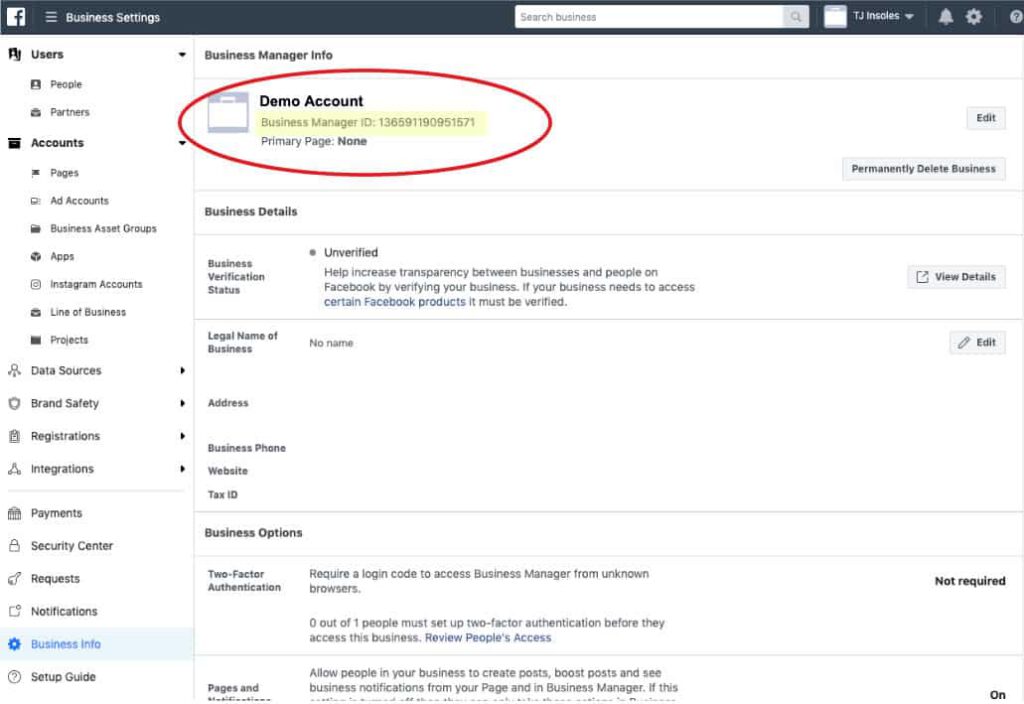
Step 1: Please provide Dstillery with your Business Manager ID. This ID can be found in the Business Info section in Business Settings.

Business Manager ID - Step 1

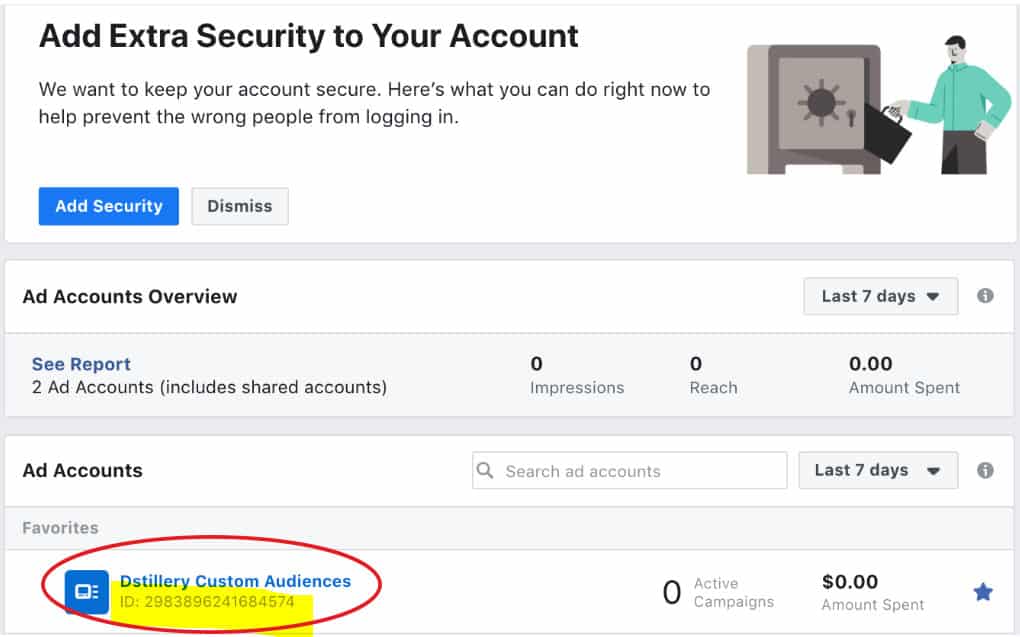
Step 2: Please provide Dstillery with your Ad Account ID. This ID can be found in the Ad Accounts section in Business Settings.

Ad Account ID - Step 2

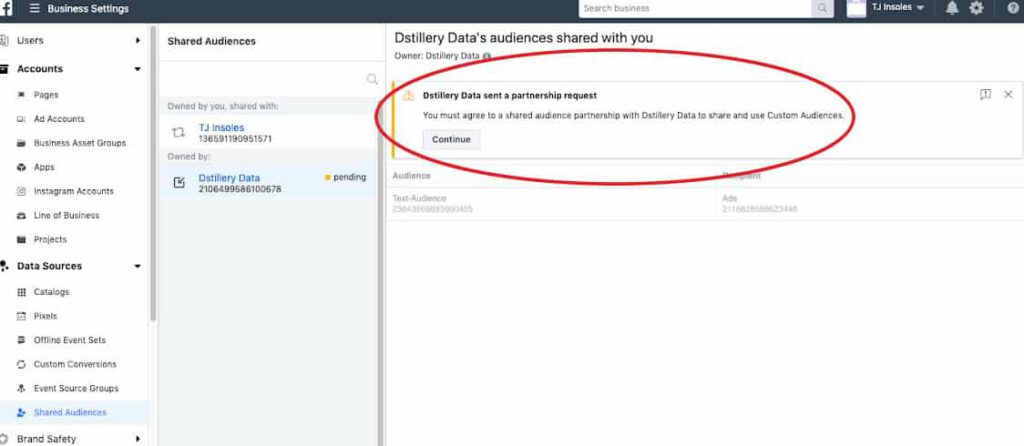
Step 3: You will get a notification that Dstillery Data is sharing audiences with you. The notification will also show up in the Shared Audiences section in the Data Sources dropdown.

Audience Notification - Step 3

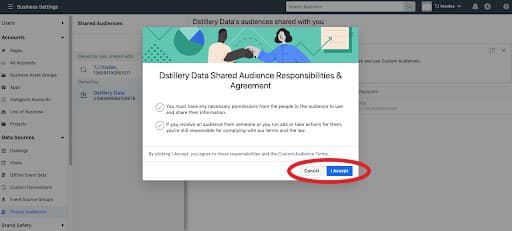
Step 4: A Shared Audience Responsibilities & Agreement popup will appear. Once you hit accept, the Partnership can now begin!

Audience Responsibilities - Step 4

Step 5: Dstillery can now send audiences to your Facebook account. If you go to Assets, then Audiences, you will start seeing Dstillery audiences show up, along with various availability statuses

Custom Audiences - Step 5

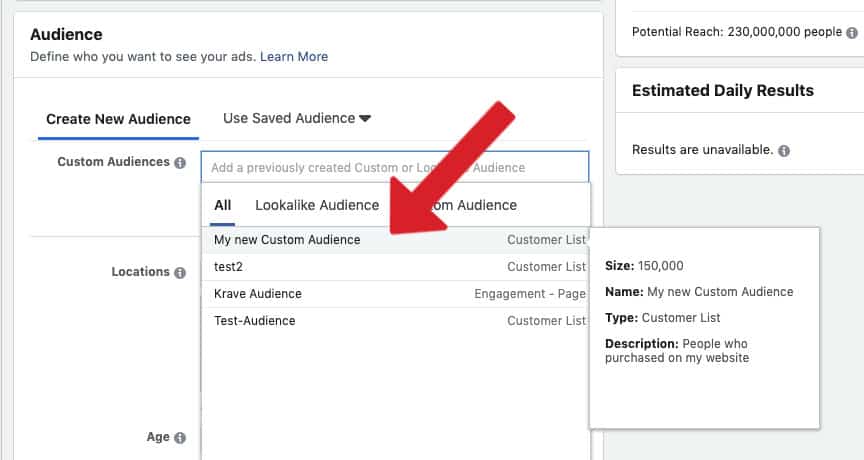
Step 6: When you are creating your campaign in Facebook, you will now see Dstillery Custom Audiences under Audiences > Custom Audiences:

Custom Audiences - Step 6

How To Build Your Facebook Campaigns

Now that your custom Dstillery audiences are available within Facebook Business Manager, you can start building out your Facebook & Instagram campaigns. 

Facebook campaigns consist of three levels: campaign, ad set, and ad creative. We suggest creating multiple campaigns for different target audiences, as well as testing different campaign objectives.

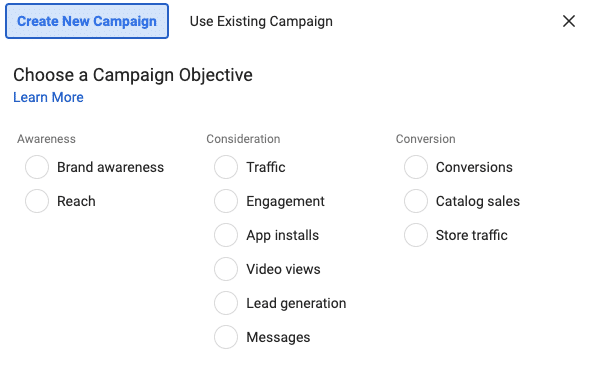
Set a Strategic Goal & Choose Your Objective

Before you begin spending your ad dollars, it’s important to determine your goals and KPIs. Are you trying to build brand awareness? Increase website traffic? Generate more leads and conversions? Some things you should think about before building out your new campaigns.

For example, if you are a sneaker brand announcing a new line of running shoes, you will most likely want to create a campaign optimizing for “brand awareness.”

If you are promoting a limited-time sale, optimizing for “conversions” (aka those in your target audience most likely to purchase) will be the most beneficial.

Facebook Ads Campaign Objectives

Choose a campaign objective that best aligns with your overall advertising goals and is relevant to your target audience.

Build Your Ad Set & Facebook Audience

Since you already pulled in your Dstillery audiences, building your ad set is a breeze! You simply choose your Dstillery audiences from the Custom Audiences section. No need to layer on additional demographics and interests.

Pro Tip: Excluding audiences is a great way to avoid wasting ad spend. For example, if you are running a promo for first-time shoppers only, then you should exclude all existing customers from your ad set.

Launch & Test Your Ad Creatives

You’ve made it to the final step – ad creatives. And boy, do you have options! You can use single images, videos, carousels, or combinations of all the above.

Click here for all Facebook ad specs.

Whether you choose an image or video, try to limit the amount of text overlay. Use a creative that is relevant to your audience, visually appealing, and has a clear call to action (CTA). Be sure to include a value proposition within your ad copy to entice your target audience.

One important best practice to follow is to create multiple ads within your campaigns. While it may be tempting, don’t just stop after you’ve created one image ad! By creating multiple ads, you can easily test variations in copy, imagery, and CTAs; giving you better insights into which ads resonate with your Facebook audience and improving overall performance.

Pro Tip: Ad content should be unique per placement. While you can easily run the same creative across Facebook newsfeed and Instagram stories, that doesn’t mean you should! Take the time to create imagery that is specific to each placement to fully optimize your campaigns and maximize your results.

How To Send Data Back to Dstillery From Facebook Ads

Now that you’ve launched your campaign, it’s time to analyze, test, and refine. There are a few ways to send data back to Dstillery for reporting purposes.

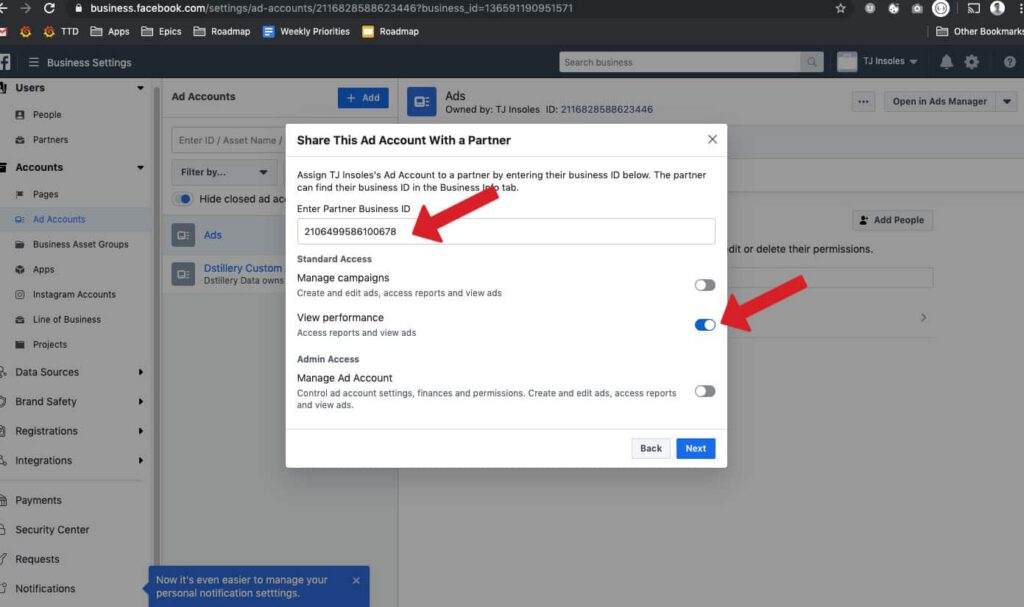
In Business Settings, under Ad Account, you can add Dstillery as a Partner by inserting our Business ID (reach out if you need this). By enabling the View Performance tab, we will be able to monitor the usage of our audiences. If you’d prefer to do this manually, you can also self-report the data to us at the end of the campaign.

Share Reporting

We’re here to help you grow your paid media campaigns with custom Facebook audiences. Please reach out to us if you have any questions.

Dstillery’s New Predictive Social Audiences

Engage Upper Funnel Consumers 72 Hours Before Social Topics Trend

What are Predictive Social Audiences?

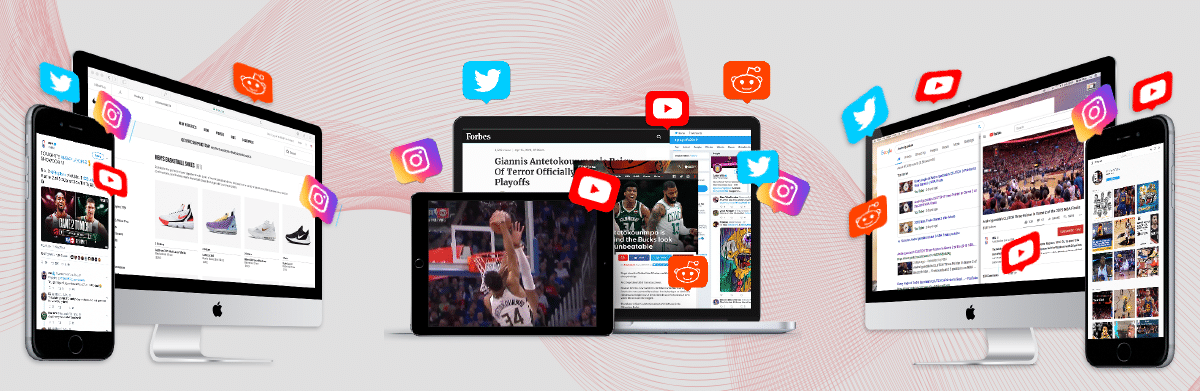
Dstillery’s Predictive Social Audiences are custom audiences built by AI technology based on topics predicted to trend 72-hours before their peak. Data sources including Twitter, Reddit, Instagram, YouTube, and Flickr feed 100 million social posts daily into Dstillery’s custom AI models to create a Predictive Social Audience based on an advertiser’s desired audience segment. Like Dstillery’s other continuously refreshed audiences, Predictive Social Audience members are continuously scored and rescored as conversations and topics change in the social media landscape.

Will Predictive Social Audiences Work for My Brand?

Predictive Social Audiences work for branding advertisers who want the following benefits and the ability to:

  • Discover new customers engaging with content likely to trend
  • Build cultural currency by driving emerging social conversation 
  • Get ahead of trends without chasing them with an audience segment that is always on and constantly updating with AI tech
  • Be top of mind across formats on open web, app, native, audio, and connected TV 

More specifically, Predictive Social Audiences work best for the following Campaign Goals:

  • Reach
  • Awareness
  • Engagement
  • Audience Expansion
  • Relevance with Social Trends

Upper funnel advertisers with the above campaign goals can activate Predictive Social Audiences across all screens and formats like Connected TV, Audio, Native, and Video, everywhere. Please contact us at contact@dstillery.com or your Dstillery sales rep for more information.

A Retail Footwear Advertiser’s Success Story

A major shoe retailer approached Dstillery wanting to insert their brand into pop culture conversations and discover incremental new audiences to engage with their brand. After leveraging Predictive Social Audiences, the advertiser exceeded their KPIs:

  • Click-thru-rate on display was two times above their benchmark
  • New-to-site visits were 95.5% of total visits, which was three times above their display benchmark

The retailer also achieved a halo effect on the parent company’s search performance to drive home the success of using audiences based on predicted social conversations.

Download one-sheet

I Know What You Did Last Summer: Getting Smarter About Reaching Back to School Shoppers

The end of the school year marks a time for relaxing with friends, exploring new destinations, and…shopping for school supplies. Huh? After nine months of early-morning wake up calls, packing lunches, and chasing school buses, the last place one might think to find a parent in the summertime is at a retailer looking for school supplies. Yet, savvy families know that they must start early to find bargain deals on supplies for the next school year. In a 2018 survey conducted by the National Retail Federation, 41% of families reported starting to shop for school supplies three weeks to one month prior to the school year and a whopping 25% of families reported beginning their search for school supplies a full two months prior to the start of the school year.

So Back to School shopping is really more of a season-long affair–far from the jam-packed week of last minute shopping before the first day of school. 

What this means for marketers: reaching Back to School shoppers effectively requires paying special attention to how seasonality influences Back to School shopper behavior.  In designing targeting strategies, marketers can no longer simply rely on indiscriminately advertising half-off promotions a few weeks prior to the beginning of the school year.  This strategy may work fine when the school year looms close, but what about before then?

Here, we set out on a quest for smarter Back to School marketing by analyzing how their behaviors evolve throughout the summer.

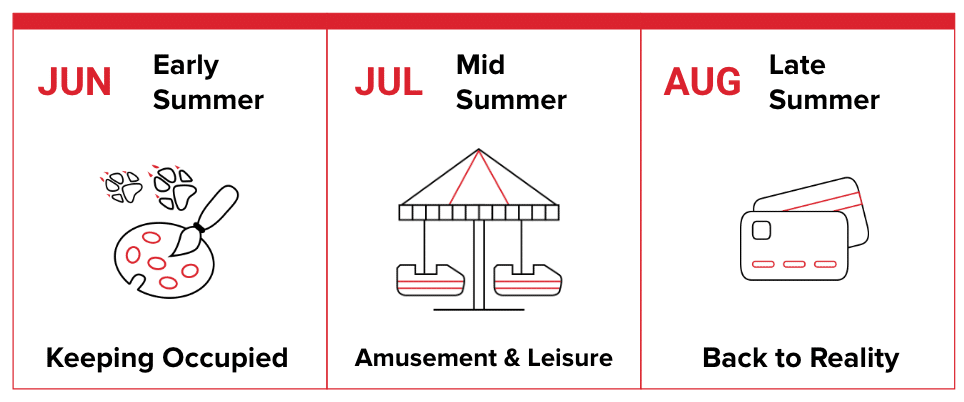
THE THREE STAGES OF SUMMER

Early, Mid and Late Summer mindsets of Back to School shoppers

Our analysis revealed that Back to School shoppers experience three distinct mindsets throughout the summer: Keeping Occupied, Amusement & Leisure, and Back to Reality.  Each of these mindsets are characterized by different browsing habits and activity preferences.

Below, we dive further into the distinct characteristics of these different mindsets and unpack what drives them to shop. Using these findings, we provide a blueprint for how retailers can use seasonal changes in shopper behavior to their advantage, helping ensure they reach Back to School consumers with messaging that resonates and products that best fit their needs.

EARLY SUMMER: KEEPING OCCUPIED

Exploring ways to make constructive use of the newfound free time.

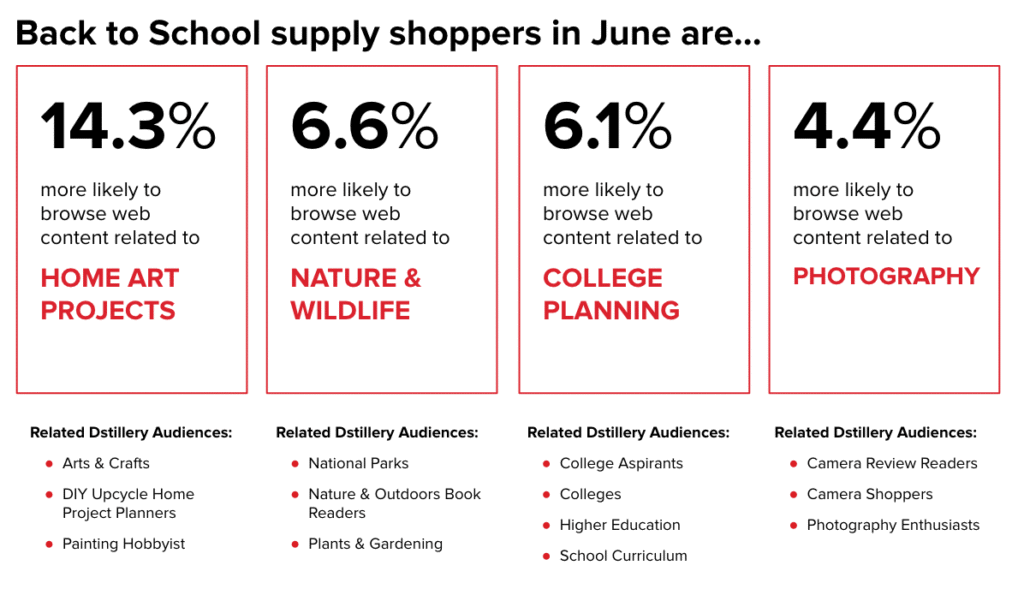
With students facing nearly three months of unstructured free time following nine months of a jam-packed school schedule, parents are looking for ways to help their kids occupy their time productively.  Between picking up a hobby, experiencing the great outdoors, and preparing for life after K12 there is no shortage of ways to stave off an idle mind.

To reach incremental Back to School shoppers in June, we recommend targeting segments related to Home Art Projects, Nature & Wildlife, College Planning, and  Photography.

MID SUMMER: AMUSEMENT & LEISURE

Researching leisure activities, summer reads, and children’s summer programs.

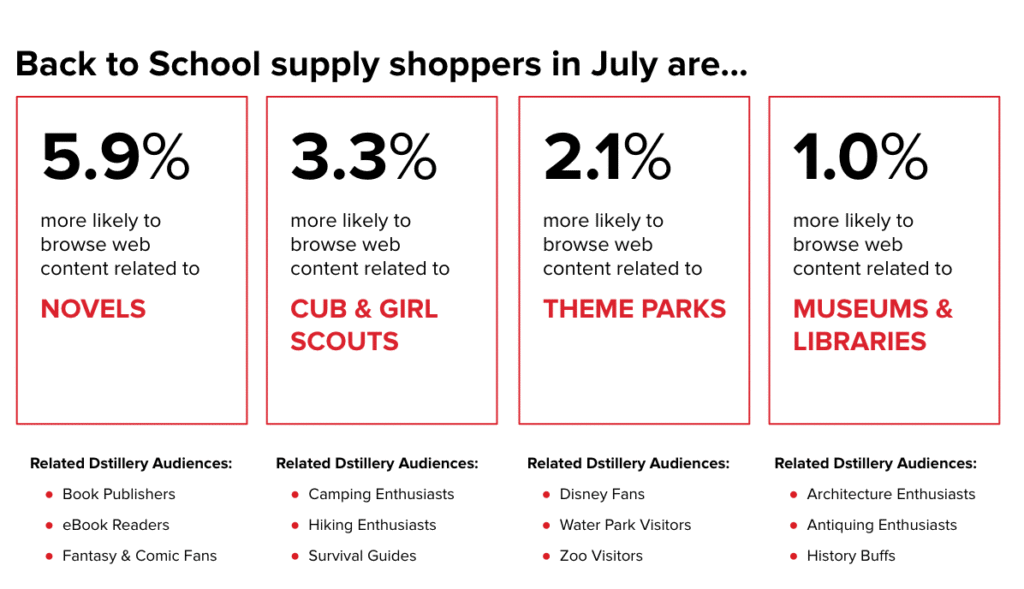
A few weeks into summer, things have slowed down considerably.  The regiments of the school year are a distant memory, instead replaced with a light & breezy air.  In this atmosphere, parents are planning family excursions, picking up new leisure reads, and arranging fun activities for their kids.

To reach incremental Back to School shoppers in July, we recommend targeting segments related to Novels, Cub & Girl Scouts, Theme Parks, and Museums & Libraries.

LATE SUMMER: BACK TO REALITY

Cutting back indulgence and dealing with practical matters.

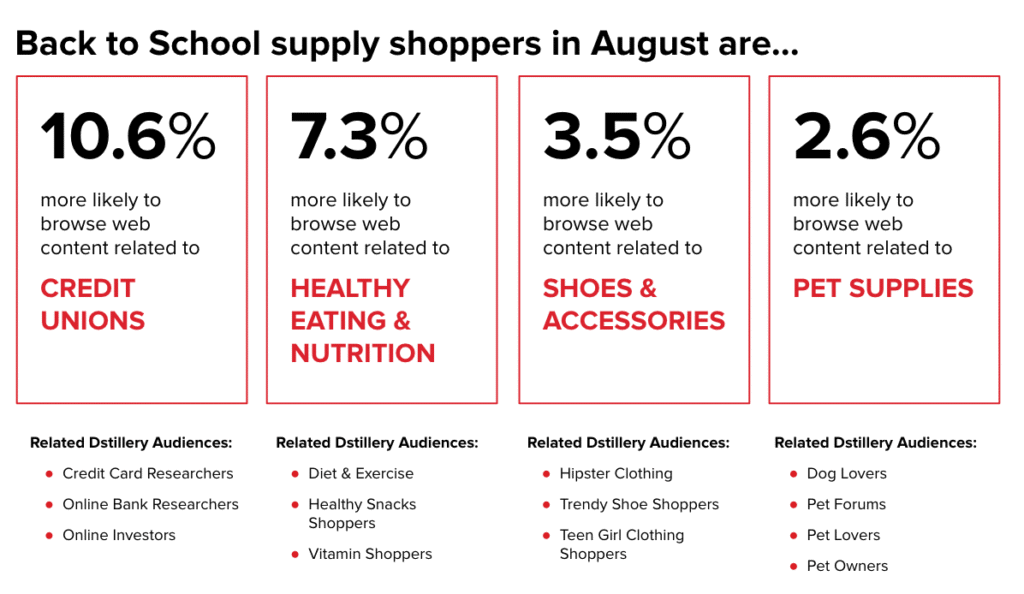
Alas, the impending school year begins to rear its head. It’s time to review the family budget, start buying vegetables again, and stock up on household items in bulk.  And what do you know! The kids grew four inches in four weeks. This calls for a journey to the mall to update their wardrobe.

To reach incremental Back to School shoppers in August, we recommend targeting segments related to Credit Unions, Healthy Eating & Nutrition, Shoes & Accessories, and Pet Supplies.

CONCLUSION

Our findings illuminate the importance of taking seasonal context into account when planning Back to School marketing activations. For any marketer seeking to engage Back to School shoppers, understanding how their behaviors shift at different stages of the summer enables more effective marketing activations. These temporal insights can inform changes in how retailers market their products and help reach incremental audiences.

For example, knowing that Back to School shoppers show a higher likelihood to browse College Planning sites in June and Healthy Eating sites in August, retailers such as Staples can form creative, data-backed strategies to sell more products.  Let’s use notebooks to illustrate this idea. In June, target College Aspirants, College Planning, and Parents of High School Students audiences with a messaging touting notebooks as an essential resource for capturing thoughts during college visits or studying for college prep exams.  Then, in August, target Nutrition Conscious Eaters, Dieters, and Healthy Eating Researchers promoting notebooks as a valuable tool for anyone trying to make a healthy lifestyle change, perhaps serving as a food journal to keep them accountable.

Key Takeaway: Analyzing past seasonal patterns allows marketers to anticipate behavioral changes of their target audience, rather than react to them. Don’t let the Back to School season sneak up on you like a pop quiz – if you study your shoppers over time, your marketing plan will pass with flying colors.

If you’re interested in learning more about our Back to School shopper audiences for your campaign, contact us at contact@dstillery.com.