testCategory: Trends

A data-driven dive into summer travel trends

summer travel data

The Sun hangs high in the sky. You’re working from home. You’re working in the office. You’re daydreaming about being on a beach in Greece or maybe you’re keeping it simple and considering a summer camping trip in Wisconsin. Do people still camp? Are domestic flights more expensive than international? What does the data tell us about the way Americans are spending their summers? We’re going to find out in this summer travel-themed blog that uncovers the web of data that links us all and expands with every passing moment.

2023 Travel Data

In the summer of 2023, 40% of Americans have intentions to travel and 44% are willing to travel more than once. 61% of travelers are keeping their travel plans within the United States, 16% going domestic and international, and 6% solely international. That’s a huge segment of Americans just waiting to pack their bags and jump on a jet or into a minivan and head toward their final destination. On average, 40% of travelers are most often taking trips for outdoor recreation like hiking or snorkeling, a family-related event, or exploring U.S. national parks. It’s important to get ahead of the curve with your marketing plans and look to capture these seasonal travelers with strong awareness and consideration campaigns built around the globetrotting mindset. Curious about what that looks like? Let’s explore some ideas together.

Crafting a Targeting Travel Campaign Strategy

Travelers have one main thing in mind when starting the ideation process of where to go: getting out of the house. Every journey begins with a destination. You can best capture your targets by considering the places they’re likely to go and then accenting your campaign strategy around the adjacent components to their destination. Nearly 39% of American adults say they intend to road trip more than 250 miles from their home this summer. For example, if a family is looking to travel to the beach, it’s best to start with broad strokes like Beach Vacation Enthusiasts, Waterfront Activity Participants, Luxury Hotel Guests, and Boat Enthusiasts to lay the groundwork for your audience optimization. These larger scale audiences are the backbone to a successful campaign because they represent the pillars of your audience’s initial identity and what it will come to be. In the early stages of your travel campaign planning, don’t be afraid to take big swings to bring interested parties with big tentpole audiences.

Leveraging Data to Enhance Consideration Campaigns

As you start to develop more insights into the characteristics of these sunbathing, wave surfing, and beverage-drinking targets, if it’s available, blend in your first-party data to begin to watch these broad stroke audiences evolve and learn more about their intentions. This is a vital part of any consideration campaign as it allows for your campaign to take a defined stance against your direct response goal. By working closely with our data partners and utilizing partnerships with opt-in data providers, Dstillery can weave domain data into our Consideration Solutions and help further map customers not solely based on assumed interest but also by their digital journey and online intentions. Consideration campaigns are where you begin to explore intention – where do these people exist online? What and where are they researching topics based around your brand?

Optimizing Consideration Campaigns for Maximum Results

We may know that they are Beach Vacation Enthusiasts, but perhaps they’re already local to an area like the American Southeast, so we can sharpen by adding in audiences like Myrtle Beach Trip Planners, Florida Atlantic Coast Planners, Beach House Second Home Owners, and Beach Supply Shoppers audiences to hone the signal in your consideration campaign to focus on users with the highest intention to deliver results. Their adjacency to the subject of your campaign based on their internet habits is that it improves Dstillery Considerations Solutions’ effectiveness. It thereby creates a microcosm based on your customers and their digital experiences and serves them ads that will ideally push them toward a real-world action.

This is all to say that campaign planning begins similarly to planning a vacation – with broad strokes that become more and more defined over time until you reach your destination. Nearly 42% of American adults say they intend to travel more this summer than last, so you’ve got to be ready to capture their attention and craft around it with turnkey targeting solutions. Reach out to Dstillery and build tactical, intuitive campaigns and strategies with our data experts today. 

Cannes 2023 recap: reconciling the themes of AI & privacy

cannes 2023

As always, last week’s Cannes Lions International Festival of Creativity was a whirlwind. Over the course of 4 days, the Dstillery team attended dozens of meetings and met with scores of clients, partners and prospects. Overall, the tone of the festival was optimistic, with positive energy and enthusiasm for the changes that are coming to the industry. The discussions of change encompassed two key themes:

AI is going to change everything.

If there was any overarching theme to the entire festival, it was AI, and how ChatGPT will change nearly every step in the advertising supply chain, from creative concepting and production to media strategy & execution. Nearly every panel, every speech, and every meeting touched on the topic, and many were totally dedicated to it.

Privacy is a global trend.

There was a clear consensus that privacy standards will continue to rise all around the world, and that the advertising industry needs to embrace, not resist, this trend. Under the heading of rising privacy standards, there was also a relatively clear consensus that Google will indeed retire 3P cookies from Chrome on schedule by the end of 2024.

The intersection of AI advances and rising privacy standards represents both a moral hazard and an opportunity for our industry. The risk comes from the inevitable temptation AI presents to use more data than less.

Let’s embrace the movement.

A commonly discussed application for AI during the proceedings in Cannes was to enhance personalization, which of course, more often than not, requires user tracking and targeting. Leveraging user data to inform an AI model which produces personalized advertising experiences may violate the requirement for using less user data to meet the rising privacy standards. Not many of the proponents of more personalization addressed how it could be done while honoring the rising privacy standards.

We believe that the advertising community should embrace the explosion in advanced AI tools as an opportunity to enhance consumer privacy. Dstillery’s ID-free® technology does just that. We apply AI to targeting via a data-minimized opted-in panel, rather than applying it directly to user data in the AdTech ecosystem. In short, the way that we approached the problem allows us to provide some level of the promised personalization of AI while honoring user privacy.

It may sound trite to say that the only constant is change. With the rapid advancements in AI, the pace of change is arguably accelerating futher and faster than anything we’ve ever experienced before. The advertising industry has a real-time opportunity to decide how to best embrace this change, putting AI to work to drive innovation, creativity and growth while at the same embracing the movement for greater consumer privacy.

Considering a consideration campaign?

consideration campaign

Building your brand’s consideration campaign is a crucial step for companies trying to catch the eye of prospects throughout the sales process. Programmatic advertising is a key component of making digital impressions on your customer base that will push them toward your product or brand. The consideration phase of the sales funnel is far and wide the most difficult to optimize against. However, it isn’t impossible, nor should you feel intimidated by the prospect of creating a sharpened consideration-oriented programmatic campaign. Dstillery is here to help and break out some of the key points you should remember when building your mid-funnel campaign. 

Understanding customer intent in your consideration campaigns

The first thing to understand about the consideration phase of the sales funnel is that it’s based on customer intent. What do we mean by intent? We know that people like to take vacations. However, the idea of a vacation means different things to different people; some want to end up on a beach in Thailand or check out a national park, and others might want to take a  cruise in the Bahamas. Targeting these people based on age or gender is ineffective and outdated. Great consideration campaigns are built around why people vacation. 

With vacation top of mind, let’s say you have a campaign goal to get people to consider vacationing in Yellowstone National Park. Aside from being a beautiful national park, ask yourself, why would people want to visit Yellowstone? When we dove into understanding the Yellowstone experience and began matching it with our audience taxonomy, we built a base of eight audiences that appeal to the Yellowstone visitor. 

  • Hiking Enthusiasts
  • Camping Enthusiasts
  • Rock Climbing Enthusiasts
  • Sightseeing Travelers
  • Outdoor Enthusiasts
  • Craft Beer Enthusiasts
  • U.S. History Buffs
  • Nature and Outdoor Book Readers

Mapping out a digital journey

But there is more to it than just identifying the habits of these people in our audience taxonomy. We also have to understand their habits from a domain perspective; where do these people go on the internet, what websites interest them, and where is their digital journey most likely to take them? By working closely with our data partners and utilizing partnerships with opt-in data providers, Dstillery can weave domain data into our Consideration Solutions and help further map customers not solely based on assumed interest but also by their digital journey and online intentions. 

Intent-based marketing doesn’t manifest itself insidiously for a customer either. For example, someone looking at hiking boots may then be served an ad for Yellowstone National Park. Their adjacency to the subject of your campaign based on their internet habits is that it improves Dstillery Considerations Solutions’ effectiveness and thereby creates a microcosm based on your customers and their digital experiences and serves them ads that will ideally push them toward a real-world action. You can build this out further too – we know that people who enjoy nature also tend to enjoy craft beer and breweries. Your consideration campaign can grow in reach to include these people as well and serve them ads that usher them down your funnel. By understanding your consumer’s activities, you can continually grow your consideration campaign and optimize it based on what groups are showing interest. 

Using data to optimize

The consideration phase of the campaign is also a key point in which to hone your brand’s message and creative. In this phase, you can see in a very clear way who is engaging with your campaign message and optimize against it. You can create or re-work messages in real-time to guide your narrative. For example, you may notice that American History Buffs are starting to take an interest in Yellowstone and may begin to optimize campaign creative toward that and shift away from Craft Beer Enthusiasts.

Consideration is far and wide the most impactful portion of the sales funnel and the one where most marketers tend to optimize and re-optimize the most due to how critical it is to capture customer interest. That said, it’s important to note that its the place where your investment in programmatic campaigns goes the longest way as it connects passive interest to real conversions. 

Interested in using Dstillery audiences in your consideration campaigns? Let’s chat.

What makes the best brand awareness campaigns? 

awareness campaigns

Building your brand’s awareness is a crucial step for companies trying to make their name in the marketplace. Utilizing programmatic advertising is key to building the foundation for your brand since everyone is always online. While programmatic advertising has a seemingly high barrier to entry, we’re going to break down some of the key components to building a top-of-funnel, awareness-focused marketing campaign.

Programmatic brand awareness campaigns

Programmatic marketing is the perfect entry point for awareness-focused marketing campaigns. Digital advertising offers marketers a variety of media buying options. The most common way to buy digital ads is through real-time bidding (RTB). With RTB auctions, you can access many different kinds of publishers with many types of inventory and audiences. This type of media buying is great for increasing brand awareness because you can get global exposure at a very low price.

Whether your brand is in its early stages or is a marketplace mainstay letting consumers know what you have to offer is undeniably advantageous. It’s important to generate excitement and measure your brand’s reach in the market.

Real-time optimizations

The main benefit of programmatic-based awareness marketing is that it allows your brand to tell its story in a much easier way that is optimized for both reach and cost. Storytelling through programmatic is a data-driven pursuit insofar that advertisers can test and optimize their message by seeing which ads perform best in the market in real-time. The ability to drive and optimize consumer awareness in the moment is an amazing advantage for anyone in the digital marketing space. Your customers are everywhere, and your marketing should be too. People are on their computers or cell phones nearly 9 hours a day and then come home to their smart TVs and tablets for the other 5 hours they’re awake. That’s 14 hours of the waking day where your brand’s message can be a potential customer’s next interest or purchase.

Campaigns that scale

The second and most budget-centric advantage of programmatic advertising regarding brand awareness campaigns is that it provides campaign reach at scale. What do we mean when we say “reach at scale?” Your brand’s reach is directly proportional to how much money your brand invests into the final result. With RTB auctions, you can scale and bid on ad space in real-time, allowing you to see how far your campaign investment goes in the marketplace day by day. The ability to track spend in such a manner allows you to have total control over not just your brand’s narrative but your campaign’s financial investment by being able to optimize against the last week’s or last month’s results.

Actionable analysis and learnings

The last great advantage of programmatic marketing regarding brand awareness campaigns is that when the campaign ends, it allows marketers to understand all of the people who were attracted to their product or campaign and create customer groups from these segments.

This is such a massive win for marketers because it makes the final two portions of the sales funnel – consideration and conversion, so much easier to action against in further programmatic campaigns. By understanding your consumers on a deeper, more demographic level, your brand can craft even sharper and more effective campaigns that speak less generally and more specifically to your target audiences. This information allows every dollar you put into your campaigns to be pushed toward an end result that you control to people that you understand.

Awareness campaigns are the fundamental bread and butter for brand awareness so it’s important to always ensure that you’re exacting the most value when you cast your brand’s widest net. Programmatic ad technology is always evolving to help markets reach their customers in the most effective manner possible.

Reach out and talk to us about optimizing your campaign’s digital capabilities, efficiency, and scalability today.

Tips to launch your 4th of July advertising campaigns

2023-Blog-Image-Size-opt

In the U.S., the Fourth of July is not just a day on the calendar but a massive celebration of independence and gathering of community. It’s also a huge marketing vehicle for brands to capitalize on anything from consumer packaged goods to decorations to travel. Fourth of July’s influence on the American marketing landscape is strong, so it is important to arm yourself and your digital campaigns. Every brand can connect with the holiday in some way, so here are some things to keep top of mind when working on your Fourth of July-based campaigns.

Pre-Holiday Awareness Campaigns Are Crucial

In the leadup to the Fourth of July, it’s essential to position your brand ahead of the competition by starting awareness campaigns as early as April or May. Start with a slow drip campaign or go robust with an evolving marketing narrative to put your product ahead of the rest. Want to be the top dog? Focus on honing your brand’s message and product benefits now.

In 2023, Fourth of July, consumer spending for consumer packaged goods such as food, beverages, and party supplies is expected to be north of 7.2 billion dollars in the U.S. In the months leading up to the holiday, it is crucial to develop brand recognition that resonates with consumers while they are spread thin focusing on other things like planning summer travel, their kids being home from school, and leisure. Americans have an average attention span of 8.25 seconds meaning your brand should focus on capturing their attention with sharp, decisive ads and awareness campaigns that clearly define product value with memorable visuals and distinct benefits that set it apart from the competition.

In-Market Customers Want Your Product

The great thing about the Fourth of July is that the products canonically associated with the holiday, like food, drink, and entertainment, are generally no-brainer purchases for those looking to celebrate. While brand awareness is a massive part of finding success with your campaigns during the lead-up to the holiday, once the week before and of the Fourth of July lands, it’s go time. Consumers will no doubt be out deciding and purchasing products at the store, especially last minute when they’ve realized they forgot something on the way to the barbecue.

The consideration phase is a crucial area for spending in the marketing funnel in the weeks leading up to the Fourth of July – it’s primed for aggressive programmatic spend to put your product in front of the eyes of people who are ready to make both calculated and last minute decisions. Also note that this is the most competitive stage for items in the consumer packaged goods category. Brands will duke it out for ad space, especially alcohol and soda brands. Other fundamental aspects of holiday eating, such as meat brands, will see some competition but remain the most expensive part of the meal due to beef, chicken, and seafood costs rising 30% since 2021. The big takeaway? With a strong awareness campaign and heavy spending push in the second and third weeks before and during the holiday week, your brand will surely perform well amongst the holiday shopping chaos.

Of the Americans that celebrate the holiday, the majority tend to do their shopping in the three weeks leading into the holiday. With that in mind, it’s time to start thinking about the Fourth of July now, rather than later when consumers are begin to settle into familiar brands and patterns.

So, a recap on what we know: Fourth of July 2023 is expected to be a BIG year for competition within the alcohol marketplace as beer alternatives like hard seltzers and kombucha have begun to take up a larger share of the alcoholic beverage space. Hot dogs remain unaffected and surprisingly, spending will grow by 20% as it traditionally has year over year. And would it be a Fourth of July blog without acknowledging fireworks? A purported $2.5 billion will be spent on fireworks this year.

The numbers around this holiday are massive, if not overwhelming, but that doesn’t mean your brand has to watch from the sidelines while the major players take up the space. With a tactical approach to awareness and consideration campaigns, your brand can carve out space for itself during the greatest American holiday in the peak of summer.

Tis the season for holiday shopping trends

Holiday shopping is here. Both advertisers and consumers must be strategic about where they spend their dollars this holiday season. According to Insider Intelligence, advertisers will spend $1.3 billion between October and December this year. Even more importantly, research from 2021 has shown that only 4% of holiday consumers didn’t utilize digital channels to purchase goods. In 2020, retailers chose to deemphasize Christmas holidays in favor of Black Friday and Cyber Monday deals due to the pandemic. Now, budgets are returning to both as holiday spending is expected to surge even amidst inflation.

Lean into Brand Loyalty 

To keep their brands relevant this holiday season, advertisers need to budget toward higher spending and scale across the internet and digital platforms. Native ads, high-impact ads, banner display, and video across all digital devices, from desktop to mobile, will be a crucial playground for those looking to be the king of the hill this holiday season with their profits. Last year, holiday shoppers started buying sooner rather than later, breaking the long tradition of last-minute gift-buying madness.

Brand loyalty programs had a lot to do with this. Brands are pushing customers to skip the door-buster deal fear and hedge their bets on earlier sales. 81% of consumers shopped for specific brands during the 2021 holiday season because they were a member. Notice an increase in ads offering Cyber deals, or even huge sales early, like right-this-instant early. It is no mistake that brands are activating earlier, more often, for the holiday season.

Retail Media 

This heavier spending is leading to the emergence of a subsection of advertising called retail media. Retail media is advertising within the retailer sites and apps that builds and feeds the brand story. This technique uses both a retailer’s omnichannel properties and data each time a consumer comes into contact with the brand –  from being on the brand website on their phone to being physically present in the store –  to serve them content relevant to their desired experience with the brand.

Brands like Amazon are embracing this advertising method and looking to capitalize on the digital-first experience by building their brand presence into worlds for the customer to inhabit. These worlds are filled with deals and media content that indulges each area where the customer wants to interact with the brand. Brands are expected to grow their retail media spending by 27% moving into 2023 as consumers seek more authentic connections with the brands they consume. 

What now?

What does this mean for digital marketers? Invest in your brands! This requires leveraging your brand’s first-party data to make informed decisions about where the customer wishes to adventure within the brand world. Building an omnichannel marketing campaign is the absolute baseline for success during the holiday season. Taking things to the next level by investing more in a specific brand’s retail media is a way to seal the deal and form a perfect digital-to-physical relationship between your brand and its customers. 

If you’re ready to put your first-party data to use, contact us today.

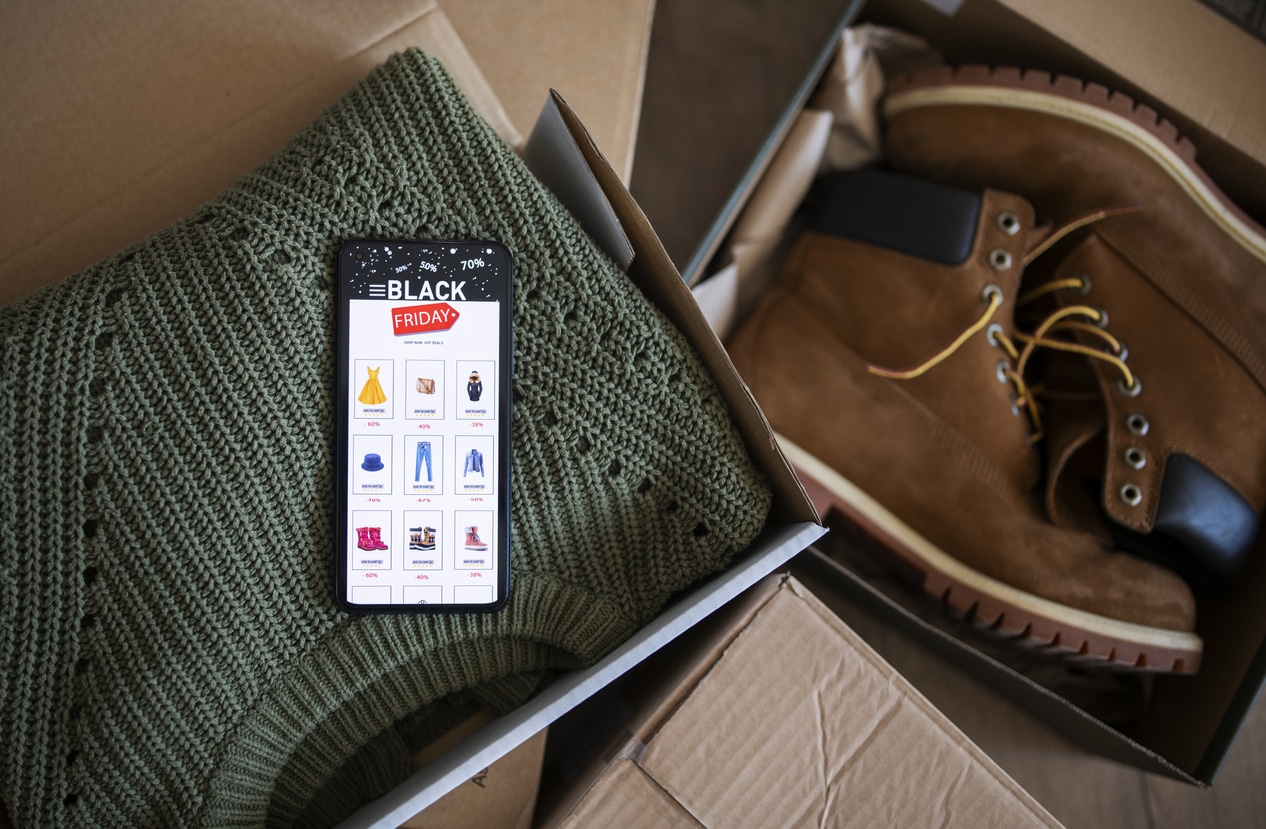
Preparing your Black Friday advertising strategy

Black Friday and its sibling, Cyber Monday, are almost here. These two have become the premiere retail days of the year and now more than ever, it’s time for brands to prepare their campaigns. Curious about the best ways to approach campaigns for the biggest retail weekend of the year? Look no further.

Lead with Data

More important than any catchy slogan or meme is data. Does your brand resonate in market? Who are the customers? What do they want? Why do they want it? The foundation of any successful campaign is data analysis and segmentation to reveal the real customer story behind your brand. Figure out who your customers are, understand their behaviors, and build around these data points. 

Last year, despite the surging COVID variants, Black Friday and Cyber Monday broke several online retail records with over $200 billion spent online over the entire holiday season, another $100 billion spent during Cyber Week, and $9 billion spent on Black Friday alone. To put this into perspective, Black Friday sales figures clocked in at $6.2 billion in 2018, $7.4 billion in 2019, and $8.9 billion in 2020.

Although last year was a record-breaking holiday shopping season overall, the average eCommerce conversion rates dropped in 2021 by over 20%, landing just under the 2019 number. Curious about more? A deeper analysis of over two billion eCommerce store sessions every single week showed that the average conversion rate globally for Black Friday in 2021 was 3.2%, compared to 4.5% in 2019. While a 1.2% drop seems insignificant as a number, for marketers, this means brand messages need to speak louder to customers, lest a brand is left behind. The US scored slightly better than the global average, with conversion rates at 3.6% in 2021, vs. 4.3% in 2020. Nonetheless, that doesn’t mean we can rest on our laurels. It’s hustle time. 

Be Seen or Be Left Behind

If you’re not first, you’re last, and absolutely no one wants to lose. The weeks before Black Friday and Cyber Monday are all about honing your brand’s perfect message and serving it over and over again. This isn’t the time to scatter-shot a hundred different ads with different messages. This is the time for a solid message and driving it home. Reduce your campaign budgets to focus on only the best-performing ads and maximize spend in those areas. It’s vital for your brand to produce and finalize creative early on and allocate budgets toward success. Is your brand worth shouting about? Prove it in your marketing campaigns. 

Many brands are shifting their Black Friday sales as early as late October, while others begin offering promotions in early November. 75% of retailers surveyed in 2020 said they offered deals before Black Friday, with some lasting several days or weeks. 83% of holiday shoppers stated that they started their holiday shopping earlier than Black Friday, and with the persistent economic uncertainty, it is likely that 2022 will bring in the same.

Does Google’s cookie retirement timeline matter anymore? 

Google delays cookie retirement… again.

This week, Google announced that it would once again delay its retirement of third-party cookies from the Chrome browser. Originally planned for 1Q 2022, Google had shifted the timeline to 4Q 2023 last June. Now, it is targeting
2H 2024.

Why the delay?

The reason Google gave is that its own post-cookie solutions, known as the Privacy Sandbox, will not be ready in time to provide the industry with a viable alternative to cookies by 4Q 2023 – a requirement for regulators focused on Google’s market power.

A further delay is not wholly unexpected. In fact, it has been consensus for some time in the programmatic ad industry that Google would not meet its timeline, and many believe that cookies will live on indefinitely.

But the industry momentum behind new targeting technologies is not exclusively about Google’s plans for cookies. Indeed, that is only the most visible element of a bigger, more fundamental industry movement towards privacy-safe digital advertising technologies, a movement that is unlikely to abate.

What does this mean for advertisers today?

That does not mean that we think advertisers ought to stop using cookies. Indeed, our point of view has been that advertisers should use that technology for as long as it is available, if it is delivering value for them.

It does mean, though, that we believe that advertisers should also be leveraging — or at a minimum, testing —the new technologies that the privacy wave has inspired. Among those technologies, there may be something better than cookie-based solutions that brands should be using today instead of or in addition to them.

Cookieless targeting is available now.

At Dstillery, we are super-proud of our cookieless targeting solution, which we call ID-free Custom AI™. The patented technology uses aggregate behaviors of consented users (from, say, a panel) to make predictions about what ad inventory is likely to convert for a specific brand. The accuracy of those predictions is on par with the accuracy of our high-performing user-based audiences, despite having no user histories and no ID in the bid request. And all of this at the scale that advertisers need.

ID-free has had a strong reception from the market and has unlocked a wave of innovation and growth at Dstillery. We have developed an ID-free targeting solution for the healthcare industry, which we call Custom Patient Targeting, that delivers privacy-compliant but highly accurate, scaled digital targeting to healthcare brands. We have launched targeting in new forms beyond user-based audiences, including custom bidding algos and Deal-IDs. And we have seen intense initial interest in ID-free from advertisers in Europe, where user targeting is constrained by GDPR.

Whatever Google’s timeline, Dstillery is well positioned today with the combination of best-in-class ID-based audience targeting products and easy-to-activate ID-free solutions that provide scale, performance, and precision in a privacy-safe way. Those solutions are available for activation here and now, and drive better performance than the most widely used cookie-based audiences.

The wave of privacy-inspired innovation that is underway will keep on rolling, regardless of whether cookie retirement happens or not. Advertisers would do well to ride that wave.

A+ strategies for education marketing

For education marketing, 2022 is less about finding new marketing tools and more about optimizing existing campaigns to adapt to the changing digital landscape. This year, education marketers have invested more in expanding reach than any year before due to factors like social media marketing, crowdsourcing, and micro-influencer marketing. Even more exciting is that almost everyone is targeting the same demographic: Gen Z. Whether it’s running enrollment-based marketing campaigns or conquesting new students, there has never been a better time to be in education marketing.  And, with 36% of campuses seeing a fall in campus visit requests, universities and other higher education institutions are adopting digital marketing to enhance their student recruitment.

Appealing to Gen Z

Not only was higher education marketing conquesting Gen Z, but they were also adapting to Gen Z students in lockdown. They leverage videos, post photos, and share relevant written content to help students make informed decisions. 20% of the Gen Z students said that YouTube videos play a significant role in their enrollment decision. It has been said that connecting with Gen Z can be difficult if not approached correctly. Gen Zers have also been accused of having a short attention span, not checking emails, or distrusting brands. While all of these are valid criticisms, they are also the most logged-on generation EVER and are willing to become vocal advocates for anything that they deem valid. 

Education Marketing without Cookies

In 2020, Google announced its plan for the retirement of third-party cookies and has since moved the timing to late 2023. However, one thing that didn’t go unnoticed was Google ending the production of their annual search terms report. This report was a key source of data that helped digital marketers across industries optimize campaigns, queries, and keywords. Shortly after in 2021, Facebook and Apple made it harder to target users with cookie-based ads. With worldwide digital ad spending expected to rise to $441.12 billion in 2022 (making up 58.7% of total media spending), it becomes more important than ever to ensure that campaign scale and reach are as precise as possible. As we inch closer to a cookieless future for digital targeting, education marketers can benefit from utilizing Dstillery’s ID-free targeting solutions to help replace the loss of scale and reach in their campaigns. 

Research also revealed that a typical educational institution spends 11% of its annual revenue on education marketing and digital marketing activities. With that in mind, it’s best to focus on precise and ready-to-scale solutions to drive brand growth. Combining your digital marketing due diligence with expanding the subject matter of your digital presence is a sure-fire way to attract not only parents of students but the students themselves. To be an institution now is about more than name recognition; it’s about being compelling, showing that you have a perspective, and are an attractive place to continue education. 

Sail away – Summer travel is back and so is traveler data

Whether you are taking a short vacation to the cabin or shipping off with the whole family off to a Hawaiian beach, this summer is already proving to be explosive in terms of increased travel. Do you ever wonder how much data plays into travel marketing? We do, but of course we do, we’re an audience solutions and data science company. Travel marketing is set to accelerate by 36% in 2022. Travel ad spend is set to grow at six times the normal rate of other industry advertising spend, with more growth expected in key markets such as the UK, US, and Germany.

In the past two years, travel and traveler data have changed dramatically across the globe. The ways people are engaging with the world around them are shifting too, leading to exciting new ways to look at the habits and intentions of citizens everywhere. 43% of travelers claim they enjoy experiences more than things. That’s incredible! It comes as no surprise that over the last few years of on-and-off lockdowns, people are looking forward to reinvigorating their lives with new, exciting moments. What is equally interesting is that those who are traveling have others’ – and the planet’s – well-being in mind as well, with 72% of people who travel believing in “sustainable traveling methods.”

Shifting Trends

These shifts in traveler sensibilities can lead marketers to hedge solid bets on focusing campaigns on digital and physical customer experiences. Using traveler data to create and deliver informed consumer-centric activities will help travelers feel as though they are living their lives to the fullest. In addition, it creates an emotional connection between travel aficionados and travel marketers. Travelers have a moment in time that they can tie back to their experiences with your brand that, in return, makes each consumer feel like they are the center of the marketing strategy itself. This physical-to-digital throughline has prompted a major shift to digital ad spend. Travel brands alone have increased their digital advertising spend from 63% in 2020 to 70% in 2023, driven by the rise of travel apps and digital concierge services.

At the end of the day, before the journey begins, travel data is one of the richest areas within which marketers can work. It’s filled with opportunities and exciting new territory. From resurging budgets to a heavier focus on consumer experience, there has never been a better time to get to know your customer. Summer travel is near pre-pandemic levels, and most travelers plan to spend at least as much as they did on their 2019 vacations. Summer travel in 2022 will be shaped by the continuing surge of remote work, interest in private rentals, excitement and relaxing of flight, and the expectation of flexibility.