testTag: id-free

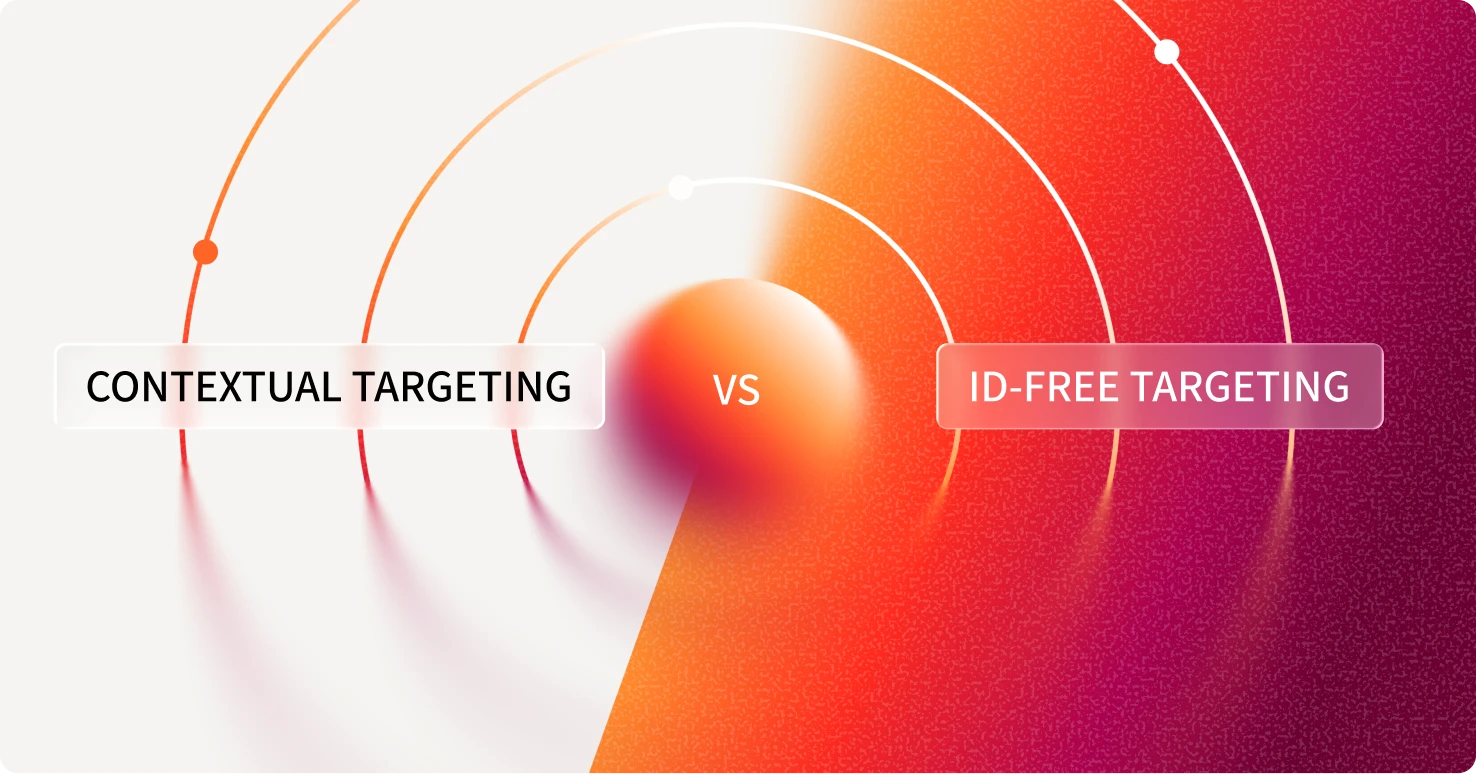
How Does ID-free® Differ from Contextual Targeting?

Back in January 2020, when Google first announced its intention to deprecate third-party cookies, marketers and advertisers started exploring alternative strategies to reach audiences effectively. And while third-party cookies are technically still here, the need for new privacy-safe targeting solutions remains.  

Two popular approaches are ID-free® targeting and contextual targeting. While both methods help deliver privacy-friendly advertising, they are distinct in how they operate and how they identify the best audiences.

Understanding ID-free Targeting

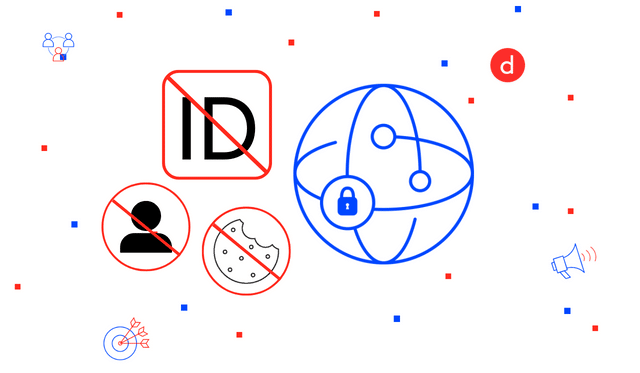
Dstillery’s patented ID-free targeting is a revolutionary technology that employs a totally different approach than basic content analysis. ID-free targeting is rooted in data science and machine learning, leveraging sophisticated algorithms to find the right audiences without relying on any form of personal identification, cookies, or device IDs. By analyzing the aggregated behaviors of an anonymous consumer panel, such as browsing behavior, content consumption, and time of day, ID-free targeting finds your best audiences based on behavioral inventory signals. What’s more? ID-free predicts which sites are likely to convert for your brand without any user profiles or tracking.

The power of our ID-free technology lies in its ability to be adaptive and intuitive. It allows advertisers to reach users who are most likely to engage with their messages, based on patterns of behavior that indicate interest, rather than matching specific topics or keywords. This level of precision not only enhances campaign performance but also meets the growing need for privacy-safe solutions.

What is Contextual Targeting?

Contextual targeting is an advertising method that involves placing ads based on the content of the webpage, or the context in which the ad is served. For example, an ad for gym clothes might appear in a blog article about workout routines. This approach uses keywords, page topics, and sentiment analysis to ensure that ads align with the content that users are currently viewing.

While contextual targeting can effectively place ads in relevant environments, it is limited by its reliance on immediate content. It does not account for user behavior beyond the current page the way ID-free does which will cause advertisers to miss out on reaching pertinent audiences.

Contextual targeting is a good way to understand the keyword clusters an audience member might search for along their digital journey. However, if you craft a deep profile of understanding around your audience, only a tiny fraction of that audience will be targeted by contextual solutions. 

Key Differences Between ID-free and Contextual Targeting

ID-free technologyContextual Targeting
Audience PrecisionLeverages complex data science techniques to identify ideal audiences based on anonymous behavioral signalsMatches ads to specific content, ignoring interest patterns or user journeys 
Privacy StandardsPrivacy-safe, does not rely on any personal dataPrivacy-safe 
AdaptabilityDynamically adjusts to shifting behaviors and trends in real-time, enabling brands to stay relevantTied to specific page content and may not capture broader audience interest shifts

Choosing the Right Solution for Your Brand

As more and more people opt out of cookies, it’s crucial to understand the differences between ID-free and contextual targeting. While contextual targeting is effective in aligning ads with relevant content, ID-free offers a powerful alternative for brands and their agencies aiming for audience precision without sacrificing privacy. 

If you’d like to test ID-free targeting in your next campaign, reach out to get started.

FAQ: ID-free®

Explore how Dstillery’s ID-free® targeting, an AI-powered technology that predicts ad impressions without user tracking, can enhance your programmatic campaigns in our frequently asked questions.

What is Dstillery’s ID-free® targeting?

ID-free is an AI-powered targeting technology that predicts the best ad impressions for a brand without any user tracking.

What problems does ID-free solve?

ID-free delivers performance and scale for advertisers’ programmatic campaigns. It also solves user privacy issues by not tracking users or creating user profiles. This makes ID-free a perfect solution for cookie deprecation and any privacy laws or regulations, including GDPR.

What are the use cases for ID-free?

ID-free is proven to drive both performance and scale. It can be modeled and optimized across the marketing funnel for most key performance indicators (KPIs), but it is most commonly used for upper-funnel campaigns driving qualified reach. By adding predictive bidding on The Trade Desk, it can also deliver up to 2.5x the performance of cookies for mid- and lower-funnel campaigns (more on this below).

What makes ID-free different from competitors’ solutions?

ID-free solves problems like performance, scale, and privacy for advertisers today. It’s not contextual nor an alternative ID; it’s patented technology in a category of its own.

ID-free uses AI to learn privacy-safe browsing patterns and applies these insights to inventory targeting. Think of it like this: ChatGPT understands words based on their use in a sentence. Similarly, ID-free understands website visits based on how they appear in browsing patterns. The result is privacy-safe behavioral targeting that reaches any display, in-app, or CTV ad impression with or without IDs.

How can I activate ID-free?

Partnering with Dstillery lets you choose the best ID-free activation method for your brand.

Activate via:

PMP directly on your DSP.

Predictive Bidding supported by The Trade Desk. Rather than making binary ‘buy’ or ‘don’t buy’ decisions, our AI predicts the precise value of each impression to your brand and exactly how much you should pay for it, maximizing every ad dollar.

Contextual Integration found in The Trade Desk’s contextual marketplace.

How do I get started?

You can buy off-the-shelf ID-free audiences today on your DSP. If you’re looking for a custom, first-party data-powered ID-free audience, contact your Dstillery representative today or click here to get in touch.

Exploring Predictive Behavioral Targeting: What It Is and How It Works

In the fast-paced world of digital advertising, the ability to anticipate customer behavior isn’t just an advantage — it’s a game-changer. Predictive behavioral targeting offers advertisers a powerful way to unlock this potential, ensuring ads don’t just reach an audience, but the right audience at the right moment. But how exactly does predictive behavioral targeting work, and why should it be a part of your advertising strategy? In this blog, we’ll dive into the fundamentals of behavioral targeting and how predictive models can supercharge your campaigns.

Understanding Predictive Behavioral Targeting

What is behavioral targeting, and how does it differ from other forms of advertising? Simply put, behavioral targeting is a technique that uses data from a user’s online behaviors — such as search terms, website visits, or online purchases — to show relevant ads to individuals. The goal is to ensure the right message reaches the right person at the right time. 

However, predictive behavioral targeting takes this a step further. It involves using machine learning algorithms and AI to predict future behaviors based on past actions. So, instead of just responding to customer behavior after it happens, you’re anticipating it, offering a more personalized and timely experience without compromising user privacy. 

Examples of Behavioral Targeting

For example, if users frequently visit travel blogs and airline websites, predictive behavioral targeting might serve them ads for vacation deals, travel insurance, or hotel stays. Similarly, if someone has shown interest in fitness equipment, they may start seeing ads for gym memberships or nutritional supplements.

With predictive behavioral targeting, advertisers can go beyond simple demographic data and tap into the evolving preferences and needs of their audience, ultimately increasing engagement and conversion rates.

To learn more about how behavioral targeting is different than contextual targeting, click here

How Predictive Behavioral Targeting Works

The mechanics of predictive behavioral targeting rely on data analytics, machine learning, and AI. By analyzing massive datasets, algorithms can identify patterns in user behavior and predict future actions. 

Here’s a breakdown of how it works:

1. Data Observation: The process begins with collecting and observing data from various sources such as website interactions, purchase history, search queries, and social media activity. This data is critical for building a profile of each anonymous user.

2. Data Segmentation: Once the data is collected, users are segmented into different groups based on shared behaviors or characteristics. For example, users who frequently visit luxury car websites would be grouped as “high-end car buyers.”

3. Prediction Models: Using machine learning algorithms, the targeting technology then predicts what actions users in each segment are likely to take. For instance, it might predict that a user is likely to purchase a product within the next 30 days based on their previous browsing habits.

4. Ad Delivery: Finally, personalized ads are delivered to these segments, ensuring the right message is sent at the right time, boosting the likelihood of engagement and conversion.

Benefits of Predictive Behavioral Targeting

Now that we’ve covered how it works, let’s look at the benefits of using predictive behavioral targeting in your advertising campaigns. This advanced form of targeting offers multiple advantages for businesses looking to optimize their existing and new ad campaigns, no matter the vertical or campaign objective. 

1. Increased Personalization: Predictive behavioral targeting allows for a more tailored approach to advertising. By understanding a user’s past behavior and predicting their future actions, brands, and agencies can create ads that resonate on a personal level, improving engagement rates and reducing wasted ad spend. 

2. Higher Conversion Rates: With highly personalized ads, customers are more likely to take action. Whether clicking on an ad or making a purchase, behaviorally targeted ads are proven to increase conversions compared to generic, one-size-fits-all campaigns.

3. Better Resource Allocation: By focusing on the most relevant audiences, brands and agencies can spend their ad budgets more efficiently. Rather than casting a wide net, predictive targeting ensures that resources are directed toward users who are most likely to convert, leading to a higher return on ad spend.

4. Improved Customer Experience: By anticipating the needs of users, predictive behavioral targeting can enhance the overall customer experience. Ads are no longer seen as intrusive but as helpful suggestions based on individual preferences.

Getting Started with Predictive Behavioral Targeting with Dstillery

If you’re ready to implement predictive behavioral targeting into your marketing strategy, Dstillery can help. Our patented ID-free® targeting technology is the industry’s only predictive behavioral targeting technology without IDs. It delivers scale, performance, and privacy for advertisers’ campaigns by using AI to predict the best impressions without user tracking. 

With ID-free, you can reach high-value audiences without relying on third-party cookies, ensuring your campaigns stay ahead as more and more users opt out of cookies. Start delivering ads that resonate with your audience and drive meaningful results.

Contact us to get started. 

Ready for a Cookieless Future? Check Out Our ID-free® Testing Guide

With cookie deprecation and cookieless testing top-of-mind for many media buyers, here is a quick overview of the best ways to set up and test Dstillery’s ID-free®, the only behavioral targeting solution without IDs. 

ID-free is a first-of-its-kind targeting technology that delivers performance, privacy, and scale by predicting the value of an impression to a brand without knowing anything about the user. This patented technology uses AI to learn from browsing patterns detected in de-identified opt-in panel data, ultimately answering the question: When someone visits a site, how likely will they be interested in your brand’s message?

Audience Definition

The first step is defining your target audience in your display, search, or CTV campaign. If you have used an ID-based Dstillery audience in the past and found it successful, you can simply request an ID-free version of the audience. If you haven’t, you can use a variety of signals such as first-party data, search terms, URL lists, or our catalog of thousands of pre-built audiences to seed your ID-free model.  

Campaign Setup

One of the most common pitfalls we see with testing is not allocating enough budget and time to allow the model to perform and optimize. We recommend three months for a proper cookieless test to truly understand how the audience performs against your KPIs. Beyond awareness metrics, ID-free excels in cost-per metrics such as:

  • Cost per action (CPA)
  • Cost per click (CPC)
  • Cost per complete view (CPCV)
  • Cost per site visit (CPSV)
  • Return on ad spend (ROAS)

In terms of budget, we recommend a $30,000 monthly budget in media – split out evenly between ID-free and ID-based versions of your audience – without highly restrictive inclusion lists and operating all hours of the day. These campaign parameters will allow you to truly understand and optimize your ID-free campaign with the most information available throughout the testing period.

Make the Most of Your ID-free Test

Our experienced Client Success teams can help you through all the details of creating a proper A/B testing framework. Beyond campaign parameters, to properly assess ID-free performance, efficiency, and scale, we recommend an A/B testing approach by running both ID-based and ID-free audiences in parallel. We recommend creating one line item for your ID-based audience and one for your ID-free audience. When creating these line items, try duplicating them rather than creating them from scratch. This ensures that various settings in your line items are identical, except for the singular variable (ID-based vs ID-free audience) you are testing. Also, since our industry still uses third-party cookies for attribution KPIs, we recommend targeting trackable Chrome inventory for both line items. 

Bonus Test to Assess Performance Outside of 3rd Party Cookies

Using conversions measured on trackable inventory, Dstillery can model the conversion rate per site across all domains specific to the campaign. Using this data, we can understand the performance of impressions delivered on inventory with no trackable identifiers. To learn more about this measurement, read our case study with Tombras, where we drove 2.5x more conversions than traditional cookie-based targeting.

Ready to test ID-free? Amazing. It’s available on every DSP. Contact one of our representatives to get started today.

Cutting the AdTech clutter: ID-free® is just that – free of IDs

ID-free®

This week, I’ve had an unusual amount of time to think about AdTech terms, as in “How clear is our industry?”, “If not clear, is that intentional?” and “Why such an overdose of relentless acronyms?”

With no shortage of alphabet soup in AdTech, it shouldn’t surprise anyone that our industry is often adrift in a sea of verbal confusion.  Imagine if each company in our grand Lumascape were to take the “Programmatic Oath.”  Much like Medicine’s Hippocratic Oath, we’d promise to uphold ethics, speak clearly, and define simple reasons behind our brand names (e.g., “Dstillery – the DS is for Data Science”).  We’d flat-out avoid the buzzwords.

The same standard should be upheld when distinguishing between two, three, or seven things that all sound like one.  Take, for example, the oft-used and seemingly benign term “platform”.  With DSPs, DMPs, SSPs, and CDPs, how does shortening to the word “platform” help get anyone’s point across?

And what’s all the industry buzz about ID-free?

Unless you’ve been living under a rock for a few years, ignoring the clamor for cookieless and ID-free ad targeting has been impossible.  The accelerating noise level won’t be put off by anything that Google does or doesn’t do, nor will any other industry titan “solve this” for our whole ecosystem. At Dstillery, we decided to take Privacy matters into our own virtual hands and boldly go where no other AdTech company has gone.  We invented a truly ID-free® technology that is now the only ad targeting tech of its kind on the market that’s truly without identifiers.  No alternate IDs, no ID-based probabilistic IDs, no bait-and-switch fingerprinting tactics.  And unlike contextual, we’re not reading words on a page.  Instead, Dstillery’s ID-free uses predictive behavioral signals to understand the best inventory moments on a given website.

Will the real ID-free please stand up?

You’re looking to cut through the clutter.  You’ve heard enough noise about whose solution is the “real ID-free”.  Now, we have something for you and you don’t have to just take our word for it.  That’s because at Dstillery, we’ve earned both a patent* for our tech and the registered trademark for our name.  Yes – The USPTO – unconfined by all the shackles and shortcomings of AdTech vernacular – has definitively decided that our ID-free is THE ID-free.  

Show me the Money.

If you’re a senior media professional in a programmatic agency, you and your Brand Marketer counterparts control your digital media budgets. Based on your campaign’s goals and your values on Privacy, you may be interested in finding an ID-free ad targeting solution that performs on par with the ID-based stuff.  And as such, you have choices.  We invite you to test drive our ID-free.  Compare it to ID-based.  Test both of ours together to gain 80% more reach.  Scour the market to find other ID-free wannabees.   

We think you’ll find that nearly one hundred of the Fortune 500 and a monthly average of 150 major media agencies can’t be wrong.  We’ve got something and we want to share it with many more of you.

*U.S. Pat. 11,068,935

What is De-Identified Data and How Can It Benefit Your Business?

Marketers are constantly facing new challenges in reaching target audiences while adhering to strict data regulations, especially as more and more consumers opt out of cookies. De-identified data offers a powerful solution, allowing marketers to collect and analyze valuable insights while protecting consumer privacy. By removing personal identifiers, like names and contact information, businesses can still create personalized campaigns and improve marketing strategies while staying compliant with laws like GDPR and CCPA.

Dstillery is leading the way with our ID-free® targeting technology, which helps marketers reach their audience without using personal data or cookies. Instead, ID-free uses advanced AI technology to create accurate audience targeting that respects privacy.

Here, we’ll explore de-identified data, how it’s generated, and how it can enhance your marketing efforts while building consumer trust.

What is De-Identified Data?

De-identified data is information that has been processed to remove personal identifiers, such as names, addresses, or social security numbers. This ensures that individuals cannot be readily identified from the dataset. By transforming sensitive data into an anonymous format, businesses can maintain privacy while leveraging valuable insights for decision-making and analysis.

For marketers and advertisers, de-identified data provides a way to understand audience behavior, preferences, and trends without compromising consumer privacy. This approach not only ensures compliance with data protection regulations but also helps build trust with consumers who are increasingly concerned about how their data is used.

To learn more about how de-identified data fits into cookieless advertising, check out our FAQ on ID-free targeting

Why Is De-Identification Important?

Data de-identification is critical for protecting consumer privacy. By safeguarding sensitive information, organizations can mitigate the risks associated with data breaches, unauthorized access, or misuse of personal data. This protection is essential for maintaining regulatory compliance under frameworks like GDPR, CCPA, and HIPAA.

Benefits of Using De-Identified Data in Marketing

Using de-identified data for your advertising efforts offers numerous benefits, including:

  • Enhanced Privacy Compliance: Avoid potential fines or penalties by adhering to privacy regulations
  • Improved Consumer Trust: Show customers that you prioritize their privacy by using de-identified data responsibly
  • Accurate Insights: Access detailed audience reports and behavioral insights without compromising personal identifiers
  • Scalable Solutions: Implement strategies that work across regions and industries without the need for personal data

De-identified data reports can help businesses refine their marketing strategies while maintaining the integrity of consumer privacy. Discover how Dstillery’s ID-free technology leverages these benefits to improve targeting precision in a privacy-first world. 

How Dstillery Uses De-Identified Data

Our patented ID-free targeting solution is a prime example of how de-identified data can be used effectively in marketing. By leveraging advanced AI algorithms, we create audience insights and precision targeting without relying on personal identifiers or cookies. This approach allows digital advertisers and marketers to:

  • Reach their ideal audience with confidence and without cookies
  • Deliver personalized campaigns that respect consumer privacy
  • Access de-identified data reports that offer actionable insights

Our commitment to privacy and innovation sets us apart in the advertising industry. Learn more about how ID-free targeting can enhance your advertising strategy.

Driving Success 

De-identified data is a vital tool for businesses looking to thrive in a privacy-first, cookieless advertising ecosystem. By understanding what de-identified data is and how to use it effectively, you can enhance your marketing efforts, build consumer trust, and ensure regulatory compliance.

Ready to transform your advertising strategy with privacy-safe solutions? Let’s connect.

Dstillery’s Privacy-Safe Audience Targeting Solution Can Now Activate Deal IDs

New capability makes it easier to integrate ID-free™️ into advertising campaigns

NEW YORK, Aug. 11, 2022Dstillery, the custom audience solutions company, announced today the activation of its ID-free Custom AI solution on any demand-side platform (DSP) via Deal IDs. This new targeting vehicle, made possible in partnership with Microsoft (formerly Xandr), using their curation platform, Microsfot Curate, offers a flexible, easy-to-activate private marketplace (PMP) option that expands the use of ID-free.

ID-free Custom AI

ID-free Custom AI is a patented, privacy-by-design targeting solution that works by reaching inventory, not users, across all internet browsers. It’s a new category of targeting that uses AI to predict the likelihood of conversion based on privacy-safe behavioral signals like URL, geographic area and time of day. ID-free gives agencies and brands the ability to deliver advertising performance that rivals today’s best cookie-based solutions without user tracking. ID-free is neither a new identifier nor is it contextual targeting.

Deal IDs

A Deal ID is a container for inventory that is defined on the supply side to identify relevant impression opportunities, and can be used to express targeting today, and in the cookieless future.

“As programmatic buyers look for alternatives to cookie-based targeting, Deal IDs provide an opportunity for enhancing the distribution of ID-free Custom AI in their strategy,” said Evan Hills, SVP of Strategy & Partnerships, Dstillery. “We’ve already demonstrated the power of ID-free through our buy-side partners – availability via deals will bring even more programmatic media buyers into the fold.”

Through the Microsoft Curate platform, Dstillery will create easy-to-use Deal IDs that offer the same privacy-safe targeting available previously exclusively via APIs on DSPs.

“The agencies buying on our platform are eager for these curated deal IDs, because they’re a critical part of how brands will connect with consumers moving forward as the identity landscape continues to evolve,” said Chris Cattie, Associate Director, Xandr. “With Deal IDs, Dstillery has made it a frictionless experience to tap into rich, privacy-friendly targeting, and we’re proud to be able to provide the platform to help make that possible.”

Digital marketing firms, such as Distillery client KORTX, are already experiencing success using the deal ID method.

“With Deal IDs, we can connect without an external API integration for programmatic ad buys, which means ID-free audiences are easier than ever to activate for clients like Tropical Smoothie Cafe. Since we began using ID-free to help drive more purchases to Tropical Smoothie in March, we’ve experienced a $14.34 CPA for Display and $62.33 for Video, rivaling or even beating results from previous ID-based campaigns. We are proud to be Dstillery’s first partner for execution on Xandr,” said Bryan Presti, Senior Ad Ops Specialist at KORTX.

Deal IDs are now available for all of Dstillery’s ID-free audiences, which include Custom AI, Pre-built and custom-built. To learn more about Dstillery’s ID-free Custom AI, visit www.dstillery.com/blog/dstillery-product-updates.

About Dstillery

Dstillery, the custom audience solutions company, empowers brands and agencies to reach their best customers across the programmatic web. Backed by our award-winning data science, Dstillery has earned 16 patents (and counting) for the AI technology that powers our precise, scalable solutions. Our newest innovation, ID-free Custom AI, is a privacy-by-design behavioral targeting solution that performs on par with cookies — without user tracking. Our ID-based premier product, Custom AI Audiences, is a just-for-your-brand targeting solution that continuously scores hundreds of millions of users to deliver the best audiences for your brand. To learn more, visit us at www.dstillery.com or follow us on LinkedIn.

About Xandr

Xandr, a part of Microsoft Advertising, powers a global marketplace for premium advertising. Our data-enabled technology platform, encompassing Xandr Invest, Xandr Monetize, and Xandr Curate, optimizes return on investment for both buyers and sellers, while maintaining a commitment to an open marketplace and empowering the open web globally.

About KORTX

KORTX is a digital marketing and data strategy company based in Detroit that provides customized media solutions for brands and agencies. As a minority-owned, independently held organization built from the ground up, KORTX has crafted products and services based on the needs and challenges of clients, and provides support through digital advertising, data strategy and data-inspired creative. KORTX is in the Inc. 5000, recognized as a “Great Place to Work”, featured on the Black LUMAscape, and NMSDC-certified. Visit www.kortx.io for more information.

Media Contact
Raven Carpenter
BLASTmedia for Dstillery
dstillery@blastmedia.com
317-806-1900 ext. 171