testAuthor: Dstillery

5 Steps To Prepare Now for the Cookieless Future

The 5 steps are each preceded by a question.

“Great results begin with great questions.”*

In a recent Gartner article, How the CMO Role Has Evolved – and What’s Next, VP Analyst Chris Ross refers to the role as having “undergone a head-spinning transformation over the last decade.”  In the next 5 years, Ross contends, the CMO role will become even more challenging with expectations for supporting the scope, speed, and complexity the business requires… with the need to “measure and optimize everything they do.”  

Add a global pandemic to the equation and the stakes get even higher. In the 2021 Forbes article, 4 Ways the Role of the CMO Has Changed As a Result of the Pandemic, author Greg Salmon contends that CMOs need to “address the fact that we face uncertainties and volatilities as never before.” So where do CMOs turn for advice, future planning insights, and flat-out answers? If there’s one thing that hasn’t changed, it’s where an agency can add its greatest value: Solving problems beyond a brand’s in-house capabilities or expertise.

Enter the Challenge of The Cookieless Future.

Few agencies would offer that they have “the answer.” Meanwhile, marketers, at all levels, readily admit that they need those answers to run successful campaigns in the future.  A future that’s rapidly approaching.  It’s not an overstatement to suggest that addressing the cookieless future, ahead of third-party cookie deprecation, is essential to capturing growth.

IAB’s Internet Advertising Revenue Report, issued earlier this week, shows programmatic advertising growing at 39% YoY, with its share of total digital revenue increasing 52.3%.  Outside of media, the ad agency business would be hard-pressed to identify another direct-path-to-growth that exceeds that trajectory. But what happens when data-driven digital advertising faces a dearth of the very data it has come to rely upon for decades?

The 5 questions CMOs should be asking their agency partners.

CMOs, Heads of Marketing, and any marketer responsible for their brand’s growth should be asking these 5 questions, to prepare for the cookieless future:

  1. To understand changes in data privacy: What’s happening, when, and how will it affect my campaigns?
  2. Data Partners offer options: Are we confident we have the right partners to deliver optimal audiences?
  3. Planning Strategy: What near- and long-term media strategies do you recommend?
  4. Testing Now: What plans are in place to test cookieless solutions now?
  5. Measurement: How are we monitoring performance and measuring successful results, comparing to cookie-based campaigns?

In our own Dstillery ID-free research**, the findings suggest a not-so-surprising range of concerns. What IS surprising is that for every concern that marketing leaders and agency media professionals cite, the solution is merely to develop a preliminary plan and begin testing. Consider how a team approach, where CMOs and their marketing teams work with their programmatic agency partners to plan and run cookieless tests, would address our clients’ key issues:

A. “I don’t have a plan”
B. “Unsure how cookieless works”
C. “Worried about measurement”

CMOs and any marketer embracing their role in driving growth, have not only the right, but arguably, the responsibility to test and share learning with their organizations.  

If you’d like to learn more, visit: dstillery.com/go-cookieless

*Marilee Adams Ph.D., President and CEO of the Inquiry Institute, Originator of the QUESTION THINKING™ methodologies
**Source: Research conducted by Dstillery via Linkedin Polls, Dstillery Digest and 1:1 customer interviews, October 2021- April 2022 

Statement of Support for Ukraine From Our CEO

Dstillery strongly stands with the people of Ukraine amidst the ongoing Russian aggression and ensuing humanitarian and refugee crises. We condemn the senseless violence aimed at both Ukrainian military members and civilians alike, and we hope for a swift, peaceful resolution. 

This week, we donated to the GlobalGiving Ukraine Crisis Relief Fund and the International Rescue Committee’s Crisis in Ukraine Fund. For every Dstillery employee who chooses to donate to these organizations as well, we pledge to match 100%.

We will continue seeking the best ways to support Ukraine. We encourage everyone to do and give what they can, including our partners, clients, industry peers, as well as friends and family.

Michael Beebe
CEO
Dstillery

No Expiration Date – Data Is the Key Ingredient in a Successful CPG Campaign

The Consumer Packaged Goods (CPG) market grew rapidly during the pandemic despite being forced to undergo a massive transformation. The market was experiencing a modest 1.8% compound annual growth rate between 2016 and 2019 (MediaRadar). But then the pandemic hit and the industry grew by a strong 10.4%. According to the latest Global Consumer Packaged Goods (CPG) Logistics Market report, growth will remain steady through 2026.

The CPG industry is known for being heavily data-driven. New products come in and out of the market in the blink of an eye. A brand needs to know where its products are sold, what stock exists, how many units are moving, retail partner performance, and how current branding is working  – at all times! CPG advertisers spent $5.2 billion in advertising through October 2021. This was flat compared to the previous year, only increasing by 1%. Digital, on the other hand, increased by 118%, reaching $1.4 billion. There are so many data variables that it can be overwhelming for digital advertisers to begin selecting audience data for campaigns.

Historically, it’s been nearly impossible to know what a shopper will do in most real-life situations.  Consumer research is often conducted to yield qualitative data, helping to guide marketing choices.  In a focus group, for example, one person may articulate choices one way, while they may make different decisions in reality. The solution is to build a dynamic, constantly refreshing audience that will put your CPG campaign into a cycle of continuous innovation and development. By utilizing your brand’s first-party data and seed sets, Dstillery is able to create continuously evolving and optimizing Custom AI audiences that fit into your brand’s DNA. With proper campaign refresh and data cleanliness, the sales cycle will suddenly begin to look like this:

  • Sell products
  • Collect sales data
  • Make campaign adjustments
  • Repeat

The primary goal of our Custom AI audiences is to reduce your campaign waste and create a regularly refreshing, constantly laser-focused audience for your brand. Now, we can take our simplified sales cycle to the next phase. We can begin to focus on things that are less high level and have more direct influence on your brand from day to day. For example, data points like promotional lift, share of category, and shopper loyalty can be used to truly infuse your brand’s Custom AI campaigns – giving you the ingredients to beat out the competition.

Promotional Lift 

Promotional lift is a great measure for data for numerous reasons. Many consumers, especially in these inflationary times, purchase based on discounts, value-adds or rebates. Understanding sales around promotions is vital to campaign optimization because it will help indicate if customers find a brand to be overpriced or are detracting from sales you would have normally made. 

Share of Category

Share of category data is a key point of campaign optimization as it helps you understand where you exist in the broader market and if your campaign should be focused on brand conquesting. When looking at the share of category data, you can begin with various product attributes like container size or content. From there, you can begin to examine whether or not these factors are influencing sales. As a smaller brand, it can be discouraging to see a bigger brand taking up a larger share of category. Using a container size example, if the lead product in the category is a 12 ounce can at $5 but you are offering a 16 ounce can at the same price, there may be room for aggressive campaigning as your product is a higher value for the same cost. You can get as creative with this as you want, maybe you’ll even get lucky and create a whole new market segment… we’re looking at you, Oatly.

Consumer Loyalty 

Consumer loyalty is a huge factor in CPG brand development and growth. While it’s nice to pick up one-time customers,  winning brands consistently provide a consumer experience earning  loyalty, creating brand preference and resulting in  an increasingly sizable market share. Dstillery can use your brand’s first party data to understand who your core customers are and  find audiences of prospective customers that you haven’t yet reached. 

Wow, that was a lot to cover! Hopefully, now you can see that the world of CPG marketing campaigns is constantly in motion and moving fast. On a brand level, the data your product generates should inform every step of your potential growth and conquesting opportunities. We talked a lot about the cycle of continuous improvement, but advertisers can only do that with truly sharp, first party data-driven performance optimization. Consumers are broadening their horizons every day with fresh data. By utilizing Dstillery audiences, built with your brand’s DNA, you will be able to reach more consumers and much faster than before.

Outlook 2022: A Year of Rethinking, Not Simply Predicting

“We live in a rapidly changing world where we need to spend as much time rethinking as we do thinking.”  – Adam Grant, Organizational psychologist at Wharton, #1 NYT Bestselling Author of THINK AGAIN

Never, in the span of most of our lifetimes, has this concept of rethinking held so much meaning.  Our Perfect Storm of Pandemic + Political Unrest + Educational Crisis is not simply a call-to-arms to embrace Resilience.  Rather, it’s a defining moment when the Winners will be those who rethink past assumptions and reimagine the future.

What does any of this have to do with Adtech in 2022?  Isn’t it enough to take the position of an Innovator, offering the best, newest, most exclusive solutions?  If we build it, will they come?

Within the digital marketing industry, we see no shortage of brilliant, thought-leading predictions, innovations, and new-to-the-world offerings.  A few weeks into this new year, we spotlight three defining forecasts:

Adweek Outlook 2022

Adweek Outlook 2022, featuring our Chief Data Scientist, Melinda Han Williams, offers a series of recent livecasts, capturing every angle of the adtech ecosystem.  Click here to watch Melinda’s presentation, sharing how marketers can engage with consumers on their terms, in a privacy-first digital landscape.

GroupM Forecast

This time last year, we were fortunate to have GroupM’s Global President of Business Intelligence, Brian Wieser, join Dstillery’s Chief Data Scientist, Melinda Han Williams, and our CEO, Michael Beebe, forecasting this past year’s trends.  His latest report looks ahead with predictions for the coming year.

Web Summit 2022 Marketing Trends Report

This November in Lisbon, at “Europe’s biggest tech conference” (Reuters), “The giants of the web assemble” (Wall St. Journal). Check out the Dstillery reference on p. 9, under “A world without Cookies” here.

With each of these, and so many others, the unique challenges that our world, our industry and our future brings have a common denominator: They’ve forced us to rethink our previous assumptions, to take nothing for Granted, and to view predicting [the future] as less Crystal Ball, more Science. All of which works to our advantage, since Science, and specifically Data Science, is at the heart of everything we do.

Weaving Dstillery’s Data Fabric for the World of Healthcare

If there’s one thing we know about a new year it is that people have a renewed focus on their health and personal fitness. After dealing with the past two and a half years of the pandemic, healthcare has become an even greater if not the most important focus in our lives. From personal fitness goals to chronic illness, the world of healthcare is vast and frankly, dense, for marketers on internal and agency teams to crack.

The trick, however, is to understand who you want to reach and how to get them. Doing so requires key data insights around behavior, consumer spending habits, and demographics and the way that they all coalesce into your target demographic. What’s fascinating from the Dstillery side is how much our healthcare audiences have grown and changed over the course of the pandemic and how new pockets of overlaps and intenders have emerged.

In addition to making pre-pandemic healthcare assumptions, marketers must open their minds to healthcare’s newer audiences and the ways they overlap with other consumer segments such as fitness and mental health, along with industry mainstays such as chronic illness and medical procedure research. This means looking at more data over a wider array of topics and data points to drive interest and return on investment. Luckily for those in healthcare, the data is out there and it is plentiful.

Choosing Your Targets

If one industry is tried and true with its audiences, it’s healthcare. People all follow the same arc, they’re little, they grow, and they grow, and they grow, and suddenly they’re old. Within all of that growth, they’re getting sick, recovering, developing new health conditions, and making lifestyle changes to increase the longevity of their lives. The life story has a ton of component pieces that Dstillery has taken and parsed out into tons of pre-built audiences that can be utilized for marketing campaigns. Considering the three main stages of human life, let’s look at three segments of healthcare consumers:

  • Children and Teenagers
  • Middle Aged People
  • Elderly People

Understanding the Influence of Healthcare Trends

Sure, it’s easy to identify the three most obvious groups of consumers in healthcare but let’s bring it down into a more approachable level. Looking back on 2021 it seems like everyone was wrapped up with COVID in mind regarding their personal health. 

However, many personal healthcare motivations remained the same. For example, many people renewed their interest in personal fitness early in the year. Kids are outdoors more than ever, but also more digitally connected with devices and screens for schooling and leisure activity. Over the summer, we began to see a renewed interest in action sports and physical activity that required consumers to be outside and engaged with their bodies. For older consumers, there was a blanket uptick in regular check-ups, with an emphasis on heart and lung health as well as increased interest in exploring regular exercise activity. 

What this tells us is that the average healthcare consumer within our classic targeting groups is much more dynamic and sophisticated than being summarized as simply a “fitness intender” or a “medical procedure researcher.” The three demographics we looked at before suddenly become more interesting when you view them like this:

Children and Teenagers 

  • Eyeglasses Shoppers
  • Eyeglasses and Contact Lens Buyers
  • Dermatology / Dermatologists
  • Pediatricians
  • Asthma Sufferers
  • Dentists

Middle Aged People

  • Cardio Health Researchers
  • Vegans / Vegetarians
  • Oncologists
  • Endocrinology
  • Fertility Treatment Researchers
  • Gastroenterologists 
  • Reproductive Health

Late Aged and Elderly People

  • Joint Pain Sufferers
  • Generic Prescription Pill Shoppers
  • Arthritis Sufferers
  • Neurologists
  • Heart Surgery Researchers
  • Orthopedic Health Researchers

Observing and Predicting Healthcare Trends

Now that you can begin to see how complex the average healthcare consumer is and how their needs are determined by lifestyle or seasonal activities, you can begin to needle in on new ways to leverage their motivations. 

Healthcare marketers must understand that one-size-fits-all audiences may be useful in gaining large swaths of consumer segments, but needling in and understanding their behaviors seasonally or habitually will provide the most return on investment. These audiences can come from our recommendations based on pre-built data segments and seed sets, or via first-party data. 

With an ever-changing and evolving customer base, our audiences can be as fluid as your campaign demands. 

Consumer Trends and Data Privacy

One approach to reaching new healthcare-based audiences is to leverage our ID-free Custom AI solution to provide a more privacy-forward and behavior-forward audience solution. ID-free is built differently than our cookie-based audiences. The product is a new privacy-by-design patient targeting solution that reaches your healthcare brand’s best patients while protecting their privacy. Unlike wasteful and stagnant audience segmentation, ID-free is a dynamic model that targets individual impressions based on patients’ behavior. This is all done without any user tracking ensuring 100% compliance with all laws, policies, and guidelines.

Powered by patented neural network technology, the product constantly analyzes hundreds of millions of anonymous patient journey patterns and learns the health condition and behavioral signals underlying any web visit. Using a healthcare brand’s first-party data, the product creates a just-for-your-brand model that evaluates anonymous impressions individually to select the ones most likely to convert.

We do this all without the use of cookies, but rather behaviors that we see trend across websites, seed sets, and other data points to build privacy-forward audiences to help future-proof digital marketing campaigns.

Leveraging the Signals

The segmentation and trend analysis we just walked through is commonplace within all Dstillery campaigns. Consumers broadcast tons of signals out into the ether of the internet and it’s our job to understand and distill that information into useful, tangible results for digital marketers. There’s a huge chance that your brand has useful seed set data for us to utilize and build custom AI audiences for your next marketing campaign. 

It’s not worth the time or money to throw marketing dollars into the hands of audience solutions companies that won’t explain, research, or optimize your campaigns for you. Our audience solutions are dynamic, cutting edge, and built on seizing opportunities as they are and as they arise.

Responsible Vulnerability Disclosure Acknowledgements

At Dstillery, we recognize responsible disclosure and believe that collaboration with researchers in the security community is critical to maintaining a secure environment for our clients and partners.

Update from November 2022

We’d like to recognize Shivam Khambe for identifying vulnerabilities.

Update from September 2022

We’d like to recognize Chirag Ketan Prajapati from Cybertix for identifying an infosec disclosure. Chirag can be contacted via LinkedIn.

If you believe you have discovered a security vulnerability with one of Dstillery’s products, please report it here.

Reflecting on ’21, Ringing in ’22

Vision. Innovation. Growth.

Terms like these get thrown around this time of year like midnight confetti on New Year’s Eve. 

As Dstillers, we also like to measure ourselves from another important perspective: Did we do what we set out to do, actively supporting the occasions and organizations we committed to from the start? 

As a company, we’re proud to say that we did accomplish what we set out to do, surpassing some of our greatest expectations. And not just for Growth, but for Good.

We’re proud to have supported several life-changing organizations, including St. Jude Children’s Research Hospital, ASPCA, Kids in Crisis, No Kid Hungry, World Central Kitchen, and the ALS Association. During Black History Month, we honored Black Girls Code, 100 Black Men of America, and The Fifteen Percent Pledge.

In honor of Pride month, Dstillery spotlighted the good work of New Alternatives NYC, Transgender Law Center, and Live Out Loud, supporting their missions.  Dstillery Walks Together exceeded our mileage goal of 1,969 (Year of the Stonewall Uprising), logging over 2,200 miles of solo and team treks.  Dstillery added to employee contributions, benefitting both The Trevor Project and Trans Lifeline.

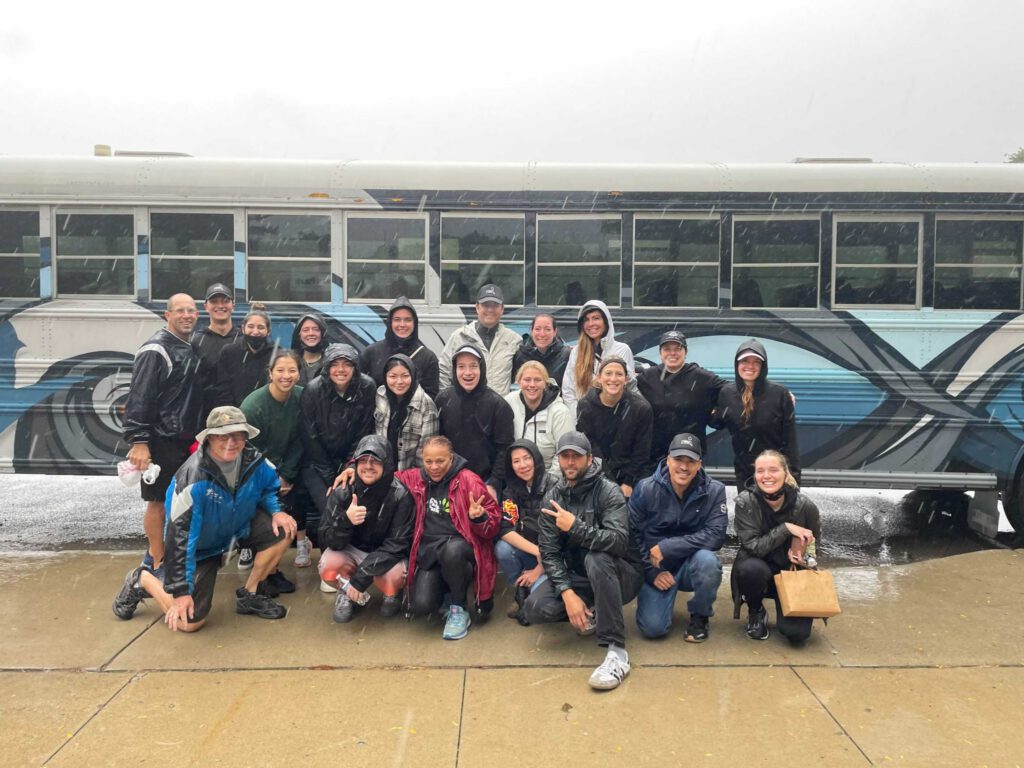
Our Go-to-Market team took over Motor City, volunteering with the non-profit People for Palmer Park, in a rain-soaked clean-up event to help sustain a portion of the 296-acre historic community.  

Our Client Services Leadership Team combed and cleaned over 2.5 miles of NY coastline, earning a matching commitment from Public Benefit Corp., 4Ocean.  

Our third-annual Cycle for Survival, benefitted rare cancer research at Memorial Sloan Kettering, as Dstillers raised pledges for cycling, running, walking and even doing yoga.

We wrapped our year with Secret Santa, as employees donated to one another’s charitable causes, extending the reach of our spirit of giving.

2022 is bound to bring both opportunities and challenges, as we embark upon a New Year filled with possibilities.  But one thing’s for sure. None of our successes, our learning, or our innovation can happen without you, our clients, partners, and industry supporters.  For that, we’re grateful, and most importantly, committed, to making 2022 even greater, brighter and bolder, for all in our community.  

Actionable Data Insights vs. Intelligence Insights

At Dstillery, we understand that terms like data and insight can quickly become synonymous. We put together this blog post to help you understand each term.

What is an insight?

We like to use the term insight as a way to highlight key data points for clients to focus on as we begin to process campaign data and optimize campaign performance. This deeper understanding helps clients make better decisions.

There are two predominant types of insights:

  • Actionable data insights refer to insights that are specific and relevant enough that they lead to actions which can increase efficiency, revenue, and profits. These are gathered as campaigns evolve in real time and are utilized by our client services team to provide immediate campaign optimizations.
  • Intelligence insights refer to having awareness about every aspect of your business from real-time data designed to develop long term actions. Intelligence insights are often used for campaign planning and conquesting campaigns. These insights are viewed as long term insights and allow for stronger campaign performance.

What is an example of an Insight?

Insights can vary greatly between industries. The ability to derive actionable data insights is dependent on a variety of factors. Some of these might include the quantity of data available to you, the parameters of a given dataset, and the specific problem that you are trying to solve. What’s important is establishing which metrics provide valuable information for your particular industry, and leveraging that information to give you an edge in the market.

Data Insights might include:

  • 41% of fast fashion shoppers are also interested in discount travel
  • Over the last 6 months, car insurance researchers have increasingly looked at luxury cars rather than compact sedans
  • 83% of electric vehicle shoppers are also interested in golf courses

Actionable Insights

Actionable data insights share many distinguishing characteristics. Generally speaking, insights are basic observations that may not provide a direction or course of action. Actionable insights include an action you will take due to the insight you gained. This provides a blueprint for creating greater value for consumers, as well as increased efficiency for your business. Below is a list of attributes to consider when deciding whether or not your derived insight is actionable.

What makes a data insight actionable?

  • Relevance
  • Clarity
  • Context
  • Alignment
  • Specificity

Intelligence Insights

Intelligence insights are developed as campaigns evolve over time and can be used to form campaign baselines. These are utilized by clients as a way to interpret actionable insights into a larger context for your business. Over time, many accumulated actionable insights can unlock new aspects of your business and its audiences; allowing you to regularly optimize your campaigns with greater insight throughout the year and spend your marketing dollars more efficiently, with less waste and fragmentation.

The same things that make actionable insights relevant are the same that make intelligence insights relevant but on a grander, longer-term, and encompassing brand umbrella scale.

Bringing it all home

Dstillery deals in clarity. Our insights are made with the cleanest data available for both short and long-term campaigns. Our data cleanliness patents in addition to our patented ID Free Custom AI technology allow for a client to make tactical steps forward with their campaigns without the worry of audience fragmentation or wasteful spending, with or without the use of cookies.

Dstillery’s insights are exactly that – a magnifying glass into the finer details of your business or marketing campaign that may have otherwise gone unnoticed or overlooked. We can see into every corner of the internet that you’re interested in or identify new opportunities and conquests for your brand.

Contact us today to understand how to continually optimize your campaigns and expand your reach across the ever-evolving digital landscape.

How To Do Everything At Once: Digital Advertising in 2021 & Beyond

Data-driven digital advertising in 2021 means working in a world where everything is changing, always. The biggest recent change for advertisers is the extended timeframe for the planned retirement of third-party cookies. 

Even with this change, it’s clear that the industry’s future is based on opt-in identifiers, rather than default-on tracking. Lots of advertisers spent a year scrambling to get ready before Google provided an additional two years to prepare for losing cookies entirely. However, the addition of more time hasn’t changed advertisers’ goals. They must prepare for the future and optimize for today, all at the same time.

These two needs are at odds. How do you optimize actions for today and tomorrow simultaneously? How can you prepare for a cookieless future without giving up performance benefits prematurely?

The answer: Do everything.

Think like Zaila Avant-garde, the winner of the 2021 Scripps National Spelling Bee and a multiple Guinness World Record holder. Avant-garde can dribble six basketballs at once. Fortunately, marketers won’t have to do that. But they do need to think about a targeting strategy that uses multiple approaches to finding their best audience. The trick is to balance these approaches in an optimized digital advertising targeting portfolio.

Your Digital Advertising Targeting Portfolio

Digital advertisers generally run lots of tactics at once, and most have testing and scaling phases for new tactics. This is a great practice to maintain in order to explore new emerging approaches. But it’s not what we mean when we talk about an optimized digital targeting portfolio. We’re talking about a portfolio of tactics that gives you the best possible performance now. And the good news is this portfolio is likely to include approaches that also prepare you for tomorrow.

This is because some post-cookie solutions work well enough to improve ROI and performance right now if allocated correctly. As the landscape transitions away from cookies over the next two years, the optimal allocation of these post-cookie solutions will change. Right now, cookies drive the strongest performance. Somewhere between now and mid-2023, there will be a point where cookies aren’t gone yet but more post-cookie solutions are ready to use at a scale beyond what would make sense today.

The optimal portfolio will keep changing over time, and at every point, it will make sense to use both cookie-based and post-cookie solutions. Start by choosing what to include in your portfolio; Including today’s best solutions as well as the solutions you’ll want post-cookie keeps you prepared for the future. Then optimize for any scenario by turning those knobs to dial up the solutions you need.

The Dstillery post-cookie solution

One way to start strengthening your portfolio now is by adding Dstillery’s ID-free Custom AI cookie-less solution.

ID-free Custom AI is a privacy-first behavioral targeting solution that performs on par with cookies and reaches users without using an identifier. Because ID-free doesn’t use identifiers, it works on any browser, today and in the future.

Best of all, it works, at scale, and can (and should) be used to complement ID-based solutions.

ID-free Custom AI takes a similar approach to what we’ve been using for years to build our ID-based Custom AI audiences. We’ve just reapplied the technology to ID-free signals. Big picture: this is a privacy-friendly approach to targeting users, without any kind of ID, by identifying the impression opportunities that drive performance.

This solution works so well in a portfolio alongside ID-based solutions because it’s a true complement to those approaches. ID-free signals are based on the impression opportunity, rather than persistent information about the user. Since it uses separate signals to make decisions, the ID-free approach is able to take advantage of opportunities that ID-based solutions miss. It remains to be seen how much inventory will be sold without any IDs after cookies are fully retired, but one thing we know for sure is identifier-free inventory will exist in that world, because it already exists today. Running Dstillery ID-free Custom AI in a portfolio along with ID-based solutions is an easy way to improve your ROI today, and be prepared to turn the dial to stay optimized in the future.

To learn more about ID-free Custom AI, please contact Dstillery here.

To watch a previously recorded session on this topic during the ANA Masters of Data & Technology Conference, click here.

Dstillery Secures Patent Describing Ad Targeting Without the Use of Cookies or Identifiers

We are proud to announce our 16th patent awarded for visionary techniques that will help guide marketers into a post-cookie future, officially titled “Artificial Intelligence and/or Machine Learning Models Trained to Predict User Actions Based on an Embedding of Network Locations.”

Our newest patent describes an approach for advertisers to deliver targeted advertising in a privacy-friendly manner, to users without any identifiers or cookies.

The patent grant is especially timely in light of Dstillery’s development of its ID-free solutions, designed to help agencies and brands target digital advertising effectively without the use of third-party cookies or any type of user IDs.

Google’s latest announcement that it will delay the deprecation of third-party cookies on Chrome extends the timeline for advertisers to solidify their plans for post-cookie targeting. During this exploration and testing period, it is essential for marketers to put in place solutions that address inventory where user IDs are available, using new post-cookie identifiers, and to reach inventory with no available identifiers. Dstillery’s ID-free solutions will prepare advertisers for any future digital advertising landscape.

To learn more, follow us on LinkedIn or contact us today.