testAuthor: Patti Boyle

Mutual mentoring is a perfect fit for the age of AI

The rise of AI has created uncertainty about the future of employment across several industries, and advertising is no exception. In an era where new tools are emerging almost daily and changing the very nature of work, mentorship has never been more important. It’s within this era of change that the practice of mutual mentoring becomes so important.

The concept of mutual mentoring began in academia as universities like UMass and Cornell developed an approach that tied tenured faculty and early career professors together. The idea was that the tenured group could teach leadership, while the other, less-experienced group could teach newer, more digitally-native techniques. The concept was quickly adopted by corporate America, and today, in this age of AI, rapid technological evolution, and shifting skill sets, it’s fresher than ever.

I recently had the privilege to lead a panel on this topic at Cannes, as part of the Empower Cafe. Joining me were Julie Lyle, Board Director of Dstillery; Rebecca Dykema, Founder of the Future Works Initiative, and Anna Koicheva, Head of Business Development & Strategic Growth at Tatari.

How AI innovation changes mentoring possibilities 

While the arrival of AI has shifted how many people perform their day-to-day work, the AI tools are so new to nearly everyone that this moment creates the perfect opportunity for mentorship, skill sharing, and ongoing conversations. 

“As much as times have changed, they haven’t,” said Dykema. She shared a conversation with a CMO who was encouraging mutual mentorship across his group by connecting colleagues and peers to teach each other about what they were doing with AI. If the organization is committed to supporting mentorship, then the innovation and opportunity are greater for that organization. 

Of course, this isn’t the only way that mentorship can happen. Learning opportunities can happen impromptu, but are more likely to happen when structure is in place, according to Lyle. She shared how early in her marketing career she found a mentor and asked for one hour a month to talk about her career goals and learn about her mentor’s career trajectory. 

“When you create a structured program like that and you say, ‘I really only need an hour a month and the opportunity to travel with you and I’ll also complete a project for you,’ even the busiest leaders can find time to support your growth and development,” Lyle said. 

When it comes to the actual mentoring practice, AI creates a new way for mentors and mentees to interact. Good mentorship is all about providing feedback where employees want to access it. This is the case at Tatari, which uses Claude to deliver certain kinds of feedback to employees in a neutral manner. 

“You have to have a human being involved with you to support you, give you soft feedback, etc.,” Koicheva said. “But when it comes to particular KPIs and metrics in terms of how you achieve, how you improve your productivity, emotional intelligence or intellectual intelligence, it is important to actually have these neutral tools support that as well and provide that feedback.”

Continued mentorship across a career

Mentorship so often conjures images of more experienced employees guiding those just entering the workforce. While that’s a critical component, no one should ever consider themselves “too experienced” to be a mentee. The real benefit of mutual mentorship is that both sides get something out of the exchange. 

As Dykema explained, some of her most beneficial relationships were when those mentors used the relationship “to see what the next generation is thinking about, to see what they’re wrestling with, to understand the complexities of their business from a totally different perspective.”

Mentorship programs are also critical for developing interpersonal and cross-generational

communication skills. “If you have the technical skills and you don’t have those skills, you will reach a cap fairly quickly in your career,” said Lyle. 

Seize the moment.

Overall, every panelist agreed that this is a perfect opportunity for organizations and employees themselves to engage in mutual mentoring. While not everyone finds the perfect mentor or opportunity with their very first try, this age of AI requires us all to be curious and open to the possibilities of learning from each other.

As Lyle put it, “Luck always plays a part in everybody’s career, but luck often happens when you’re prepared and you’re ready for it and you seize the opportunities.”
How multimodal AI is redefining ad targeting

Editor’s note: This blog was featured in the U of Digital AI Literacy Alliance series, where we explained how multimodal AI can help advertisers move beyond the constraints of silos, toward more adaptive, cross‑channel targeting.

Why following clicks has never been enough 

For years, digital advertising relied on channel-specific tools to find audiences and buy media to effectively reach them. Early AI followed the same pattern, with separate models for search, display, social, or CTV, each trained on a single data stream in isolation rather than the full multimodal customer journey. But real-world consumer behavioral journeys don’t occur in silos. As people move across sites of interest, they encounter and generate many different modalities at once — text, images, audio, video, and behavioral signals — that do not fit neatly into single-channel patterns. The industry has shifted from “following user clicks” to “understanding the user journey and the moment.” Just as we are all multi-faceted individuals, user behaviors are best predicted not as single-modality models but instead, with multimodal AI, connecting those signals in one unified system.

When more data creates fragmentation, not better targeting

Advertisers and their agencies now have access to more heterogeneous data than ever: site tags, search terms, product feeds, campaign and ad exposure logs, CTV viewership, and signals from podcasts or streaming services. 

And while advertiser data volume may seem advantageous, the key is quality over quantity. A small but accurate seed of a brand’s best customers often outperforms a large, disconnected dataset. Yet, all too often, these inputs are still modeled and activated in silos, making it hard to turn them into coherent targeting signals for top-performing campaigns.  The resulting fragmentation, latency, and guesswork mean brands and their agencies lose out on precision, ultimately compromising results. Bigger datasets or faster models won’t solve these problems; brands and agencies need targeting that can adapt to more predictive, cross‑channel environments.

Omnichannel targeting strategies have been around for years; how is this different?

Marketers often define their target audiences, perhaps through a set of descriptive attributes, and then reach those audiences across channels in one of two ways – qualitative matching or device graphs. 

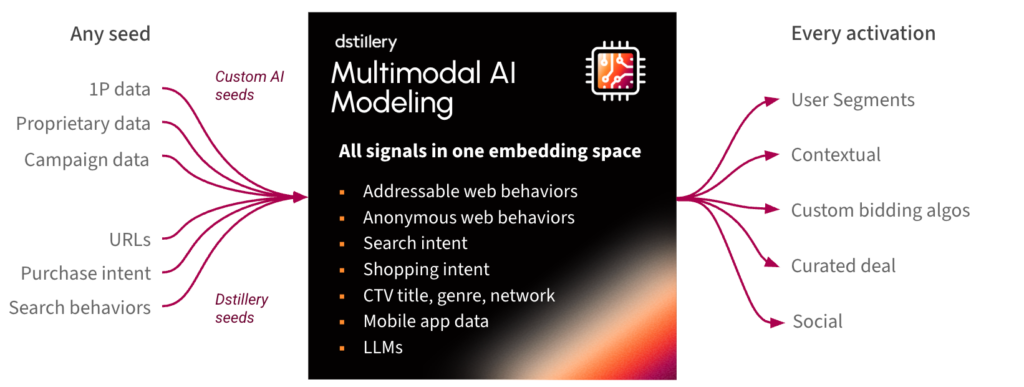
Dstillery Chief Data Scientist, Melinda Han Williams, explains: “Multimodal AI goes a level deeper, bringing cross-context connections directly into the model’s training space. Beyond gaining a more precise view of a brand’s best customers across data types, learning in a multimodal space unlocks flexibility for model inputs and outputs that otherwise wouldn’t be possible.”

How multimodal AI works (simplified)

At its core, multimodal AI represents digital behaviors, or data points, from different contexts, or modalities, in one common space to use as the foundation for modeling. Instead of treating a search term, a URL, or a CTV show as separate objects, the system converts each into a point in a shared mathematical space, or embedding, where similar behaviors and interests sit close together. The model learns that space across many signals at once, so behaviors tied to similar outcomes cluster together even without a common ID. Those points in the shared embedding space then become a common behavioral map to reach users regardless of modality or silo, ensuring the highest value for a brand’s campaigns.   

Multimodal AI is powerful, but not magic

Multimodal AI does not, by itself, solve today’s targeting challenges; it provides the connective tissue advanced agentic systems will rely on to understand and operate across modalities. For that foundation to work, agencies and brands need to test multiple tactics, share learnings with their partners, iterate on models, and align around clear KPIs. Success depends on strong inputs, transparency, and an ongoing willingness to learn what delivers results.

What Super Bowl LX teaches us about AI in advertising: how AI shifted from experiment to strategy at the Big Game

Why the 2026 Big Game was more than halftime entertainment—it marked a turning point for AI in digital advertising.

For the first time since AI entered the mainstream with tools like ChatGPT in 2022, it wasn’t a sidebar in advertising — it was central to how brands approached the Super Bowl itself. Super Bowl LX reflected a broader shift in how agencies and brands are using AI to inform strategy, shape investment decisions, and decide when they’re ready to compete on marketing’s biggest stage.

1) AI Is No Longer About Tools—It’s a Defining Position

AI-driven decisioning wasn’t just influencing how ads were created, but which brands chose to show up at all.

That shift was especially evident in the rise of first-time Super Bowl advertisers. Performance-minded, growth-focused brands were willing to make high-stakes investments in live TV, using AI-backed insights to validate reach, relevance, and scale before committing to the biggest media buy of the year.

We want to give a shout-out to our TV advertising platform partner, Tatari, on securing and managing the ultimate in premium media placements for four first-time Super Bowl brand advertisers—Life360, Manscaped, Ro, and Tecovas—each making a deliberate bet on relevance, reach, and measurable outcomes. These brands didn’t simply “jump in” to the Super Bowl; they’ve been expanding beyond their original target markets and hero products. While AI may have played a role in their media strategies and ad targeting decisions, what’s clear is that the legacy brand-building playbook still has a valuable role, with agency partnerships and relationship currency more important than ever.  

This theme of blending top performance and playing to win extended beyond the game itself. At Adweek House, these brands joined a panel led by Tatari’s SVP of Marketing, Amit Sharan. See the full story here: First-Time Playbooks for the Big Game

2) AI-Powered Targeting Is Now the Confidence Engine Behind Media Decisions

Super Bowl advertising has always been a media decision as much as a creative one. What changed this year was the confidence behind those decisions.

Rather than relying on broad demographics or legacy assumptions, advertisers leaned on AI-powered audience prediction and targeting to reduce risk and increase certainty. AI is no longer optimizing campaigns after launch—it’s shaping upfront investment decisions, giving brands the confidence to take bigger bets with expectations.

3) AI Is Embedded in Prediction and Engagement (Not Just Creation)

Every Super Bowl ad is ultimately a prediction: a bet on what audiences will remember, share, or act on. AI is accelerating that predictive capability across both media and messaging.

This year, that showed up through AI-forward brand narratives and competitive positioning that used AI as both a capability and a differentiator. The most effective advertisers weren’t chasing novelty—they were using AI to align insight, timing, and engagement to drive impact.

The Bigger Signal

Super Bowl LX made one thing clear: AI in advertising has moved beyond experimentation. It’s shaping confidence, precision, and prediction—helping marketers ensure the right messages reach the right audiences at the right moment.

Reflections from Davos 2025: leadership, innovation, and the future of AI in marketing

As I reflect on an unforgettable week in Davos, the World Economic Forum 2025 experience continues to resonate. Representing Dstillery at the gracious invitation of The Female Quotient, I had the privilege of joining a dynamic panel to discuss the power of mentorship, sponsorship, and cultivating the next generation of women leaders.

The Power of Sponsorship & Next-Gen Leadership

On stage with Anna Marks, Camilla Maggiori, Bijou Abiola, and our exceptional moderator Amber Coleman-Mortley, we explored what it means to build pathways for emerging talent — not just in theory but through deliberate, meaningful action. These conversations are particularly relevant in the rapidly evolving landscape of AI-driven marketing, where guiding the next wave of women’s leadership is just as critical as technological innovation itself.

Dstillery & AI Innovation: Aligning with UN SDG #9

Throughout the week, a common theme emerged: the role of AI in driving sustainable innovation. Dstillery’s commitment to AI-driven insights and ethical marketing practices aligns with United Nations Sustainable Development Goal #9 (Industry, Innovation, and Infrastructure) — reinforcing the importance of responsible AI development that fuels both business growth and societal progress.

From collaborative discussions on AI regulation to exploring investments in growth-oriented technology, Davos provided a platform to engage with industry leaders on how marketers can harness AI responsibly while maintaining a human-first approach to advertising.

Leadership in a Shifting Business & Political Landscape

Beyond the panels and networking lounges, I had the opportunity to participate in exclusive roundtable discussions hosted by Steve Clemons, Chairman & CEO of Widehall, Washington, DC. These conversations delved into the evolving terrain of leadership, business, and politics, highlighting the challenges and opportunities executives face in a landscape shaped by geopolitical shifts, economic pressures, and rapid technological transformation.

A Seat at the Table: CNBC International’s “CMO Now” Series

One of the most exciting outcomes of the week was getting invited to record a video interview for CNBC International’s “CMO Now” series, set to air later this month in the lead-up to International Women’s Day. This conversation allowed me to discuss the intersection of AI, marketing, and leadership, further reinforcing the pivotal role of AI-driven insights in shaping modern business strategies.

Looking Ahead: Davos 2026 and Beyond

Among the highlights of Davos 2025 was the invaluable time spent with our newest Dstillery Board Member, Jim Weiss, Founder & Chairman of Real Chemistry, and the outstanding EVP/Chief of Staff, Danielle Clark-Brown. As we look to Davos 2026, one thing is certain: the convergence of AI, leadership, and innovation will continue to shape how brands engage, connect, and grow.

For Dstillery, the takeaways from Davos reinforce our vision: to remain at the forefront of privacy-friendly AI innovation, actionable data insights, and digital advertising solutions that drive measurable business impact. I look forward to continuing these conversations, taking actions to continually grow and lead, and making plans to return and reunite in Davos for WEF 2026.

Stay tuned for our CNBC International interview airing later this month, and let’s keep the conversations going!

Performance meets brand: how to win the short and long game

As the digital media landscape evolves, one perennial debate remains: performance marketing versus brand marketing: which matters more? At Dstillery, we’ve discovered that it’s not an “either-or” question—it’s about finding harmony between these approaches to drive measurable growth while building long-term brand equity. With the upcoming MediaPost Performance Marketing Summit in Deer Valley, UT, there’s no better time to explore how integrating these two disciplines can transform your advertising strategy for 2025.

Performance Marketing: The Sprint to ROI

Performance marketing can sometimes be misconstrued as solely about clicks, conversions, and measurable returns. More accurately, well-planned performance marketing is vital to any strategy, ensuring campaigns are tied directly to outcomes. Yet, in our hyper-quantified world, the danger can lie in focusing solely on short-term wins at the expense of long-term growth. Both pursuits are valuable and not mutually exclusive.

The industry leaders headlining MediaPost’s agenda highlight the sophistication of modern performance strategies, from precision targeting to multi-touch attribution. The key is not just to measure performance but to optimize campaigns while maintaining a broader brand vision.

Brand Marketing: The Marathon to Mindshare

Brand marketing, on the other hand, builds a company’s reputation, affinity, and trust over time. This “slow burn” is no less essential in driving sales; in fact, research shows that brand equity can multiply performance results.
In my MarketingProfs article, “Brand Awareness Measurement: A New Perspective,” I explored how companies often struggle to measure the true impact of brand campaigns. Our solution at Dstillery applies award-winning innovation, including advanced AI modeling and predictive behavioral targeting, to ensure your campaign is reaching your best customers. The future lies in connecting the dots between brand strength and performance metrics.

Why Choose? The Case for Integration

The most effective marketing strategies no longer draw hard lines between performance and brand. Instead, they fuse these disciplines into a seamless, cohesive approach. At Dstillery, we’ve worked with global agencies and brands to align short-term and long-term goals using data-driven decision-making. For example:

Re-framing Target Market Groups: Use Dstillery Insights to refine your target market prioritization or adjust for seasonality. If campaign results reveal that GenZ audiences respond more positively to short-form video ads, then shift your strategy to allocate more budget toward platforms like Instagram to maximize engagement.

– Simultaneous KPIs: Measure short-term ROI alongside brand health metrics, like awareness and favorability, to ensure no aspect of your marketing suffers.

Iterative Feedback Loops: Performance data can fuel brand decisions and vice versa, creating a virtuous cycle of continuous improvement.

Takeaways for the MediaPost Performance Marketing Summit

The MediaPost Summit promises a deep dive into the future of performance marketing, but attendees should look beyond tactical excellence. The challenge — and opportunity — is to balance these skills with brand-building strategies that can scale and sustain success.

Here are a few questions to ponder as you prepare for the summit:

– How can we use performance data to refine social strategies?
– Are our KPIs reflecting both short-term wins and long-term growth?
– What technologies or methodologies (like those in Dstillery’s portfolio) can help bridge the gap between branding and performance?

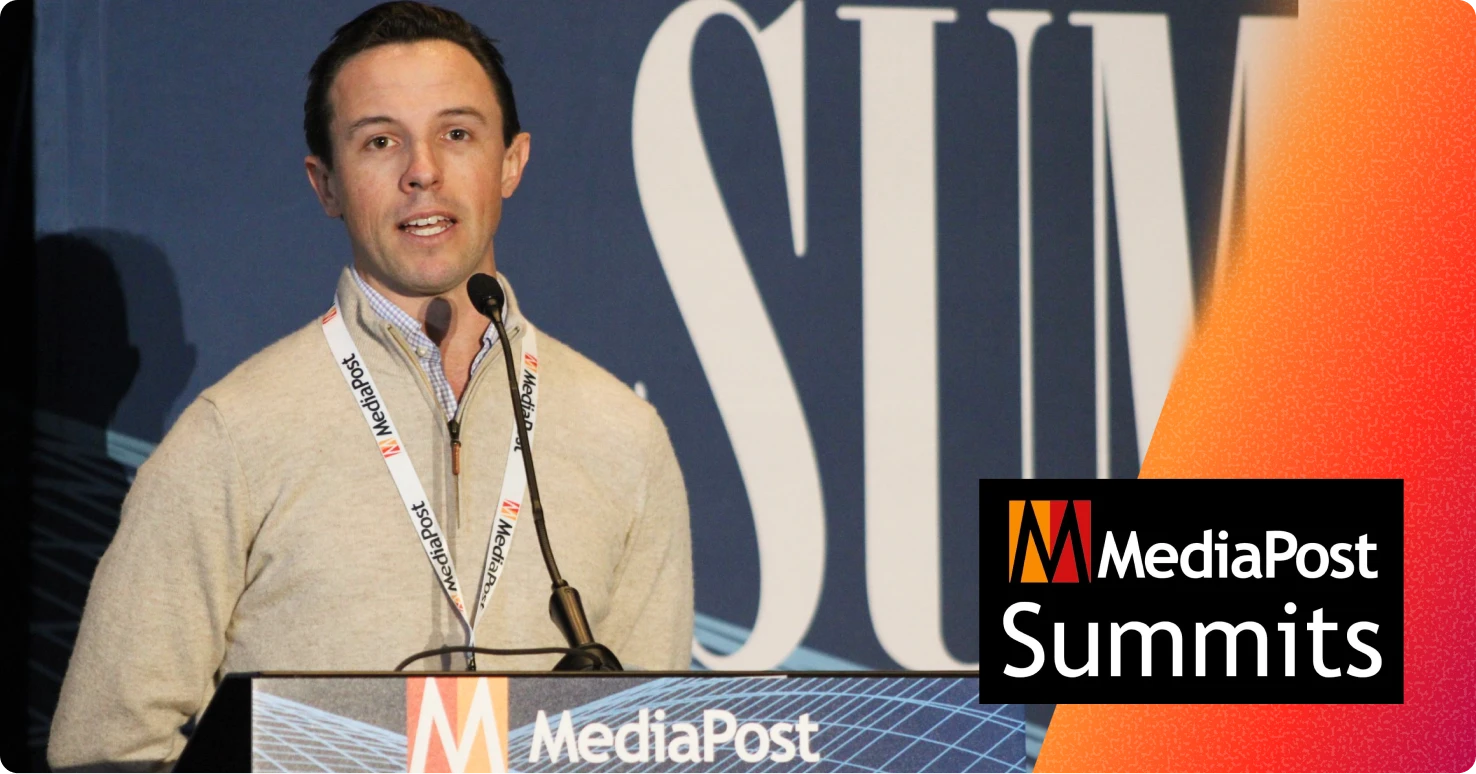
We’re also a proud sponsor of the event and will share insights during our presentation titled, “How To Target & Reach The Right Audiences in 2025.”

A 2025 Marketing Mindset

In 2025, the most successful marketers won’t think of performance and brand as separate entities. They’ll see them as two sides of the same coin, working together to achieve exponential growth. Whether you’re attending the MediaPost Performance Marketing Summit or reflecting on your plans for the year ahead, the time to integrate these strategies is now.

Curious to learn more? Click here to explore how Dstillery’s top-performing audiences help brands achieve measurable results while building long-term equity.

Oracle’s exit from the ad business is fast approaching: 5 ways Dstillery has your audience needs covered

With only six weeks to go from Oracle’s end-date for its well-publicized exit from the ad business, the countdown is on. Oracle’s decision earlier this summer caught many by surprise, though many leading brands and agencies remain concerned about how to replace targeted audiences for their ad campaigns. Oracle’s targeted audience products will no longer be available beyond September 30, 2024. That said, there’s good news for any advertisers questioning the future of their audience data and media targeting partnerships. 

What Oracle’s Exit Means for You

While Oracle’s exit from the AdTech space creates a gap that many advertisers need to address swiftly, the company’s decision presents a new opportunity to re-evaluate solutions with better scale, efficiency, and reach.

At Dstillery, we want to assure our current clients that we have you covered.  And for those not already working with Dstillery, the leading AI ad targeting company, we invite you to connect with us. Our ready-to-go, off-the-shelf Pre-built audiences and just-for-your brand Custom Built audiences are seamless alternatives to Oracle Audiences and BlueKai. And for those using Oracle’s Grapeshot for contextual targeting, our privacy-safe ID-free® Pre-built taxonomy of over 1600 audiences is now available within the Trade Desk Contextual Marketplace. Through these targeting solutions, you’ll see how easily and immediately we can support your highest-priority campaigns.  

Your Trusted Partner in Audience Solutions

At Dstillery, we understand the critical role that accurate and comprehensive audience data plays in driving successful digital advertising campaigns. As our client, you can rest easy knowing that we have a robust suite of audience solutions that are ready to fill the gap left by Oracle. 

Here’s how we ensure your audience needs are met:

1. Extensive Audience Data:

Our AI-driven models are highly targeted, continually refreshed audience segments that span topics across various industries and consumer interests. Whether you’re targeting specific demographics, behaviors, or interests, our selection of audiences is extensive and precise, ensuring your ads will reach the right customers and prospects, at the right time, with your campaign messages.

2. Customizable Audience Segments:

One size does not fit all in marketing. That’s why we offer customizable audience segments tailored to your unique campaign needs. Our team works closely with you to understand your objectives and creates bespoke audience segments that maximize your campaign’s effectiveness.

3. Advanced Data Science:

Leveraging our advanced, award-winning data science capabilities, we deliver highly accurate and relevant audiences, custom curated for your industry, brand, and campaign goals. Our proprietary, multi-patented AI technology analyzes vast amounts of data to identify patterns and trends, helping you target the right audience at the right time.

4. Seamless Integration:

Transitioning from Oracle to Dstillery is seamless and requires no long-term commitments. Our solutions integrate smoothly with your existing platform partners, ensuring no disruption to your operations. Our dedicated Dstillery Client Success team is on hand to support the transition and answer any questions you may have.

5. Commitment to Privacy and Compliance:

Data privacy and compliance are at the core of our solutions. We adhere to stringent data protection regulations, ensuring that your campaign audiences are of the highest quality, recency, and effectiveness, while maintaining privacy standards.

Why Choose Dstillery?

Choosing Dstillery means choosing a partner dedicated to your team’s success. Our expertise in audience targeting, combined with our continuous track record of industry innovation, makes us the ideal choice for agencies and brands looking to navigate the accelerating pace of change in the digital advertising ecosystem.

“Oracle’s decision presents a new opportunity for the advertising industry to re-evaluate targeting. Our advanced audience targeting solutions and unique targeting approach positions us as the ideal choice for agencies and brands aiming to adapt to the rapid changes in the digital advertising ecosystem,” said Michael Beebe, CEO of Dstillery.

Now is the perfect time to explore how Dstillery can elevate your audience targeting strategies. We are here to ensure your campaigns continue to reach the right audiences effectively and efficiently, achieving and often exceeding your KPIs.

With 85% of the Fortune 100 as our customers, you don’t just have to take our word for it. Our customer satisfaction ratings and success stories, plus patented technologies, are testimonies to our track record.

Get Started Today

We look forward to continuing our partnership with you and helping you confidently achieve your marketing goals. Let’s embrace the future of audience targeting together.

Contact us today to learn more about how Dstillery can support your audience targeting needs going forward. If we’re not already working together, we invite you to reach out to learn more.

Together, we can drive scale, efficiency, and campaign success to new heights.

3 key takeaways from MediaPost’s Pharma & Health Summit

The event, not surprisingly, focused on the intersection of new product innovations, data privacy, and strategic digital marketing within the pharmaceutical and healthcare industries. Event sponsors and speakers shared a common zeal for promoting advanced strategies for enhancing engagement and preserving precision targeting in a privacy-first digital ad landscape.

Our Dstillery involvement, as sponsors, centered on our interest in generating increased awareness and trial for Custom Patient Targeting (CPT), the programmatic ad industry’s only truly ID-free offering, exclusively dedicated to Healthcare. Dstillery’s VP of Healthcare Sales, Michelle Lenzo, presented a session on reaching and exceeding campaign goals using CPT to effectively target a healthcare brand’s best audiences. While the session itself clearly fulfilled its purpose of generating interest, engagement, and requests for follow-up, what has truly made the difference is the continuous flow of meeting requests, as prospects and clients have reached out to learn more. In fact, the event inspired our Healthcare-focused White Paper, Seeking Treatment for Cookie Dependency, which you can download here.

Overall, the event itself exceeded expectations, in terms of participating agencies, brand leaders, and partner organizations, against the backdrop of an ideal retreat-style southern Florida venue. While every event organizer, whether publisher, industry association, or tech player, has its own unique style, MediaPost’s combination of a low-key, relaxed environment combined with cutting-edge educational content struck an ideal balance for discovering and enhancing professional relationships. Further, following the event, the results are speaking for themselves, as interest in CPT, and our many other ID-free® solutions is growing.

Below are our top 3 Takeaways:

  1. Innovations in Pharma & Healthcare Marketing:
    Summit hosts kicked off and maintained discussions throughout the event on the increasing impact of AI on the advertising industry, the accelerating value of first-party data, and the challenges of achieving campaign results as new industry measurement standards are explored. Under this umbrella, many speakers highlighted the importance of understanding and predicting consumer behavior in real-timereal time without compromising privacy. Other notable innovations focused on cookieless tracking, the role of content relevance, brand suitability, and continuing pursuits to ensure diversity & inclusivity.
  2. Digital Marketing Excellence:
    Case studies and award-winning campaign successes demonstrated innovative creative and media applications of digital marketing within pharma companies, stressing the need for more omnichannel programs to provide holistic, seamless customer experiences. Presenters also addressed the importance of transparent, fresh, reliable data sources, focused on multi-dimensional personas, next-gen CRM capabilities, and the need for agency-client relationships to be open, collaborative, agile, and adaptable.
  3. Strategic Marketing Planning:
    In this area, it’s as if, what’s old is new again – or that the O.G. principles are getting a new life, in the era of Generative AI. Brands with in-house programmatic agencies emphasized continuous improvement through experimentation, powerhouse Holdco agencies debated the merits and challenges of AI-enabled global brand campaigns, and predictabiy, the spotlight on delivering ROI continued to glare, especially with so many privacy-focused questions around measurement.

The good news for Dstillery is that this event, and every industry gathering since, has underscored the value of our multi-patented and trademarked ID-free technology. Whether as part of our Healthcare-focused Custom Patient Targeting, our Custom Search Lookalikes, or Audience Brief Genius, we continue to believe 2024 is our year, with a bright, growth-focused future beyond.

MediaPost: the power of search in the holiday spirit

Press Events Resources 2023

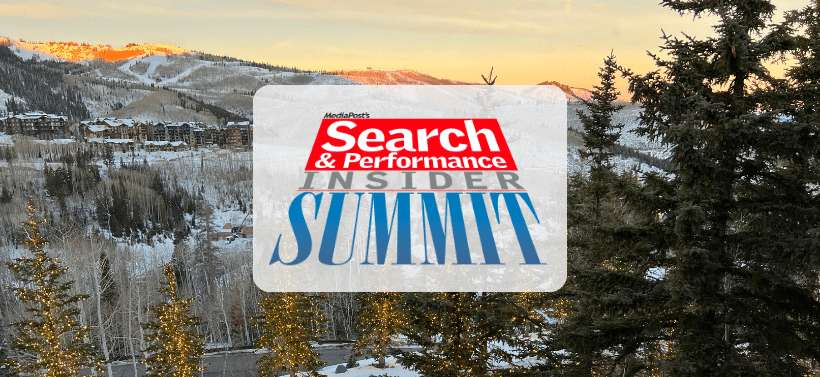
Amid the backdrop of snow-capped mountains, with alpine air so clean you can taste it, 100 industry leaders are gathering for MediaPost’s Search & Performance Summit in Deer Valley, UT. On the agenda: how senior execs and their teams can embrace the sweeping changes 2024 is sure to bring – from accelerating impacts and opportunities in AI to performance marketing that’s privacy-friendly, at long last.

Wrapping up ’23

As Dstillery’s last co-sponsored programmatic media event of the year, there’s a clear optimism – and a dash of uncertainty – about what ’24 will bring. Along with our fellow “Summit Insiders,” we’ll explore how macro and micro influences change the game and open up new paths for growth.

Whether it’s the healthy outdoor, refreshing setting or the approachable, low-key vibe, session topics for this event have a decidedly different and uplifting tone. 2024 will surely be transformational for AdTech. Yet that shift is being met with optimism and an inspiring zeal for growth. While Google’s deprecation of cookies tees up challenges for audience targeting, the senior marketing, agency leaders, and tech leaders are here to embrace consumer privacy and to learn from one another. Media agencies and brand marketers are embedding cookieless testing into their plans, and committing campaign budgets to AI-modeled search with a greater focus on performance marketing.

Looking forward to ’24

My teammate, Executive Director Meredith Flynn, will share how Dstillery’s ID-free® technology is helping brands and agencies reach their best prospects and customers. We couldn’t be prouder of how our patented, trademarked ID-free solutions, already in market since 2021, are offering the only truly privacy-friendly ad targeting — using no personal identifiers. What’s more, our Custom Search Lookalikes help marketing leaders blend their own first-party data to create unique search audiences just-for-their-brands, powered by ID-free.

Perhaps one of the most distinctly positive aspects of MediaPost events is that our Dstillery team has the chance to meet virtually everyone participating. The relaxed, informal atmosphere offers rare opportunities to develop authentic, new working relationships.

Whether your holiday plans have you traveling to well-loved places, exploring new destinations, or simply relaxing and rejuvenating with family and friends, the Dstillery team wishes you the best. Here’s to reaching your most ambitious goals in 2024. May you find everything you’re searching for .